
After we finished development on the Touhou Project NES Demakes four years ago, a lot of you were wondering if we had plans to develop SNES demakes of the first entire Windows era spanning from Touhou 6: The Embodiment of Scarlet Devil to Touhou 9: The Phantasmagoria of Flower View. We simply answered no to that question because at the time of the release of the Touhou 5: Mystic Square NES Demake, Chuhou Joutai 3: Three Nights of Scarlet Devil was wrapping up development and we were getting ready to tackle our next major project: Touhou Kourinden ~ Mythos of Phantasmagoria.
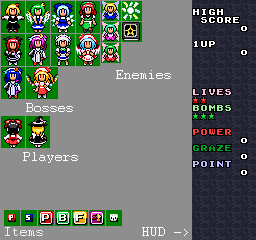
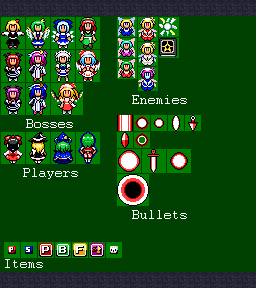
Initially, we didn’t plan to make Touhou Project fangames in the long term. We developed the Touhou Project NES Demakes so we could get Drillimation Systems into the door and spread the word of our first game, Chuhou Joutai: The Middle State of War. The Touhou 1: The Highly Responsive to Prayers NES Demake got so popular that we decided to persevere and produce NES adaptations of the second through fifth Touhou Project games. Up until Mythos of Phantasmagoria, the demakes were the only Touhou Project fangames we made. Mythos of Phantasmagoria became the first original Touhou Project fangame developed by Drillimation.

There are many reasons why the Touhou Project NES Demakes got so popular – they’re free and open source, but of course, the legality aspect of that is quite questionable. Touhou Project is a multibillion-dollar franchise, and Team Shanghai Alice enforcing their content usage guidelines is nothing new and dates back over a decade and a half. Everyone knows what happened with Touhou Kireiyoru ~ Fantasy Night back in 2011. Obviously, since the demakes are based on five of the official games, their distribution is contrary to Team Shanghai Alice’s guidelines due to a rule stating you cannot distribute any fanwork that uses assets from the official games.
This is why the demakes are exclusive to itch.io and can’t be found on the Steam storefront. We understood the fans’ questions over its legality, and realized that since the Touhou Project games starting from Embodiment of Scarlet Devil can be played on any PC running Microsoft Windows, we were not willing to take any legal risks. This plan was ultimately repurposed into Touhou Meijinka ~ Song of Divine Tempest, Touhou Chouhatsuyou ~ Burgeoning Tresses of Longevity, and Touhou Meishuugeki ~ Cursed Sweeper and Bewildering Parallel, which used the SNES graphical and audio framework and the gameplay mechanics from the first Windows era.
Last year in the months surrounding the release of Touhou 20: Fossilized Wonders, Team Shanghai Alice took down hundreds of Touhou Project-related videos with millions of views, and the playerbase was not happy. Fumio Oyamada is the one responsible for Team Shanghai Alice’s enforcement actions, both on and off YouTube. Thousands of fangames have been made, and they have all defined Touhou Project into what it is today. Some fangames, such as the demakes, are different from others. You’re allowed to upload videos from any game, unless you were playing Touhou 19: Unfinished Dream of All Living Ghost or Touhou 20: Fossilized Wonders, or even listening to Taboo Japan Disentanglement.
There have been several users who lost their videos, sometimes with two strikes, forcing them to make all of their videos private to avoid termination. Even huge YouTubers can be hit. For years, there was a channel named Kafuu Hearn that uploaded the soundtracks from the games, and Team Shanghai Alice really laid the hammer on them. They took down video after video, and within a matter of days, they went from a-okay to getting completely banned. The reason was because the music used was not synced to a visual presentation. Unsynchronized audio is against the usage guidelines and Team Shanghai Alice had every right to lay down the law and kick Kafuu Hearn off of YouTube. Anything can face takedowns, including YouTube videos, channel merch, mods, and even entire fangames.
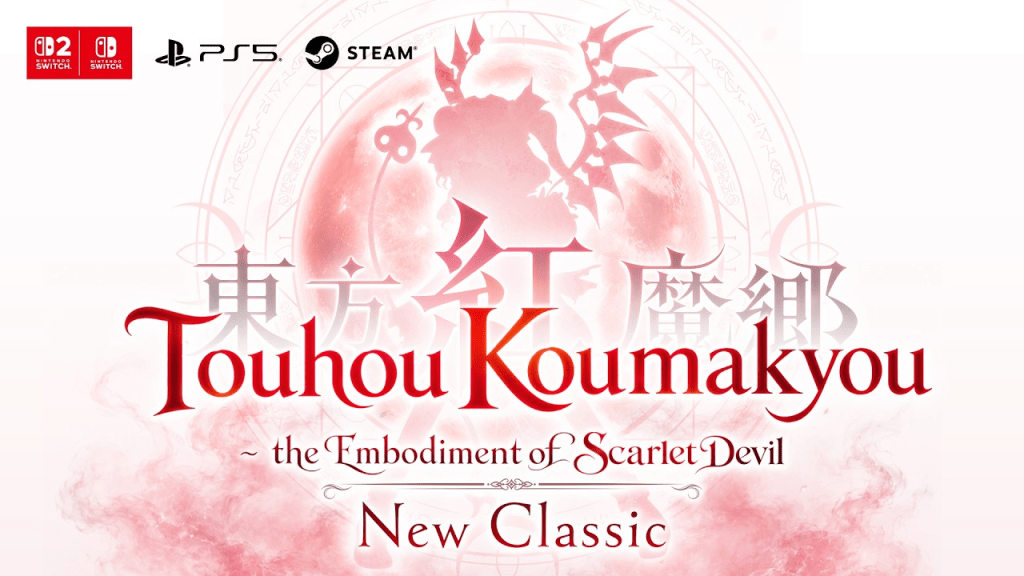
Back on Tuesday during a Nintendo Direct, Team Shanghai Alice made a major announcement that caused everyone’s jaws to drop. It was revealed that Touhou 6: The Embodiment of Scarlet Devil was getting an enhanced, high-definition remake on both PC and consoles. It will be the first mainline installment to release on consoles, and it’s releasing worldwide. Embodiment of Scarlet Devil is considered by many to be one of the greatest video games ever made. When the original released over two decades ago, it gave birth to an entire generation of players. The creators of every major video game franchise expect the magic to be passed from one generation to the next. The remake will birth another generation of players. It was also the first Touhou Project game I ever played as a kid, and many who played when it first came out are now in their twenties and thirties, ready to pass the danmaku to their own children.
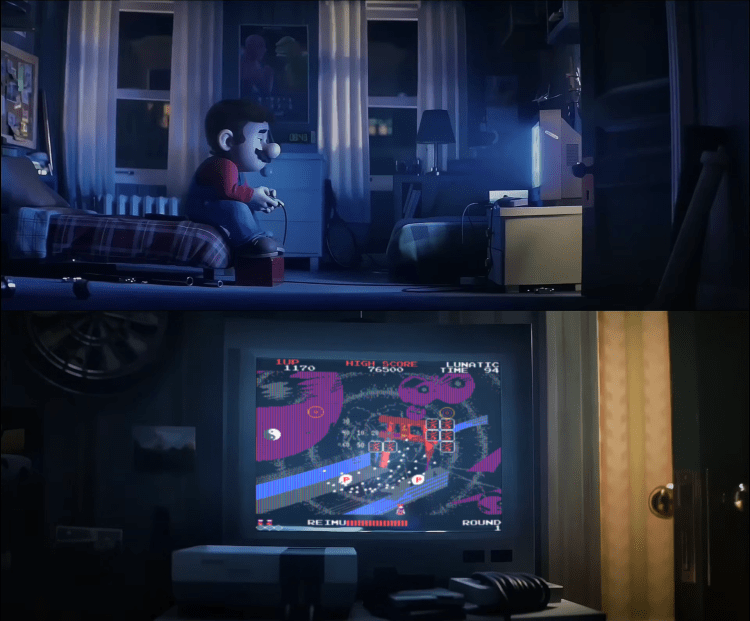
Because of the remake, developing Touhou 6: The Embodiment of Scarlet Devil SNES Demake and its sequels will no longer be possible. We will keep making fangames in the years to come, but you won’t see the next one in a while. Until then, we hope to see a Super Mario-Touhou Project crossover game. After Cursed Sweeper and Bewildering Parallel completes development, the next three games in the Drillimation Danmaku Universe will be originals.
The Game From An Alt Universe Timeline
From an alternate universe timeline where all Touhou Project games released a decade earlier, here’s what it would have looked like.
| Year | Event |
|---|---|
| 1989 | Jun’ya Ohta graduates from Tokyo Denki University and begins work on Touhou 6. It was originally intended for the Famicom, as Nintendo had not yet finalized the hardware for the Super Famicom. |
| 1990 | Development shifts to the Super Famicom after Ohta receives the dev kits. At the same time, Namco co-develops an arcade adaptation of the game that boasts better capabilities than the home console version, including voiceovers and CD-quality audio. |
| 1991 | The game receives its final name: Touhou 6: The Embodiment of Scarlet Devil. Originally planned for a holiday 1991 release, it was pushed to the spring of the following year as part of a localization effort. A beta build arrives for localization. Nintendo of America becomes concerned over the name and orders it be changed out of issue that major retailers in North America would not sell a game with the word “devil” in the title. The developer orders them not to change the name as it is only the title for the main villain. |
| 1992 | Touhou 6: The Embodiment of Scarlet Devil releases in arcades worldwide. The game takes Japan and the rest of the world by storm, kickstarting Touhoumania and resulting in the franchise’s popularity growing at a staggering rate. It is subsequently ported to MS-DOS and the Super Nintendo Entertainment System, where it becomes a Player’s Choice title. It was the number one arcade game that year in both Japan and North America, and it wouldn’t last long as the original Mortal Kombat dethroned the game in October. The game was so popular in the West that it caused a quarter shortage in the United States. The home versions sell over 4 million units worldwide. Following that success, Namco ordered a sequel to be made. The game would become Touhou 7: Perfect Cherry Blossom. Development begins after the release of Embodiment of Scarlet Devil and is hit with a holiday 1992 deadline, which would be delayed to January 1993. |
| 1993 | Touhou 7: Perfect Cherry Blossom releases in arcades worldwide and once again became the number one arcade game that year. The home console version would again sell millions. |
| 1995 | Franchise creator Jun’ya Ohta controversially remarks that Touhou Project had become “more popular than Mario.” Around this time, a Windows 95 version of Embodiment of Scarlet Devil was released, with a port matching the arcade original. |
| 1996 | The game is included in Touhou Project Anthology Vol. 2 on the PlayStation. |
| 1997 | The SNES version receives a Player’s Choice reissue from Nintendo and sold at a discounted price. |
| 2002 | The game is ported to the Game Boy Advance as Touhou Advance: The Embodiment of Scarlet Devil. |
| 2004 | A Chinese developer makes Touhou 6: The Embodiment of Scarlet Devil Arrangement, being an arranged version of the original game featuring new playable characters and bosses, in addition to music. |
| 2012 | Embodiment of Scarlet Devil is ported to iOS and Android. |
| 2016 | The game receives an enhanced, high-definition remake on PC and all major consoles. |
| 2017 | The game is selected for preservation by the United States Library of Congress for being “culturally, historically, and aesthetically significant.” |
Discover more from Drillimation Systems
Subscribe to get the latest posts sent to your email.


What a fascinating look behind the scenes of your creative journey. It’s inspiring to see how a project that began as a way to introduce your studio gradually evolved into a genuine passion and a lasting contribution to the Touhou fangame community. The success of the NES demakes clearly became a catalyst for bigger ambitions, eventually leading to original creations like Mythos of Phantasmagoria. I especially enjoyed reading about how plans changed organically through audience support and artistic growth. It’s a wonderful reminder that some of the most meaningful creative paths are the ones we never originally intended to take. Congratulations on building something that continues to resonate with fans and showcase your team’s dedication and talent. 🎮✨
LikeLiked by 3 people