
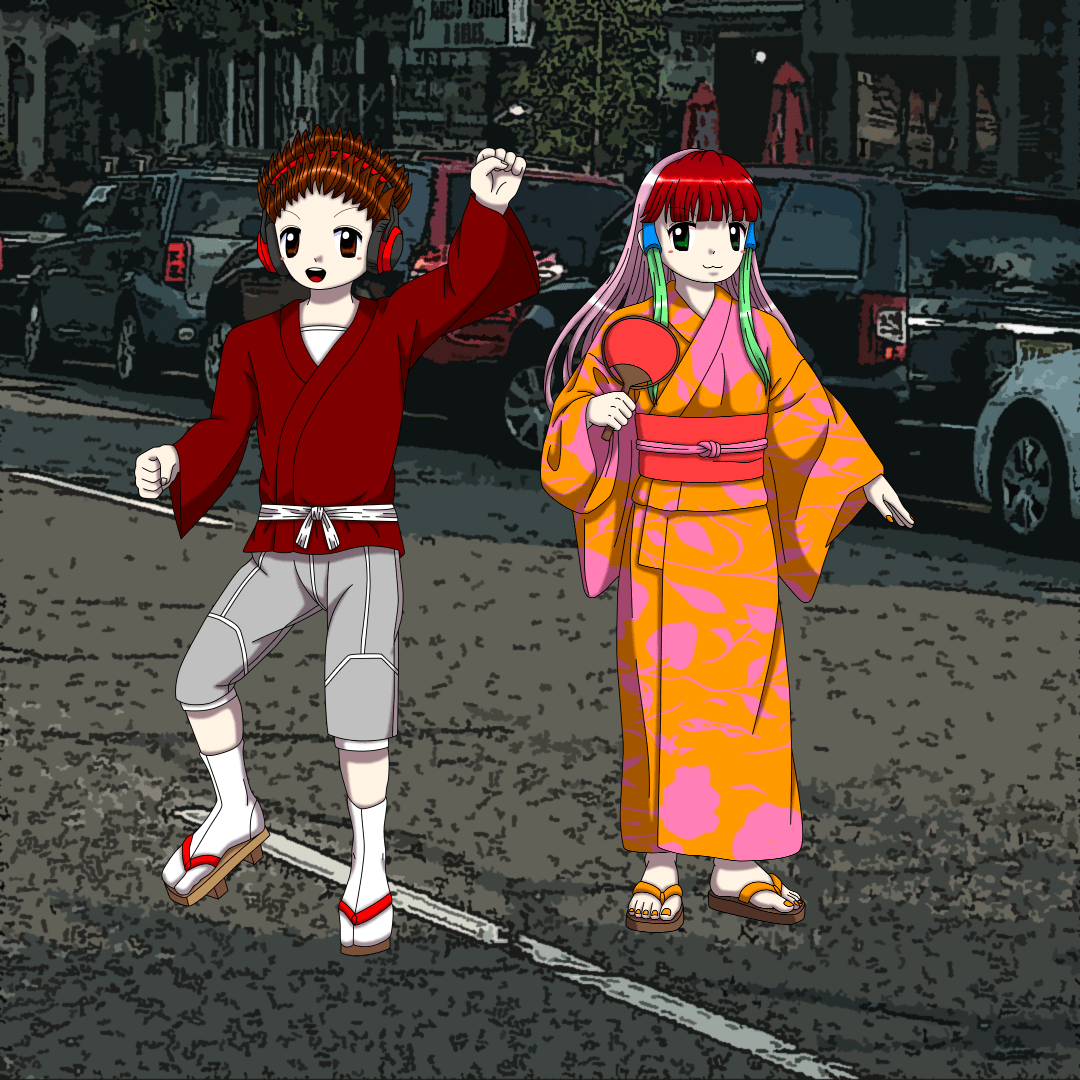
We have officially crossed into the second half of 2026, and the momentum at Drillimation Systems hasn’t slowed down for a second. Looking back at the last three months, the defining theme for the studio has been absolute resilience. Game development and community management in the current digital landscape are rarely predictable, and this past quarter thoroughly tested our ability to troubleshoot under intense pressure, whether recovering from historical hardware failures or adapting to sudden platform volatility.
Navigating these hurdles has only sharpened our focus. This quarter marks a crucial transitional phase for Drillimation Systems as we bridge the gap between long-term technical recovery and major storefront launches. Over the past three months, our efforts have been divided between deep-engine optimization, restructuring our music distribution architecture, and hitting major completion benchmarks on our active game builds.
This intensive period was dedicated to reclaiming lost ground, expanding our digital infrastructure, and pushing our current development builds to their definitive limits. I will break down the massive operational milestones behind us, our expanding distribution channels, and the precise pipeline guiding our strategic rollout planning for the upcoming summer releases.
Past-Quarter Highlights
Support for Touhou Kourinden ~ Mythos of Phantasmagoria back
Let’s start with Touhou Kourinden ~ Mythos of Phantasmagoria. I know that game released over two years ago, and as many of you in the community remember, we hit a devastating roadblock back in November 2024 when a catastrophic primary hard drive failure completely wiped the game’s source code. At the time, it felt like a total no-win scenario. Professional recovery services couldn’t salvage the data, and we had to deliver the somber news that future patches and bug fixes were effectively impossible.
But I refuse to give up on our projects. Leveraging the power of community-driven reverse engineering tools, specifically the UndertaleModTool, I undertook the massive task of pulling the missing logic, scripts, and assets directly from the compiled game files. I am incredibly proud to say that we have successfully reconstructed the source code back into a fully workable state, effectively bringing the project back from the digital grave.
With the codebase restored to current GameMaker standards, we immediately got to work tackling long-standing technical debt. We have already deployed two major updates focused heavily on stability and performance. Most notably, we eliminated a notorious hardlock on Route 6 and resolved a series of critical crashes linked to enemy spawn routines, the options menu, and battle entry sequences. We also cleaned up legacy code by replacing deprecated variables like view_xview and view_yview.
While this recovery is a massive milestone for us at Drillimation Systems, please proceed with caution. Because the code was meticulously reconstructed rather than restored from a clean, original backup, untracked anomalies may still exist. If you encounter any stray bugs while playing, please report them directly to our official Drillimation Bug Tracker on GitHub so we can keep polishing the experience.
DistroKid Partnership and Establishment of Official Artist Channel
Back in April, we crossed a major operational milestone by establishing an Official Artist Channel for our in-house record label Drillimation Records. This expansion was made possible through a strategic partnership with DistroKid, an industry-leading independent music distribution service. For years, our game soundtracks have lived primarily on Bandcamp. While Bandcamp remains an excellent platform for niche community support and the first place we release our albums, our primary goal is to make the sounds of the franchise, particularly the games, as accessible as possible.
Transitioning our catalog to every major music streaming platform worldwide achieves two critical goals. The first is we’re delivering a seamless listening experience for longtime fans who have frequently requested our high-energy tracks on their daily streaming playlists. The second is integrating our music into global public and personal playlists, which serves as a passive discovery tool, introducing the Drillimation Danmaku Universe to entirely new audiences.
Rather than dropping the entire catalog simultaneously, Drillimation Records is executing a phased rollout over the coming weeks to build sustained momentum. The first phase involved the soundtracks from our most popular series, the Touhou Project NES Demakes, the second was for the Chuhou Joutai trilogy, the third was the standalone Emiverse titles, and the last phase is the Mythos of Phantasmagoria duology and the Chuhou Joutai prequel Shining Shattering Sky ~ Reverie of Breaking Unreality. However, it will be a while before phase four can get on due to the sheer size of those games and DistroKid only allows you to upload up to 35 tracks per album. We’re currently in talks with them to increase that limit so we can get them to streaming services. Otherwise, we may have to split the albums into multiple discs as was the case during the physical era and release them as separate albums.
To maximize cross-platform engagement, the Drillimation Records Official Artist Channel is fully integrated with our main YouTube presence. Do note that it is a separate channel that you will have to subscribe to, though you can still receive notifications when new soundtracks hit the platform. We are also actively encouraging community engagement on social media, prompting fans to share their favorite themes and pinpoint which tracks are receiving the highest listener retention.
Discord AI Moderation Error
The next thing I want to talk about concerns my Discord account and server. I almost got kicked off Discord on the morning of April 21, 2026. We encountered a critical operational disruption when my primary Discord account received an automated Community Guidelines violation. The system flagged a routine communication consisting solely of two custom emojis by classifying it as “hateful conduct.” I subsequently appealed the decision, and in less than two hours, the violation was wiped from my account standing. This incident highlights a dangerous, escalating industry trend: the systematic reliance on unoptimized artificial intelligence for platform moderation.
As tech platforms scale, many have outsourced moderation to third-party machine learning algorithms to reduce overhead. This incident exposes two fatal flaws in that framework. The first is automated tools prioritize rigid pattern recognition over human context. By misinterpreting benign interactions such as harmless emojis or standard vacation photos, these systems frequently generate false positives that disrupt legitimate creators. On many modern platforms, the initial appeals process is handled by the same AI logic that issued the violation. This creates an unyielding closed loop where automated rejections are handed down instantly without human oversight, leaving users with no immediate recourse.
For an independent studio like Drillimation Systems, wrongful suspension of a primary account is not merely an inconvenience but a critical business vulnerability. Had the account been permanently locked in error, we would have faced severe consequences, including the loss of my official Discord server, severing our primary real-time communication pipeline with our audience, and the professional and community networking hubs that would instantly cause audience fragmentation, missed promotional windows, and direct income loss.
AI should function as a shield to protect communities, not a sword that strikes down innocent creators. Moving forward, Drillimation Systems is implementing a multi-layered contingency plan to safeguard our digital presence. The first is we are actively diversifying our public touchpoints across multiple decentralized and traditional platforms to ensure we can maintain contact with fans if a primary account is compromised. The second is strict protocols dictating that all digital assets, community archives, and server documentation are backed up regularly off-site. In the event of irreversible automated account actions, our operational policy and last resort include escalating the issue through formal legal channels, including filing complaints with state attorney general offices or entering formal arbitration to protect the studio’s property.
Ultimately, this incident serves as a stark reminder that while automated systems are a structural necessity for managing global platforms, they cannot become an unaccountable judge and jury. For independent creators, a single false positive can instantaneously sever vital community lifelines and threaten operational revenue. True digital resilience requires looking beyond a single platform by enforcing aggressive data redundancy and expanding our presence across independent channels. Drillimation Systems will ensure that our connection to the community remains secure, no matter how volatile the broader platform moderation landscape becomes.
Touhou Meishuugeki ~ Cursed Sweeper and Bewildering Parallel
The last part of this segment is Touhou Meishuugeki ~ Cursed Sweeper and Bewildering Parallel. I am incredibly excited to announce that the first entire half of the game is now officially complete. A massive amount of development progress has occurred since we released the initial public Alpha back in March, which served as a crucial testing ground for our updated systems.
Thanks to my efforts and the feedback from all of you, we successfully managed to complete the core development for the Cursed Sweeper and Extra stage arcs, which comprehensively constitute the first entire half of the game. We’ve focused heavily on tightening performance, refining the danmaku patterns, and ensuring that the narrative flow transitions smoothly between stages. The engine feels more responsive than ever, and I can’t wait for you all to experience the full mechanical and artistic leap this entry will represent when the final game is ready.
Next-Quarter Plans
Second Half of Touhou Meishuugeki ~ Cursed Sweeper and Bewildering Parallel
That’s it for the past quarter highlights, and this next segment will detail my plans for the third quarter of this year. The first thing I will talk about is the second half of the development of Cursed Sweeper and Bewildering Parallel. I just mentioned the first half of the game being done, but this month and the next will focus on bringing the Bewildering Parallel and Phantasm Stage episodes of the game to life. To give you an idea of where the project stands and what the road to completion will look like, I have three core points for the planned development pipeline.
The first one is the narrative and cutscene logic. The baseline script for these two episodes is already 100% complete. With the dialogue and plot locked in, my immediate next step is to program the individual cutscene objects. This involves translating the text into active game logic by mapping out character portraits, textbox triggers, and structural pacing to ensure the narrative transitions seamlessly into the gameplay.
The second is implementing the nighttime boss counterparts. A mechanical focus for the Bewildering Parallel episode is the implementation of the bosses’ nighttime counterparts. Programming these variants won’t be an uphill battle because the foundational stage layouts and standard assets are already fully assembled, saving a tremendous amount of development time. The core task here will be designing and balancing their unique, nighttime-specific danmaku patterns, adjusting enemy behavioral logic, and altering visual palettes to match the shifting atmosphere of the late-game episodes.
The last one is playtesting and feedback loops. Once the cutscenes and boss behaviors are stable, I will be conducting rigorous internal testing. Building upon the challenges I have faced at Anime Fest and the public Alpha builds, I will focus tightly on difficulty scaling and precision. The goal is to ensure these attack patterns remain fair, maintaining the highly responsive feel we achieved in the first half of the game.
While the first half of the game acts as a proven foundation, entering this second half feels incredibly encouraging. Having the stages already built in allows me to bypass the time-consuming process of environmental design and dive straight into what makes a danmaku game great. There is still plenty of optimization and bug-crushing ahead to ensure the patterns, mechanics, and bosses remain functional. The mechanical and artistic payoff at the end of this game’s journey will be worth the wait. I will continue to share updates as these final episodes take their definitive shape.
Release of Shining Shattering Sky ~ Reverie of Breaking Unreality on Steam
Another major plan lined up for July is the official Steam release of Shining Shattering Sky ~ Reverie of Breaking Unreality. I originally kicked off development for this project in May of last year and completed it in October. Since then, the game has been undergoing rigorous beta testing for several months to ensure its mechanical integrity and stability. I am incredibly happy to announce that it is finally ready to get out there on the platform, with an official release date locked in for July 24, 2026 – the first Chuhou Joutai game in nearly four years.
Because the launch window directly overlaps with the development cycle of the Bewildering Parallel episode, managing my time efficiently will be critical. To give you a clear look at how the launch is being structured alongside our ongoing development work, I broke up this transition into three phases.
The first phase was the final polish and beta wrap-up. This was invaluable for catching game-breaking bugs, fine-tuning performance benchmarks, and optimizing Steamworks integration. Over the past few weeks, the focus shifted to active feature implementation and final stability polishing. This is to ensure the launch day build is as seamless and reliable as possible for players.
In the three weeks leading up to the release, I am stepping up promotional efforts to build momentum. This includes updating store page assets, sharing the final gameplay trailer, and leveraging our established official channels to maximize visibility and drive wishlists. Launching a game on Steam is never a set-and-forget endeavor. I have structured the schedule to allow a dedicated buffer immediately following the release. It will be reserved for monitoring community feedback, tracking crash logs, and deploying hotfixes if any unforeseen compatibility issues arise.
Seeing a project that began over a year ago reach its definitive release is incredibly rewarding. The community’s patience during the beta phase has allowed me to craft a polished experience that I am truly proud of. I can’t wait to see everyone diving into Reverie of Breaking Unreality this month, and I appreciate your continued support as we cross this major finish line. Also, if you’d like a review code, drop your request in the comments or use the PR contact page on Drillimation’s website.
Q&A
Augmenting a Creative Process With AI and Using it Responsibly
Now onto the final segment of this video. The first part is the character art I’ve been doing lately. This first Q&A segment is going to be a long one, so bear with me. If you started noticing in my artworks on social media in late February, the quality appeared to be improving to the point that it looks professional. While you may think the artworks appear to be AI-generated, they are not. I started using machine learning to improve my ability to create high-quality artworks. Instead of going the sloppy route, I’ve been using it to identify how to draw certain hairstyles, clothing, and body parts. The way I do it is by drawing a rough sketch first and then using machine learning to determine how I should create the final piece. You can only use machine learning if you use it responsibly. This next part will have me explaining the problems of AI slop and irresponsible use.
The proliferation of AI-generated content across social media and mainstream entertainment has been accelerated by practitioners who bypass foundational artistic training. By essentially acting as humanoid clipboards, these users feed existing works into generators and claim the results as their own original creations. This trend is becoming increasingly ubiquitous, not only eroding the value of traditional artistry but also fostering a climate of misinformation where the distinction between genuine human effort and algorithmic output is intentionally blurred, making it difficult for audiences to discern what is truly crafted by hand.
You may have likely encountered AI disclosures on social media at least once, where systems ingest existing character, object, and background assets to produce new content. Heck, even this very video has one, as I will use AI-generated images of our own characters to explain these issues. In principle, leveraging AI as a cost-effective tool or a foundational starting point for one’s own creative work is a perfectly viable practice. However, many are betraying the spirit of this technology by using it as a direct substitute for artistic ability. Instead of utilizing AI to augment their own creative process, they are using it as a crutch to bypass the foundational labor necessary for professional work, effectively using their inability to draw or write as an excuse to pass off machine-generated output as their own.
I have witnessed the repercussions of this practice in titles like Touhou 20: Fossilized Wonders and Plants vs. Zombies Replanted, where the result is an artistic car crash. Developers often populate environments with disparate, nonsensical assets such as placing USPS mailboxes next to London phone booths, resulting in a jarring lack of visual cohesion. Because these assets are generated in isolation and pasted together without an overarching design vision, the final product feels disjointed, with conflicting art styles and surreal, mismatched elements. This AI slop is not art; it is randomly generated output masquerading as creative work, yet these developers often charge anywhere from $1-50 for the result of their lack of effort.
Back to Fossilized Wonders, this AI slop appears in the fourth, final, and extra stages of the game. Director Jun’ya Ohta, or ZUN, tried to defend this practice by demonstrating that he could incorporate generative AI into the creative process without it replacing his role, and these assets are thematically relevant to the game’s plot. This has led to a mixed response from players and critics, and it became the primary driver of the game’s negative reviews. Heck, the franchise lost a large majority of its playerbase and simply moved on to other moe-centered franchises such as Umamusume. I’m one of those players who stayed because of the fanworks, and that’s what I came for.
Attempting to monetize a game built entirely from AI-generated assets is a losing gamble; the only potential audience is a small group of uninformed consumers who mistake these hollow visuals for quality. While using AI as a foundational tool for creative development is acceptable, relying solely on it is not game development – it is the production of digital clutter. This trend has flooded storefronts like Steam and itch.io as a wave of ‘shovelware’: incoherent, buggy messes that serve as evidence that the developers prioritize automated shortcuts over the fundamental ability to actually code or design a functional experience.
Ultimately, the tragedy of this shift is that even a dedicated indie developer who spends years crafting a brilliant, original title is now struggling to be heard above the noise. When the marketplace is flooded with low-effort, AI-generated ‘shovelware’, often paired with uninspired, stock-asset soundscapes, the visibility for genuine craft is severely diminished. It is disheartening to see artistic merit overshadowed by a race to the bottom, where efficiency is valued over human expression. If this trajectory continues unchecked, we aren’t just looking at a temporary trend of poor quality; we are facing a future where the bar for what constitutes a ‘finished’ game is lowered so far that innovation itself may struggle to survive.
This approach is essentially the digital equivalent of flipping a house: developers generate a haphazard collection of assets, graft them onto basic code, and present the result as a finished product. For those working in professional environments, this shortcut carries significant risk, as their work is increasingly subject to scrutiny by AI detection tools. Familiarity with these detectors is becoming essential, as they analyze patterns and stylistic characteristics to estimate the likelihood of machine involvement. These systems are already being widely implemented in education, publishing, and content moderation, serving as a critical filter to flag work that lacks human originality or requires closer professional review.
Ultimately, AI can serve as a valuable component of the production process, but it should never be used to circumvent the creative effort that defines your voice. I advocate for using these tools solely as an assistant – a means to ensure the final product remains authentic, personal, and unmistakably your own. Whether by offering suggestions, assisting in brainstorming, or refining your narrative, AI should support your vision rather than replace it. While human-generated content is what resonates with fans, the irresponsible application of AI risks serious consequences: it can lead to derivative, formulaic output, unintended plagiarism, and a fundamental loss of originality that ultimately compromises your creative integrity.
In the end, the value of your work isn’t found in the speed of its production, but in the humanity imbued within. AI can act as a catalyst for ideas or a tool for efficiency, but it cannot replicate the lived experience, the deliberate choices, and the unique artistic soul that define true creativity. As we move forward, the most compelling creators will be those who refuse to let the machine take the wheel. Use these tools to expand your capabilities, not to shrink your contribution, and keep your creative integrity at the forefront of every project you undertake.
No Planned SNES Demakes of the Early Touhou Project Windows Era
Now that I have produced five 16-bit style Touhou Project fangames, plus a standalone original title, and before the original Mythos of Phantasmagoria began development, a lot of you kept asking if I was planning to do Super Nintendo-style demakes of the first Windows era. Unfortunately, no – and for many reasons. For one, and before the first Mythos of Phantasmagoria, the Touhou Project NES Demakes were the only Touhou Project fangames we made. Originally, I didn’t plan to produce Touhou Project fangames in the long term, but following the success of The Highly Responsive to Prayers demake, I went forth and adapted the rest of the PC-98 era.
After I completed Mystic Square, I was ready to move on to something else. I immediately began work on the original Mythos of Phantasmagoria shortly after work on Chuhou Joutai 3: Three Nights of Scarlet Abscess wrapped up development. These plans were kept in mind throughout the development of Mythos of Phantasmagoria, and even E. Enthusiasm penned 16-bit sprites of the entire cast of Embodiment of Scarlet Devil. After I realized the legal risks that would arise if we went forth, I scrapped the idea and instead developed Song of Divine Tempest, Burgeoning Tresses of Longevity, and Cursed Sweeper and Bewildering Parallel.
Any lingering possibility of reviving or revisiting the SNES demake plans was permanently shelved when, three weeks earlier, Team Shanghai Alice announced an enhanced, high-definition remake of Embodiment of Scarlet Devil on both PC and consoles. My plan for the NES demakes was to introduce the original games to younger generations who weren’t around to play them, especially those born outside Japan like me. I see the EoSD remake to be the same.
When we transitioned from the 8-bit architecture of the NES to the 16-bit Super Nintendo, it presented a massive shift in development overhead. I was initially worried that replicating the Super Nintendo’s unique Mode 7 graphical capabilities, handling expanded audio channels, and managing much larger asset sizes would have demanded a level of production budget and time that simply didn’t align with my core philosophy of maintaining small-budget, cost-conscious, and highly agile development cycles. Nevertheless, both E. Enthusiasm and I managed to pull it off with resilience, and our proprietary Driller Engine became capable of handling 16-bit graphics while still keeping a high-performance execution, all without heavily compromising our schedule.
Ultimately, pivoting away from developing SNES demakes allowed me to cultivate a more distinct creative identity. While the Touhou Project NES Demakes will always stand as a proud milestone in our history, moving toward original narratives like Mythos of Phantasmagoria and collaborative efforts in the Emiverse proved to be the right operational direction for the studio’s long-term evolution.
Anime Fest
A lot of you may be asking if I’ll be exhibiting in Pittsburgh or Niagara Falls again later this year or next. Well, not for a while. Since 2025, Pokékon, the sister convention to Anime Fest, has fallen victim to Adored by the Network rather quickly. Unsurprisingly, it became one of their most popular types of conventions, and they went on to give it lots of attention. It usually becomes default filler when they don’t have any other type of convention to place it in, pushing Anime Fest off the schedule for half the year. Given that anime is a largely diverse genre, I don’t want you to spawn conspiracy theories about the organizers being run by moral guardians using Pokékon to sabotage any convention that would be inappropriate for children and artificially manipulate their schedule.
Unfortunately, they started doing Pokékon at a time when I was about ready to get my Steam Deck to attract people to my booth. Not helping was the Nintendo Switch 2 was considerably closer to launch, and spending over $1,000 on two consoles would be impractical. Making things worse, I lost a large portion of my convention schedule that year. This frustration with scheduling conflicts was the reason I chose to exhibit outside of Erie and definitely contributed to my 2026 plans of doing more traveling for conventions. When I hit the ground in Pittsburgh and Niagara Falls, the results were night and day. I wasn’t just another booth; I was offering a high-energy game demo that kept attendees engaged far longer than in previous years. It marked a turning point.
My strategy for the rest of 2026 is less about chasing every available event and more about intentional appearances where I can maximize engagement. I’ve learned that the quality of my booth setup and the hardware driving it matters just as much as the content itself. By narrowing my focus to Anime Fest when it becomes available, I’m confident I can maintain this momentum without spreading myself too thin. The goal for the future isn’t just to exhibit, but to solidify a dedicated playerbase that feels as invested in these games as I am.
Ultimately, these conventions have taught me that Drillimation is nothing without the people who engage with it. The lessons I learned while troubleshooting have made me more attuned to what fans are looking for. As I look forward to my upcoming plans in Cleveland and Erie this October, my priority remains the same: creating an accessible, high-energy experience that invites players to really dig into the Drillimation Danmaku Universe. These lessons will apply to Drillimation’s future chapters.
The unpredictability of a convention circuit is a reality I’ve had to embrace. Whether it’s navigating a sudden evacuation or working around the launch cycles of major consoles, every obstacle has served as a crucible. These experiences haven’t just prepared me for the logistics of the future – they’ve sharpened my resolve to keep pushing the boundaries of what I can deliver. This circuit may be chaotic, but it’s exactly where the real work of refining player experience happens.
Outro
That wraps up the video. The roadmap for the remainder of 2026 is ambitious, but the foundational work laid over the past quarter ensures we are fully equipped to meet it head-on. We have successfully cleared the technical debt, refortified our internal tools, and the pipeline to our upcoming summer launches is officially locked in. By stabilizing our core development pipeline, expanding our digital storefront footprint, and resolving long-standing technical hurdles, we are entering the next season stronger than ever.
We are incredibly excited to transition from a phase of deep technical restructuring into a period of major public releases. The next few months will move fast, and we can’t wait to get these new builds and soundtracks into your hands. Stay tuned to our official channels for upcoming beta windows, storefront launch dates, and deep dives into our evolving game systems.
Ultimately, I have always been fueled by a shared passion for classic gaming aesthetics, tight mechanics, and immersive worlds, but it is your ongoing support that truly anchors this studio. Turning roadblocks into stepping stones is just part of the journey, and having such a dedicated playerbase makes every late-night debugging session entirely worth it. Thank you for your continued patience, trust, and support as we push Drillimation to new heights. I hope to see you all at Anime Fest this October.
Discover more from Drillimation Systems
Subscribe to get the latest posts sent to your email.
 Drillimation Systems
You seem to be on the go! Well done on reclaiming lost ground.
LikeLiked by 1 person
That’s great news, keep up the good work.
LikeLiked by 2 people