Drillimation Systems is happy to welcome newcomers and veteran players to our games by offering both in-person and virtual visit options. Either way, we are excited to introduce you to our products.
Anime Fest


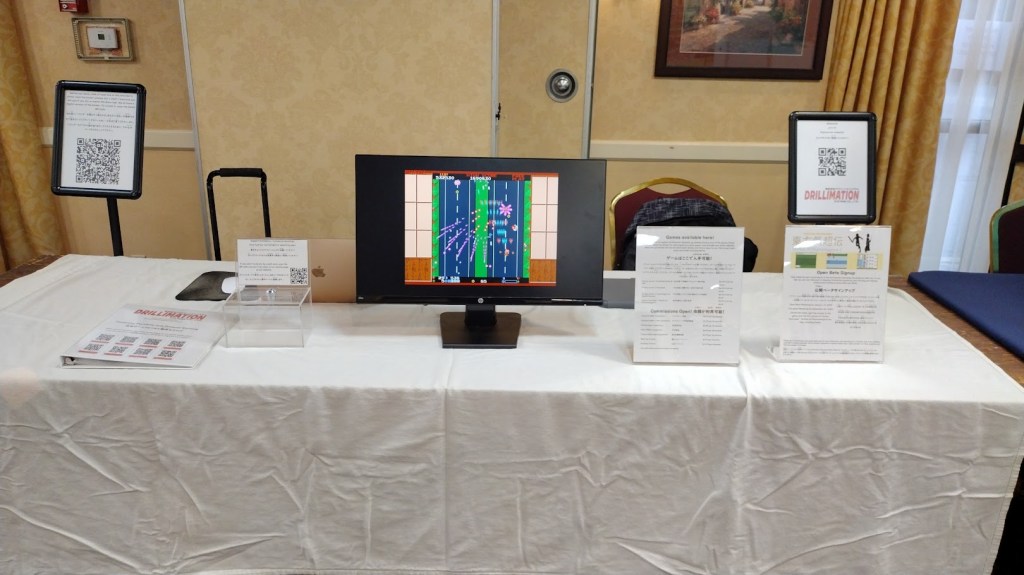

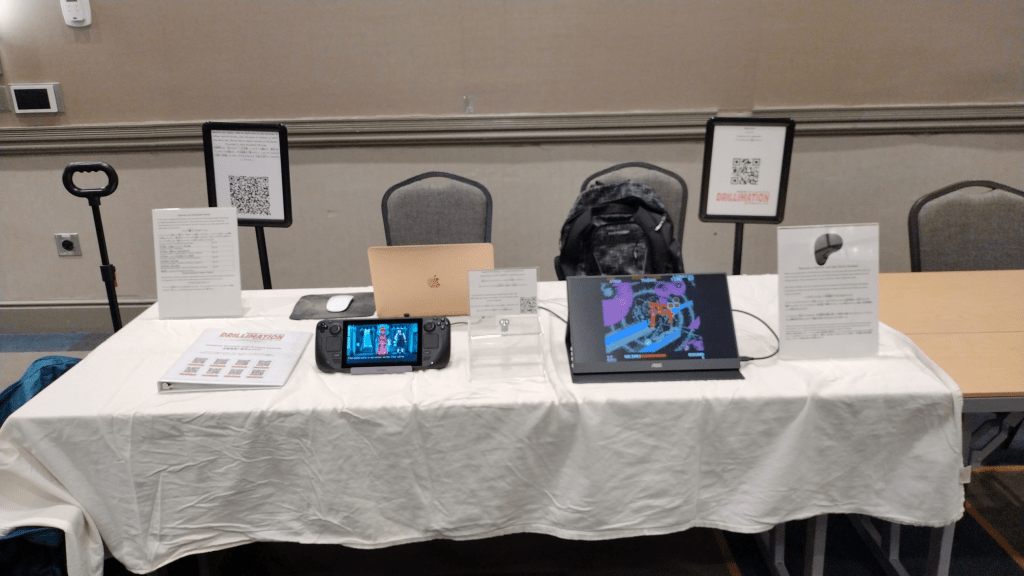

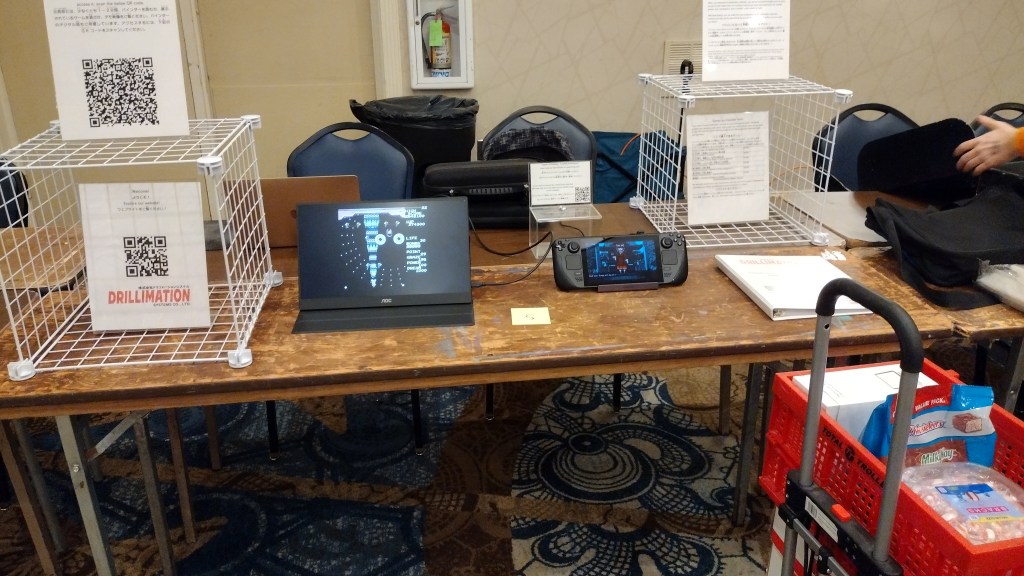
Spend a day discovering what makes anime and our games unique. If you’re just getting to know Drillimation or looking for a more in-depth glimpse of the company, we have an in-person visit option for you. Our booth is open to all attendees of the Anime Fest*, available at the following locations:
- Erie, Pennsylvania
- Niagara Falls, New York
- Buffalo, New York
- Cleveland, Ohio
- Pittsburgh, Pennsylvania
*Anime Fest may not be available at all times. Please visit ourcons.com for Anime Fest availability.
You can learn more about Anime Fest here.
Virtual Visits
Can’t make it to Anime Fest? You can join our Discord server to learn more about the company. From here, you can connect with fellow Drillimation game players, meet others who share the same or similar interests as you, and hear first-hand about what it’s like to be in the Land of Illusions (Gensokyo)!
Booth Rules
While you may be excited to meet the Prophet Driller in person, please keep these rules in mind.
- All other convention rules and hotel policies apply.
- Make sure you arrive early and check your schedule so you don’t miss out. Drillimation will be available at the start until the convention’s end. This is especially true if you want to have some time with our games.
- Please be mindful of other players waiting to play our games. We want to make sure everyone who stops by takes the opportunity to play. If you’re not sure whether or not you want to play, see how other players play the game first before you play.
- Respect the Prophet. Always ask for permission before taking a photo and it must conform to the Game Content and Brand Usage Rules, especially if you are posting selfies of yourself and the Prophet on social media. Drillimation reserves the right to remove non-compliant images.
- No food or drink is allowed in the booth area. If any of our equipment or items are damaged because of a liquid spill or food crumbs, you are responsible for any repair or replacement costs.
- Supervise children. Anyone under the age of 13 must be accompanied by an adult, though this requirement may vary based on the convention’s policies. Parents or guardians assume all responsibility for their behavior.
- Any shoplifting or unauthorized removal of property from the booth will be reported to convention security and law enforcement upon discovery. Violators will be prosecuted to the fullest extent of the law.
Safety
If you are visiting the in-person opportunities from abroad, please review the following safety information below:
Crime
Security Alert: Important warning during Operation Epic Fury
Following the start of major combat operations in Iran on February 28, 2026, we are issuing worldwide caution regarding possible reprisal attacks from lone actors, including in the United States. Assailants acting alone may target tourist attractions and major cultural events, which include Anime Fest. Please be particularly vigilant when attending.
Cyber attacks are also possible, and ensure your personal devices are secure when using public Wi-Fi at the hotel these conventions take place. While local authorities are on high alert, familiarize yourself with the emergency exits of the venue upon arrival, report any unattended bags or suspicious behavior to convention security, and monitor local news for breaking events and adjust your plans based on that information.
Please exercise increased caution due to terrorism. Terrorist and hate groups, as well as lone wolves inspired by these organizations, continue plotting attacks against civilian targets, often using firearms. The Second Amendment of the United States Constitution grants individuals the right to bear arms, and firearms regulation in the US is done at the state level and not federal level. Assailants can attack with little to no warning, targeting tourist attractions, transportation hubs, markets and shopping malls, government facilities, hotels, clubs, restaurants, places of worship, parks, major cultural and sporting events, educational institutions, airports, and other public areas.
Please read the U.S. country information on the foreign affairs website of your country for additional information, including safety. When you travel:
- Prepare a contingency plan for emergency situations.
- Be aware of your surroundings when traveling to tourist attractions and crowded public venues.
- Follow all instructions from local authorities.
- Check local news for breaking events and adjust your plans based on that information.
- If your country has a smart travel program similar to the Smart Traveler Enrollment Program from the U.S. Department of State, we recommend you enroll so that way, the embassy or nearest consulate of your country can make it easier to locate you in the event of an emergency.
- You can follow the foreign affairs organization of your country on social media.
- Review the country security report for the U.S. on the website of your regional foreign affairs organization.
- Visit the website of your government’s health agency related to your travel to and from the United States.
Demonstrations and Protests
Please be wary of demonstrations and protests, which occur frequently in response to political or economic issues. They can also occur during politically significant holidays and international events.
- Check the social media channels of local authorities for updates.
- Demonstrations can be unpredictable, so you should avoid areas where protests are taking place. Check local media for updates on traffic advisories so you can plan accordingly.
- Never participate in them either, as doing so can subject you to criminal penalties. This is because demonstrations can turn violent with little to no warning; this has often resulted in property damage and individuals including foreign tourists have been seriously injured or even killed.
- Protests frequently occur in tourist attractions and downtown areas, and to a lesser extent, near foreign embassies and consulates.
Travel
For visitors arriving from contiguous borders (Canada and Mexico), overland driving conditions in the United States generally align with standard North American infrastructure. However, international travelers must note significant regulatory and structural variances:
- Distances and speed limits throughout the United States are posted exclusively in Imperial measurements (miles and miles per hour). Multilingual signage (including Francophone and Hispanophone variations) is generally unavailable outside immediate border transit zones.
- Valid Canadian and Mexican driver’s licenses are legally recognized under reciprocal international agreements; however, valid proof of financial responsibility (automotive liability insurance) is strictly required by law across all states.
- Law enforcement agencies strictly enforce localized traffic regulations. Failure to produce a valid license, vehicle registration, and proof of insurance upon demand may result in citations, vehicle impoundment, or legal penalties.
The winter season, extending from November through March, poses severe risks to overland transit, particularly in the Great Lakes region and the interior Northeast due to volatile, lake-effect meteorological conditions.
- The region experiences extreme winter conditions, averaging over 250 cm (100 inches) of accumulated snowfall annually. Severe localized storms can deposit over a meter (three feet) of snow within a 48-hour window. Temperatures routinely fall below freezing, with intense cold waves dropping temperatures to -10°C (14°F) or lower. Dangerous wind chills can severely exacerbate these conditions. While coastal areas within Erie County may experience marginally milder baselines, they remain vulnerable to the same severe weather systems.
- Traveling during active winter storm cycles can be highly hazardous due to zero-visibility conditions and black ice. While specialized winter or snow tires are not universally mandated by federal law, they are highly recommended. Before transit, travelers are urged to consult the American Automobile Association (AAA) Winter Driving Guidelines for safe operation techniques.
- Severe winter weather or uncontained seasonal wildfires can prompt the immediate, unannounced closure of major interstate highways and local roadways. Travelers must actively monitor state-level transport authorities. For transit within Pennsylvania, consult the Pennsylvania Department of Transportation (PennDOT) Real-Time Alerts to verify route viability before departure.
Outside of the winter cycle, the United States is subject to rapid, severe atmospheric disruptions driven by high humidity and rising global temperatures:
- Severe convective activity frequently generates destructive straight-line winds, frequent cloud-to-ground lightning, and localized tornado outbreaks. These systems develop with minimal advance warning.
- High-precipitation downpours can cause immediate, localized flash flooding in low-lying or poorly drained urban areas, rendering roadways impassable. Concurrently, prolonged extreme heat waves pose critical health risks.
- Following the autumn equinox, the inland movement of tropical storms and hurricane remnants can introduce torrential, sustained rainfall, generating widespread hazardous driving conditions across transit corridors.
Health
Medical care in the United States is of high quality, with exceptional standards for public health, sanitation, and clinical facilities across the country. However, the system operates on a privatized, fee-for-service model. Specialized medical care frequently requires a referral from a primary care physician, which can result in wait times spanning several months. Additionally, emergency department wait times for non-life-threatening conditions can be protracted.
The U.S. public healthcare framework does not provide free or subsidized medical treatment for foreign nationals.
- Many U.S. hospitals and medical practitioners do not accept foreign health insurance policies and mandate upfront payment in cash or by credit card.
- Your home country’s government, including its embassies and consulates, does not assume responsibility for your medical bills or guarantee payment to a hospital.
- Travelers are strongly urged to obtain comprehensive travel medical insurance that includes coverage for international repatriation and medical evacuation before departure. Verify with your insurance provider that your policy covers overseas expenses and understand their reimbursement procedures.
Pharmaceutical regulations in the United States are strictly enforced by federal agencies, including the Food and Drug Administration (FDA) and U.S. Customs and Border Protection (CBP).
- Ensure that any medication you require is legally approved for use within the United States. Certain medications legally prescribed abroad may be classified as controlled substances in the U.S.
- Always transport medications in their original, pharmacy-labeled packaging. You must carry a valid copy of your doctor’s prescription or a medical letter detailing your condition and the necessity of the medication.
- Exercise extreme caution when acquiring medication while traveling; only purchase pharmaceuticals from licensed, reputable domestic pharmacies.
Travelers entering crowded venues or large public gatherings are at an increased risk of exposure to infectious diseases. Respiratory illnesses, including influenza, COVID-19, and Respiratory Syncytial Virus (RSV), typically peak during the winter months (November through March) due to increased indoor crowding. Ensure all routine vaccinations are up to date before traveling.
Air pollution and high pollen counts can pose severe risks to travelers with pre-existing respiratory conditions. Hay fever and seasonal allergies typically peak during the spring and autumn. Travelers are advised to monitor local air quality indexes (AQI) and allergen forecasts via trustworthy platforms like the CDC’s Air Quality Guide to adjust outdoor activities accordingly.
Wrongful Detentions
Throughout recent enforcement campaigns, local authorities, specifically Immigration and Customs Enforcement (ICE), have detained and deported foreign nationals for immigration-related offenses, including visa overstays and undocumented status.
However, U.S. authorities have also subjected foreign nationals, legal residents, and on occasion, U.S. citizens, to arbitrary arrests, questioning, and prolonged detentions without formal charges. Some individuals have been targeted based on nationality, race, or ethnic background.
Be aware that in these scenarios:
- Detainees may face legal proceedings that lack transparency, including non-public trials, restricted access to adequate defense counsel, or prosecution based on questionable evidence.
- Local attorneys may be hesitant to assist due to the opaque nature of the administrative judicial process.
- Conditions in certain enforcement holding facilities can be harsh, overcrowded, and pose risks to personal health and safety.
To reduce the likelihood of charges:
- Ensure you obtain all required visas and entry authorizations well prior to your departure.
- Maintain possession of your valid passport and entry documentation at all times. Be prepared to present them to authorities upon request, particularly at ports of entry or transit hubs.
- Check official local government announcements and law enforcement updates to stay informed of active enforcement operations and adjust your travel itineraries accordingly.
- Register your trip with your home country’s embassy or closest consulate-general (similar to the U.S. Smart Traveler Enrollment Program – STEP) to facilitate emergency communication and location tracking.

