
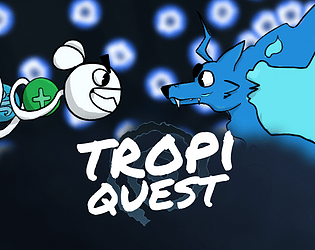
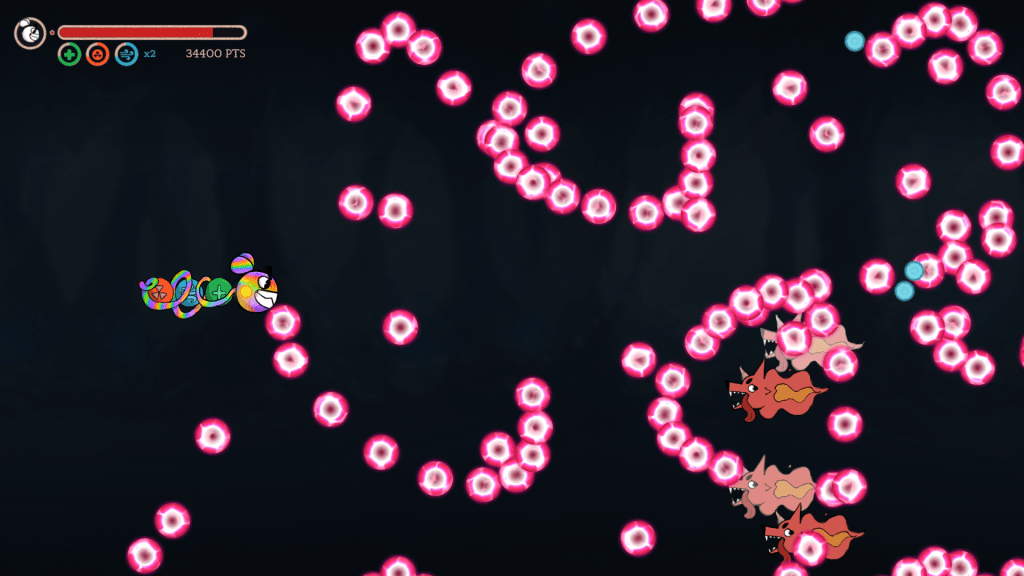
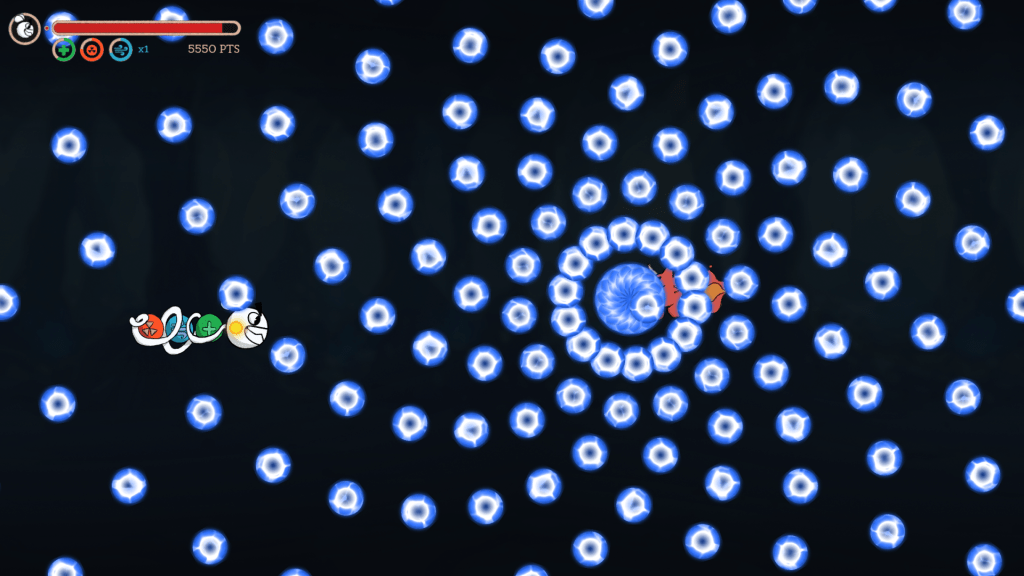
When checking out a modern danmaku title like Tropi Quest, you expect a certain rhythm – you dodge an absolute wall of neon patterns, and you hold down the fire button to blast away the things shooting at you. Yet, this particular submission for Jamlytics Jam #2 subverts that entire paradigm by presenting an experience where your attacks don’t actually destroy the enemies. Instead, the standard shooting layout acts purely as an energy-harvesting apparatus to fuel an intricate system of mechanical fusions: Fury, Poise, and Flow. It is an ambitious, highly experimental design choice that transforms a classic arcade genre into a strict test of resource management and time-fixed survival, wrapped up in a wonderfully polished aesthetic wrapper.
What to Know
Critic’s Lens
Tropi Quest subverts traditional danmaku expectations with an ambitious, resource-driven mechanical loop that trades offensive destruction for strategic survival. While its sharp visual asset coordination, sleek interface design, and highly energetic soundtrack earn strong praise, the experimental decision to make enemies completely indestructible introduces a distinct mechanical barrier that may polarize genre purists accustomed to standard arcade payoffs.
Player’s Heart
Players find Tropi Quest to be a beautifully crafted and highly engaging challenge, particularly noting that its fair collision hitboxes and “Touhou-Normal” baseline difficulty make it remarkably welcoming for newcomers to the danmaku genre. While the intense risk-versus-reward scoring model and catchy, funky audio tracks keep the adrenaline pumping, some players note a lack of sensory feedback due to quiet gameplay sound effects, alongside an ergonomic learning curve tied to its default keyboard control layout.
The Big Picture
Technical and Creative Polish
Right from the moment you boot the game up, the first thing you notice is the menu system. It is remarkably clean, sleek, and visually polished. The layout looks completely professional, like something straight out of a high-end arcade cabinet rather than a quick jam submission. It sets a great first impression before you even hit the start button. Now, let’s talk about the music. The soundtrack here is absolutely certified heat. It is catchy, funky, and packs a ton of high-energy momentum that matches the frantic pacing of a proper danmaku game perfectly.
But here is where we run into a major puzzle: the sound effects. Or rather, the complete lack of them. When you are firing your standard shots, shifting into your abilities, or even worse, taking direct damage, there is zero audio feedback. In a high-stakes danmaku game where you need to know exactly when you’ve been hit without staring at your health bar, having no sound effects drastically hurts the gameplay feedback loop. Furthermore, the main title screen has absolutely no background track playing, which makes the initial startup feel strangely silent.
The custom art assets look very nice on their own, but you can sort of tell that the user interface designer and the core game artist were separate people, as there is a slight visual mismatch between the two styles. Additionally, while the bullet patterns look good, the screen could really use some extra visual effects during active gameplay to really sell the chaotic intensity of the firefight.
The option menus are a bit text-heavy, forcing you to read through a wall of explanation when you just want to jump right into the action. More importantly, look at the HUD during gameplay. The health display and ability meters are just way too small. When a game demands that your eyes are glued strictly to the center of the screen to micro-dodge a massive wall of neon patterns, you can’t afford to glance away to decode a tiny health bar. Those vital gauges need to be significantly larger and easier to read in a split-second pinch.
Mechanics
Now, when you play a traditional shoot ’em up or a bullet hell, there is an established rule of thumb: you hold down the fire button, you blast the enemies, and they blow up. It is a fundamental mechanic that provides instant satisfaction. But Tropi Quest flips that entire concept on its head because the enemies are completely indestructible. Your standard shots don’t actually damage or destroy them at all. Instead, shooting functions strictly as an energy-harvesting mechanic to feed your meter. Because holding down the fire button is a constant necessity just to keep your meters filled, you have to wonder why there isn’t an automatic fire option to save your fingers from the constant strain. Furthermore, since you can’t thin out the enemy ranks, the stages are structured entirely around surviving fixed timers, which makes the gameplay feel less like an offensive shootout and more like a strict endurance test.
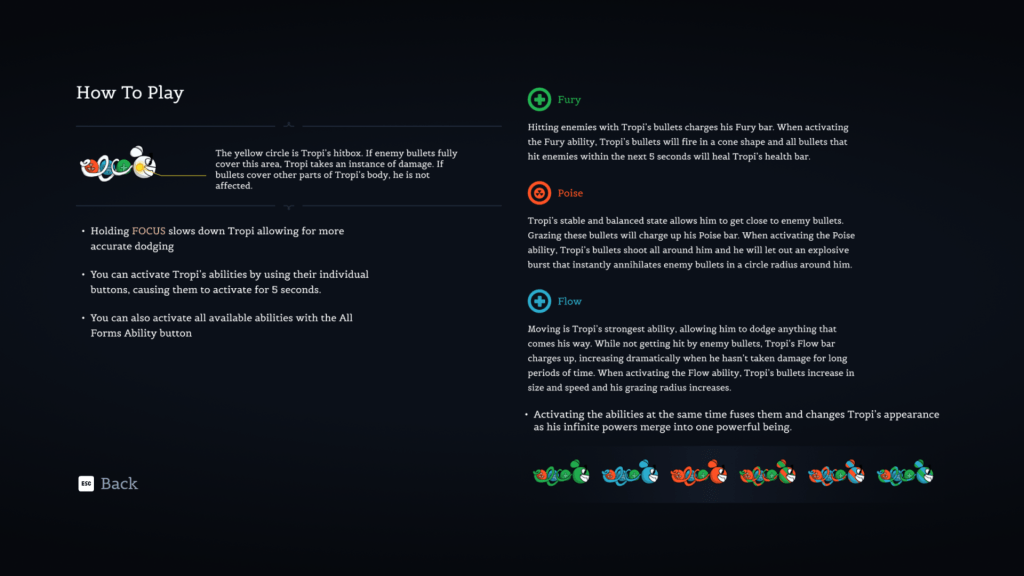
The core loop revolves around balancing and combining three distinct powers: Fury, Poise, and Flow. This is where the game’s strategic depth really shines. You are constantly making split-second, risk-versus-reward decisions, like intentionally positioning yourself dangerously close to bullet waves to aggressively farm energy and activate your abilities. A particularly neat touch is that Tropi’s visual textures actually change in real-time depending on which combination of powers you have active, which gives you excellent immediate feedback on your current state.
When it comes to moving your character around the screen, the game features zero acceleration. The moment you press a direction, you move instantly, and the moment you let go, you stop perfectly. While this level of extreme responsiveness is mathematically ideal for micro-dodging through incredibly tight, high-contrast danmaku grids, it can simultaneously make the character feel a bit rigid, weightless, and robotic. Adding an incredibly tiny amount of acceleration or physical weight could make the handling feel a bit more natural without sacrificing the precision needed to survive.
While the game deserves a lot of credit for including fully rebindable controls, the default keyboard layout presents a bit of a physical hurdle. The standard movement and focus keys are on one side of the board, but the keys assigned to trigger your abilities are mapped to U, I, O, and K. In the middle of an intense bullet hell scenario where you need to trigger a defensive power in a microsecond pinch, having your fingers stretched that far apart makes it incredibly difficult to react. Moving the default layout to a much tighter cluster like Q, W, E, and R would make the onboarding experience far more intuitive out of the box.
There is also a slight mechanical constraint when you try to navigate toward the right side of the play area. The game completely blocks your character from moving past a strict invisible boundary. In a genre where corner-dodging is a vital survival tactic, allowing the player character’s sprite or hitbox to slightly clip off-screen would make navigating the edges feel a lot less restrictive.
Sound Design and Music
When you first jump into the game, the music immediately grabs your attention. The soundtrack is absolutely certified heat. It features catchy, funky, and incredibly cool high-energy tracks that match the frantic pacing of a proper danmaku screen perfectly. For a bullet hell game, having music that pumps up your adrenaline is essential, and the composition here delivers exactly that.
However, once you start playing, you quickly notice a major technical puzzle: the sound effects. The game sorely lacks essential audio feedback. When you are firing your standard weapon, shifting your elemental forms, or most importantly, taking direct damage from a bullet, there is completely zero audio feedback. In an intense danmaku title, your eyes are hyper-focused on micro-dodging patterns in the center of the screen. You cannot afford to constantly glance away to check your health bar just to see if you got hit. Having clear audio cues for damage and mechanical actions is a necessity for the gameplay feedback loop, and its absence is highly noticeable.
Another minor layout choice is the main title screen, which currently features no background music or introductory track. When you boot up the game, it starts in absolute silence until you actually select a stage, which makes the initial presentation feel slightly incomplete. On a positive note, the options menu does include fully functional, independent audio configuration channels. This gives players full control to cleanly adjust or mute the volume levels for both the music and sound effect tracks separately depending on their setup.
Narrative Cohesion
When you look at how the story is set up, it integrates perfectly with the “Fusion” theme of Jamlytics Jam #2. The game’s lore explains that Tropi has escaped from the dungeons of Entropy and recovered his elemental powers of Fury, Poise, and Flow. This background directly justifies the core gameplay mechanic, giving you a clear narrative reason for why you are combining and fusing these distinct combat styles during a match.
Another detail that works really well is how the game handles Tropi’s sprite. As you switch between different power combinations, his visual textures change in real-time to reflect the active fusion. This is a great piece of visual storytelling because it makes the mechanics feel like an active part of the character’s narrative journey by reclaiming his true identity rather than just an abstract gameplay gimmick.
However, there is a slight narrative disconnect when you actually look at the core gameplay loop. The premise states that you are being pursued by the dangerous Inferno Syndicate, and you are given a fully functional shooting layout. Naturally, this sets the expectation that you are fighting back against your captors. But because the enemies are completely indestructible and stages operate strictly on a fixed survival timer, your attacks don’t actually push back the enemy forces. Instead of a counter-offensive, the gameplay functions purely as a defensive resource-gathering exercise to sustain your meters. It creates a bit of a puzzle where the aggressive narrative theme doesn’t quite match the strictly defensive reality of the mechanics.
On a positive note, the narrative structure builds to a satisfying payoff with the inclusion of the “lovely wolf boss” at the end. This encounter gives a clear face to the Inferno Syndicate forces tracking you down, providing a solid narrative climax and a proper mechanical test for everything you’ve practiced throughout the stage.
Engagement and Fun
For players who genuinely enjoy the danmaku genre, the game provides a highly engaging challenge. The bullet patterns are beautifully constructed with specific segments like the “green wave” standing out as highlights, and successfully navigating through them delivers a great sense of mechanical satisfaction. To keep the gameplay fair rather than punishing, the bullet collision hitboxes are remarkably generous. This places the overall difficulty right around a comfortable “Touhou-Normal” baseline, which gives beginners a fair shot at clearing the level after a few focused attempts.
Because the core loop relies on the Fury, Poise, and Flow fusion system, you are constantly making active, high-stakes decisions. The game actively rewards you for playing aggressively, allowing you to pull off strategic tricks like intentionally farming health and energy right behind a dense wave of bullets. However, this is where a slight disconnect in immediate “fun” can happen for certain players. In a standard shoot ’em up, a massive portion of the psychological satisfaction comes from physically destroying the enemy ships. Since the weapons here alter your power state but leave the enemy forces completely untouched, the strictly time-fixed survival structure can feel a bit less instantly rewarding than a traditional, proactive offense.
The presentation elements do an incredible amount of heavy lifting to keep your adrenaline pumping throughout the experience. The combination of an incredibly funky, high-energy soundtrack and a highly polished menu system keeps the overall momentum strong. That being said, minor details such as the text-heavy menu layouts that slow down your transition back into the action, or the small HUD displays that are difficult to track while focusing on tight dodging, can occasionally pull you out of that optimal gameplay “zone”.
Replayability
Like any traditional danmaku title, a massive portion of the replay value comes from pattern memorization and pure mechanical execution. When a dense wave of bullets defeats you, the immediate urge is to hit retry so you can apply what you just learned. Weaving through a complex pattern that previously gave you trouble provides a highly addictive sense of personal progression that naturally keeps you coming back for another run.
The Fury, Poise, and Flow fusion system offers a lot of potential for repeated playthroughs. Because activating different combinations of these three powers alters your tactical options and changes Tropi’s visual textures in real-time, players are actively incentivized to replay stages just to test out different mechanical synergies and see how they alter the rhythm of the battle.
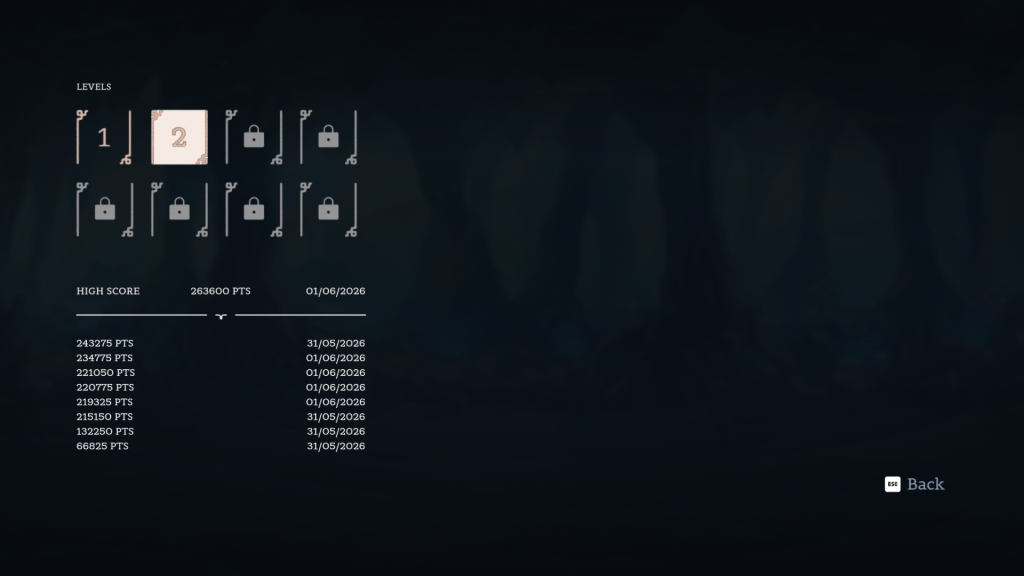
For dedicated shmup enthusiasts, the true endgame is always the leaderboard. The inclusion of a complex risk-versus-reward scoring system, which actively rewards aggressive play and tactical ability farming, gives optimization fans a concrete reason to replay levels over and over to perfect their routes. This is excellently supported by full save tracking, ensuring that your high scores persist even if you refresh your browser window.
While the core mechanics provide a solid foundation for replayability, the strictly time-fixed level structure and invincible enemy design can make repeated runs feel a bit uniform after you’ve figured out the timing. Introducing variable stage lengths, alternative difficulty modifiers (like a traditional “Lunatic” mode preset), or specific sub-objectives would massively expand the long-term replay value of the package.
Learning Curve
For players who are relatively new to the danmaku genre, the game features a surprisingly welcoming baseline difficulty. It sits comfortably around what veteran players would consider a “Touhou-Normal” level. This provides a very fair and rewarding learning curve, allowing beginners to successfully pass the levels after a handful of focused, dedicated attempts without feeling completely alienated or overwhelmed by the screen clutter.
The inclusion of a short, static, paged tutorial menu is an excellent design choice for establishing immediate player expectations. It cleanly breaks down the core rules and explains exactly what each mechanic does before throwing you directly into the fire. Having this reference point readily available helps mitigate the initial confusion that naturally comes with a highly experimental setup.
Despite the helpful tutorial layout, almost every player will experience a minor initial hurdle regarding the “Unbreakable Enemy” rule. Because centuries of shoot ’em up design have trained our brains to expect enemies to explode when we shoot them, it takes a moment to rewire your muscle memory. Once you realize that your weapon is strictly a tool to harvest energy and trigger your ability fusions, the learning curve stabilizes completely.
While the game deserves a lot of credit for features like fully rebindable controls, the default keyboard layout presents a bit of a steep physical execution barrier out of the box. Your movement and focus controls are clustered nicely, but the keys assigned to trigger your powers are mapped far away to U, I, O, and K. In a split-second bullet hell scenario where you need to pop a defensive ability instantly, having your fingers stretched that far across the board makes it very difficult to react under pressure. Shifting the default layout to a much tighter cluster like Q, W, E, and R would streamline the physical learning curve dramatically.
Another learning hurdle comes down to basic visual training. Because the game’s intricate bullet patterns force your eyes to remain completely hyper-focused on the absolute center of the screen to micro-dodge, tracking your vital status is a major challenge. The current health display and ability meters on the HUD are just too small to be cleanly read in a quick pinch. Making these user interface indicators larger would significantly lower the unnecessary cognitive load on players as they are trying to master the level layouts.
Feel of Play
When it comes to how the game handles movement, the model features zero acceleration. The absolute second you press a direction, Tropi moves, and the exact millisecond you let go, he stops perfectly. While this level of extreme responsiveness is mathematically ideal for micro-dodging through tightly clustered, high-contrast danmaku patterns, it simultaneously causes the character to feel a bit rigid, weightless, and robotic. Testing out an incredibly subtle acceleration and deceleration curve could give the character a nice sense of physical weight without sacrificing the precision required to survive the firefight.
Because the core loop relies on indestructible enemies, a major piece of traditional arcade feedback is missing. In a typical shmup, pressing the fire button delivers a highly satisfying sensory payoff when your shots tear through enemy ranks. Here, your weapons shift visually based on your power state, but they leave the enemy formations completely untouched. Decoupling shooting from destruction means your primary weapon feels visually active but physically hollow, acting purely as a utility meter-builder rather than a satisfying offensive tool.
On a purely presentation level, the game boasts a remarkably strong, high-energy presence. The combination of sleek menu layouts, a beautifully polished user interface, and an absolute standout, funky soundtrack builds an immediate sense of professional arcade excitement. Furthermore, the real-time visual texture shifts on Tropi when combining Fury, Poise, and Flow create an awesome tactical rhythm, making you feel genuinely powerful as you actively alter your mechanical state to match the unfolding chaos.
While the music is excellent, the overall gameplay feel is currently held back by a very quiet soundscape. The complete lack of audio feedback for firing your standard weapon, triggering ability fusions, and most importantly, taking direct damage pulls down the physical stakes of the battle. Incorporating these missing sound cues, alongside a bit of subtle screen-shake or extra hit-vfx, would dramatically amplify the game’s overall impact, grit, and satisfying game feel.
Final Verdict
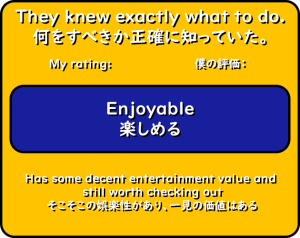
You have to look at the sheer amount of effort put into the presentation. The technical execution is incredibly sound, the user interface design is remarkably clean, and that funky soundtrack is absolutely certified heat. The “Touhou-Normal” baseline difficulty makes it a very fair challenge for beginners, and experimenting with the Fury, Poise, and Flow resource-farming mechanics gives shmup optimization fans a real reason to perfect their runs.
What keeps this game from climbing into the higher tiers comes down to that major mechanical paradox. Making the enemies completely indestructible strips away that core, traditional shoot ’em up satisfaction of blowing things up. When you pair that experimental choice with a very quiet gameplay soundscape that completely lacks vital audio cues for damage, and a default keyboard layout that stretches your fingers all over the board, it introduces a distinct barrier that keeps the experience from reaching its full potential.
Ultimately, it is an ambitious, highly polished jam submission that is a 7.5 out of 10 and absolutely worth checking out, even if its unique subversion of classic arcade rules might polarize genre purists.
If you’d like to try the game, I have the link here:
https://torchicxdd.itch.io/tropi-quest
Discover more from Drillimation Systems
Subscribe to get the latest posts sent to your email.


👍👍🔥🔥🔥🌍📖✍🏻💯
LikeLike
Great write up and analysis. Strange that there’s no audio, and the shooting part is definitely novel 😎
LikeLike
👍
LikeLiked by 3 people