
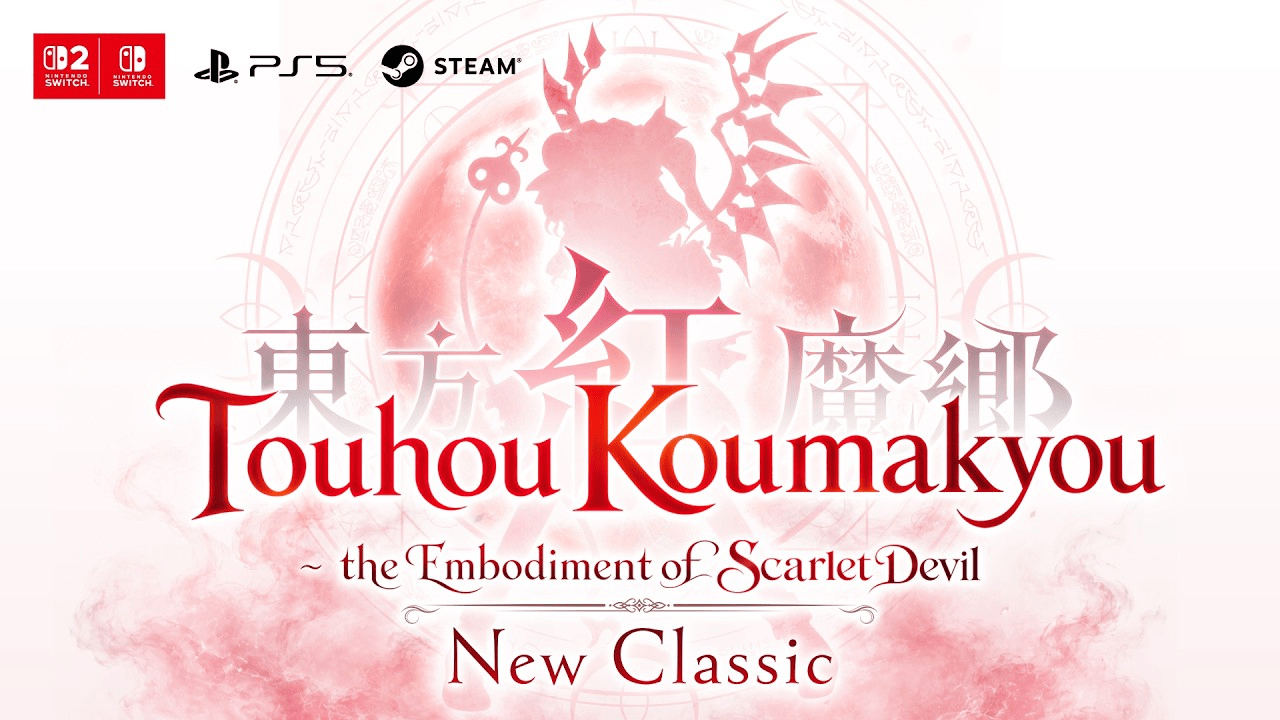
Remember the time I spent years planning a classic retro demake, grinding through SNES specs, custom sprite work, and audio channels, only for reality to come along and kick you square in the nuts? Yeah. That was me. I was ready to drag Touhou 6: The Embodiment of Scarlet Devil kicking and screaming onto the Super Nintendo, but then the June Nintendo Direct hit… and my whole plans got blasted into the sun.
Why? Because out of nowhere, we got an official remake of Touhou 6: The Embodiment of Scarlet Devil on PC and consoles. It came out this past Wednesday.
Normally, when you hear “remake of a classic Japanese indie game,” you brace for impact. You expect cheap mobile graphics, ruined controls, or some horrific cash-grab redesign that makes you want to shove a Game Boy cartridge down your throat. But this? This is actually the real deal. Not only is it a legit remake, but it’s the first time a mainline Touhou Project game has ever landed on home consoles.
The Backstory and Childhood
Before we look at this shiny new version, we have to travel back to 2002. Or even earlier, if you were a kid in Japan during the late ’90s playing obscure PC-98 titles. Back then, Touhou Project wasn’t something you bought at a store. No, you had to trek down to Comiket and hunt down a physical copy like it was some kind of ancient relic.
Back in the day, these games were practically impossible to get your hands on outside of Japan—it was the ultimate “Keep Circulating the Tapes” scenario. Unless you owned a clunky, obscure Japanese PC-98 computer and imported physical software straight out of Comiket, you were basically out of luck. But then, The Embodiment of Scarlet Devil dropped, completely changing the game. It was single-handedly forged by ZUN, a guy working at Taito who was so dedicated to the craft that he created an entire legacy for the hardcore danmaku crowd.
This entry was a massive milestone because it officially dragged the franchise onto Windows PCs. But as for home consoles? Forget about it. ZUN ran the whole operation solo and wouldn’t give up console rights to Taito or anyone else, keeping it locked to PC for nearly a quarter century. Which makes it even more insane that we’re finally staring at an official console port today.
But the actual impact this single game had on the entire indie scene, moe subculture, and video game music? It was off the dang charts. For millions of gamers worldwide, this wasn’t just an arcade shooter—it was their whole childhood. It was the first danmaku game to ever melt my brain back when I was a kid in the late 2000s and early 2010s. At the time, Touhou was spreading across the internet like wildfire thanks to heavy hitters like Touhou 7: Perfect Cherry Blossom and Touhou 10: Mountain of Faith, filling YouTube and forums with insane music remixes and relentless bullet patterns.
The Core Gameplay
When you actually sit down and play The Embodiment of Scarlet Devil, you quickly realize why this thing became an absolute legend. At its core, it’s pure, unfiltered danmaku action. You pick your character, choose your shot type, and immediately get plunged into a relentless storm of bright, glowing projectile fever.
What makes it so good is how simple yet punishing the mechanics are. There are no overly complex gauges or gimmick systems clogging up your screen. It’s just you, your movement precision, and a screen filled with thousands of colorful bullets designed specifically to ruin your day. The hitboxes are tight, the spell cards force you to learn boss patterns down to the millimeter, and every single dodge feels like pulling off a miraculous stunt. When you clear a stage without using a bomb, you don’t just feel good—you feel like a god.
Then you have the visuals. Look, by modern standards, the original 2002 graphics were rough around the edges—it had that charming, DIY indie look that only ZUN could pull off. But this remake completely overhauls the visuals without destroying the soul of the original. The character sprites look crisp, the background environments have real depth, and the bullet patterns look so clean and vibrant that dodging them feels silky smooth instead of a blurry headache.
And we cannot talk about Touhou 6 without talking about the soundtrack. And my god—ZUN didn’t just compose game tracks; he birthed legendary anthems that defined an entire era of internet culture. From the high-energy rush of “U.N. Owen Was Her!?” to the brilliant melody of “Septette for the Dead Princess,” every single stage and boss track is an absolute banger. Even after dying for the fiftieth time on a single boss, you can’t even stay mad because the synth trumpet solos and piano riffs are blasting so hard they make you want to jump right back in for another beating.
But as awesome as it is to hear these tracks again, I gotta throw a major flag on the field for the new arrangements. Why in the heck did they change the key signatures? Look, when you take an iconic, legendary piece of music and transpose the whole key, you completely butcher the mood! It strips away that exact punchy, dark, nostalgic energy that made the 2002 originals stick in your brain for over twenty years. If you’re remaking a classic, you polish the audio quality—you don’t go messing with the pitch and changing the entire spirit of the song! Give me the original synth trumpets or give me death!
The Difficulty
And then we hit the big one: the difficulty. Touhou isn’t just known for being tough—it’s known for slapping you across the face and asking for seconds, mostly thanks to those insane spell cards. By the time you reach Stage 4, even on Normal difficulty, the game decides to strip off the velvet gloves and throw you straight into a meat grinder.
Fighting Patchouli Knowledge is an absolute headache because her spell card attacks change completely depending on your character and shot type. You can’t even rely on muscle memory! And just when you think you’ve caught a breath, Sakuya Izayoi waddles in to make your life a living hell. Her daggers aren’t just projectiles—they’re literally bigger than your whole character sprite! If you don’t know how to micro-dodge through a wall of steel, you’re losing lives faster than a broken arcade machine eats quarters. Oh, and to make matters worse, she has a pocket watch that straight-up stops time like she’s Dio from JoJo’s Bizarre Adventure. Time-stopping knives! How the heck are you supposed to dodge that!? And don’t even get me started on Remilia Scarlet on Lunatic mode. Good luck with that—you’re gonna need a miracle, a prayer, and a brand-new controller!
The Characters
Stepping away from the controller-snapping rage for a second, we have to talk about the characters, because this is where Touhou gets truly wild. ZUN didn’t just make a danmaku shooter; he’s a master of moe design who accidentally built an entire cultural empire around a wacky all-female cast in shrine maiden outfits and witch hats.
Where did this even come from!? Back in the late ’80s, ZUN took inspiration from the 1986 arcade classic KiKi KaiKai—you know, Pocky & Rocky—for his main shrine maiden vibe. Throw in some classic manga influences from Izumi Takemoto for the PC-98 games, maybe a dash of Takarazuka theater, and maybe even a clever strategy to make scrolling shooters appeal to female gamers, and boom: a massive cast of iconic female characters taking over an arcade genre traditionally dominated by space fighters and drab military tanks.
Right at the center, you’ve got your core duo: Reimu Hakurei and Marisa Kirisame. In the old PC-98 games, they were just kids, but by the time The Embodiment of Scarlet Devil rolled around, they actually grew up right alongside the player base. Reimu is your permanently annoyed, lazy shrine maiden who just wants peace and quiet—she’s great for newcomers since her homing shot is a lifesaver if you suck at aiming. Then you’ve got Marisa, the fan-favorite, theft-prone witch whose entire strategy boils down to “blast everything into dust with a giant Master Spark laser.” It’s the ultimate odd-couple dynamic!
And then you have the ridiculous lineup of bosses. First stage you fight Rumia, a flesh-eating youkai controlling darkness who thinks she’s terrifying. Then comes Cirno, an ice fairy who thinks she’s an absolute genius and the strongest creature in existence, but is actually a complete idiot. Guarding the gates is Hong Meiling, your classic martial-arts gatekeeper trying her best. Inside the library, you meet Patchouli Knowledge, a bookworm dealing with severe asthma while throwing elemental magic at you. Then there’s Sakuya Izayoi, the head maid who manipulates time itself. And finally, Remilia Scarlet herself—the vampire mistress of the Scarlet Devil Mansion who unleashed the scarlet mist to block out the sun just so she could go outside during the day!
Oh, and if you somehow survive the main game and tackle the Extra Stage in the mansion’s basement, you get to meet Remilia’s younger sister, Flandre. With her eerie rainbow-crystal wings, childlike instability, and ability to destroy anything instantly, ZUN didn’t just make a bonus boss—he created one of the most iconic, terrifying, and legendary villains in video game history! Not to mention, her silhouette is featured on the cover, and that’s just another example of “covers always spoil.”
The Legacy
When you step back and look at the big picture, The Embodiment of Scarlet Devil isn’t just a classic bullet hell shooter—it’s the cornerstone of an entire internet revolution. Before this game came out, indie devs in Japan were practically yelling into a vacuum. But ZUN single-handedly proved that one guy, armed with an obsession for danmaku, a MIDI keyboard, and a whole lot of beer, could build a global media juggernaut completely on his own terms.
Without Touhou 6, the landscape of indie gaming and internet culture would look completely different today. It paved the way for massive doujin music groups, endless fan games, anime conventions, and memes that dominated early YouTube and Nico Nico Douga. Heck, games like Undertale wouldn’t even exist in the same way without ZUN’s influence—Toby Fox himself has cited Touhou as a massive inspiration for his music and combat systems!
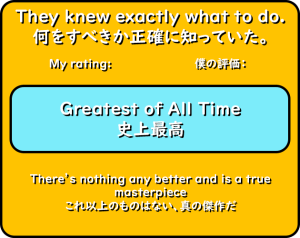
So, what’s the final verdict? Whether you’re diving into this shiny new remake on modern consoles or dusting off the original 2002 PC release, Touhou 6 remains an absolute masterpiece. Sure, the key signature changes in the remake’s music might make me want to tear my hair out, and Sakuya’s time-stopping daggers will make you want to throw your controller through a drywall, but you can’t deny its place in history. It’s challenging, it’s iconic, and it’s pure retro perfection.
If you call yourself a fan of shoot ’em ups, gaming history, or just plain punishing gameplay, you owe it to yourself to play this. What a legendary game. A perfect 10 out of 10 it is, and inarguably one of the greatest and most influential games ever made.
Discover more from Drillimation Systems
Subscribe to get the latest posts sent to your email.
 Drillimation Systems
What a fun and wonderfully honest look at the journey behind your Touhou SNES demake project! 🎮😄
I can imagine the mixed emotions—after spending years wrestling with SNES specifications, sprites, sound channels, and all the technical challenges, seeing an official remake suddenly appear must have felt like the universe had decided to rewrite your project overnight! 😂
LikeLike