
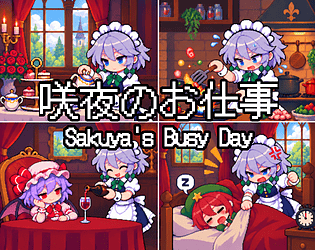
NOTE: This game is currently in alpha testings and is not the finished product. Any updates to the game that make changes to its content may make this review unreliable in the future.
I have something to document. Yes, it’s true. I haven’t reviewed anything in a while, and after I put out my Summer 2026 dev log, I needed to pivot and look for something that may have been squirted using generative AI. To the amateur developers who actually create assets, I sympathize with you. But to those who use AI to generate them, I don’t. People who use generative AI to create content shall be called “AI sloppers”. I don’t want to ramble like a madman in a poorly ventilated studio while the world around me burns. Let me condense this into a simple explanation.
AI sloppers are lazy prompt-gorgers typing three words into a box and unleashing a tidal wave of synthetic, soulless grey sludge onto the digital commons—I have none; by trading human ingenuity for a recursive, self-licking ice cream cone of automated mediocrity, these zero-effort conquistadors are accelerating the cultural endangerment of the internet, drowning out genuine indie work beneath an avalanche of asset-flip garbage, and conditioning audiences to passively consume a never-ending buffet of flavorless mush until the entire creative pipeline collapses under the weight of its own hollow convenience.
Sakuya’s Busy Day is one such game I am reviewing. I’m about ready to deduct a point from the starting score of 10 because while most of the in-game content was created by hand, the artwork was generated using ChatGPT. Looking into the credits, all of the background tracks used in-game are taken from existing arrangements with the Niconico links posted. All of the sound effects come from On-Jin and SoundEffectLab.
What to Know
Critics’ Consensus
While Sakuya’s Busy Day offers a functional, fast-paced time-management twist on the Touhou formula, its reliance on ChatGPT-generated artwork and a recycled soundtrack drags down an otherwise brisk experience, leaving behind an uninspired, hollow exercise in multitasking.
Audience Says
Users say Sakuya’s Busy Day is a fun, chaotic distraction for a quick coffee break, though many note that the Japanese-only text and the glaring lack of human touch in the visuals make it feel more like an asset-flip novelty than a fully realized indie passion project.
The Big Picture
You assume the role of Sakuya who must rely on multitasking across the Scarlet Devil Mansion. Your goal is to complete each chore’s associated minigame before the timer runs out, or your game will otherwise end. As the difficulty scales up, more jobs will pile on top of Sakuya. The minigames range from brewing tea, cooking, cleaning the windows, serving wine, drafting documents, stopping book thieves, engaging in danmaku duels, and library research. When you’ve got so many jobs to juggle at once, you can use Sakuya’s time-stopping abilities to extend the amount of time, though you can only use it multiple times per shift.
Each game is two minutes long. The game offers four levels of difficulty, from an easy, relaxed shift to a full house of simultaneous jobs. There is also a practice mode that can let you try out and improve your skills on any minigame if you can’t seem to get the gist. Let me break down each of the minigames.
- Tea Brewing: Push the Spacebar when the cursor is over the yellow area.
- Cooking: Push the arrow keys in the specified order.
- Window Cleaning: Click the splatters on the window.
- Waking the Gatekeeper: Hong Meiling has fallen asleep, and you have to repeatedly press the Spacebar to wake her up.
- Pouring Wine: Same as Tea Brewing. There is a bit of a wait time before you can start the minigame. Your goal is to hold down the Spacebar until the cursor is over the yellow area and then release.
- Writing Documents: This is your standard typer minigame. You have to type the English words themed after what you would see in the Scarlet Devil Mansion. Type three of them correctly to pass.
- Catching the Book Thief: Marisa is at it again. Your goal is to wait for Marisa to show up, and when she does, a single click is all it takes to catch her.
- Danmaku Duel: The game puts you into five rows with only vertical movement. Your goal is to guide Sakuya’s knife through Reimu’s yin-yang orbs so it hits her. If you hit an orb, you have to start at the beginning. Basically, it takes Sakuya’s boss fight from Touhou 6: The Embodiment of Scarlet Devil and plays it in reverse, with you as the boss instead.
- Afternoon Tea Prep: This is a hard one. First, you have to set the dial to bake the cake (with the left and right arrows), then decorate it with the mouse, serve it to Queen Flandre with the arrow keys (you have to wait first) and Space, and fill up her wine in a similar fashion to Pouring Wine, with the cursor being narrower (you have to press Space to fill it, and again once it reaches the cursor), and finally place the plate and glass onto the serving tray.
- Library Research: Koakuma gives you a series of runes, and you have to click on the right one once it fades to proceed.
Sounds simple in theory, right? Wait until you get to the actual gameplay. Starting a minigame requires you to use the arrow keys to select the one you want to tackle, and press Enter. You have to push Enter again once you’re done to go back and tackle another one. I would say this is basically WarioWare, but you’re playing multiple microgames at once.
Pros
- Practice Mode to improve your skills on certain minigames.
- Basic quality-of-life features such as music and sound effects volume sliders. You can also adjust those options in the pause menu.
- Despite the repetitive nature of the minigames and the AI-generated content, the game is at least functional; there are no glitches or game-breaking bugs.
- The short two-minute timeframe for a single game makes it great for short breaks, though the chaotic nature might not appeal to casual gamers.
Cons
- The images were generated with ChatGPT, showing a lack of human soul. The description limits it to the graphical aspects, but the tags promise AI-generated code and text.
- All of the BGM tracks use existing arrangements of themes rather than being arranged by the developer. There are only two songs in the game’s soundtrack, including “Flowering Night” and “Septette for the Dead Princess”, complete with two arrangements each.
- The game is only available in Japanese, so if you don’t speak the language, you won’t be able to understand the story or in-game dialogue. There is some English-language documentation, but I think it also appears to have been generated with AI (or thrown into Google Translate).
- There is no controller support, meaning you’re stuck to the keyboard and mouse.
- The minigames don’t cycle once you’re done with one, leading to you playing the same minigames over and over during the course of a two-minute game.
Final Verdict
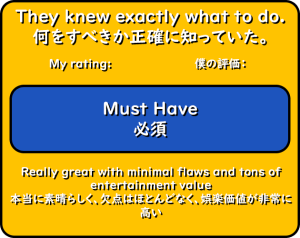
As I hope to explore the realm of pointing out AI-slopped content, I thought this title was going to be bad from a gameplay perspective, but being a functional game great for coffee breaks gives it a 7.5 out of 10.
On the topic of the developer being an AI slopper for the artwork, what were they thinking? Aside from the AI-translated text and lack of controller support, it does feel like eating a frozen TV dinner cooked in a microwave while wearing oven mitts. At least it actually works as a mindless little time-waster, but next time they make a game, they should pick up a pencil and draw Sakuya themselves. The game doesn’t give you the chronic, agonizing pain of playing Dr. Jekyll and Mr. Hyde or looking at another prompt-gorged asset flip.
If you’d like to try the game yourself, I have the link here:
https://rightarrow.itch.io/sakuyas-busy-day
Discover more from Drillimation Systems
Subscribe to get the latest posts sent to your email.

