
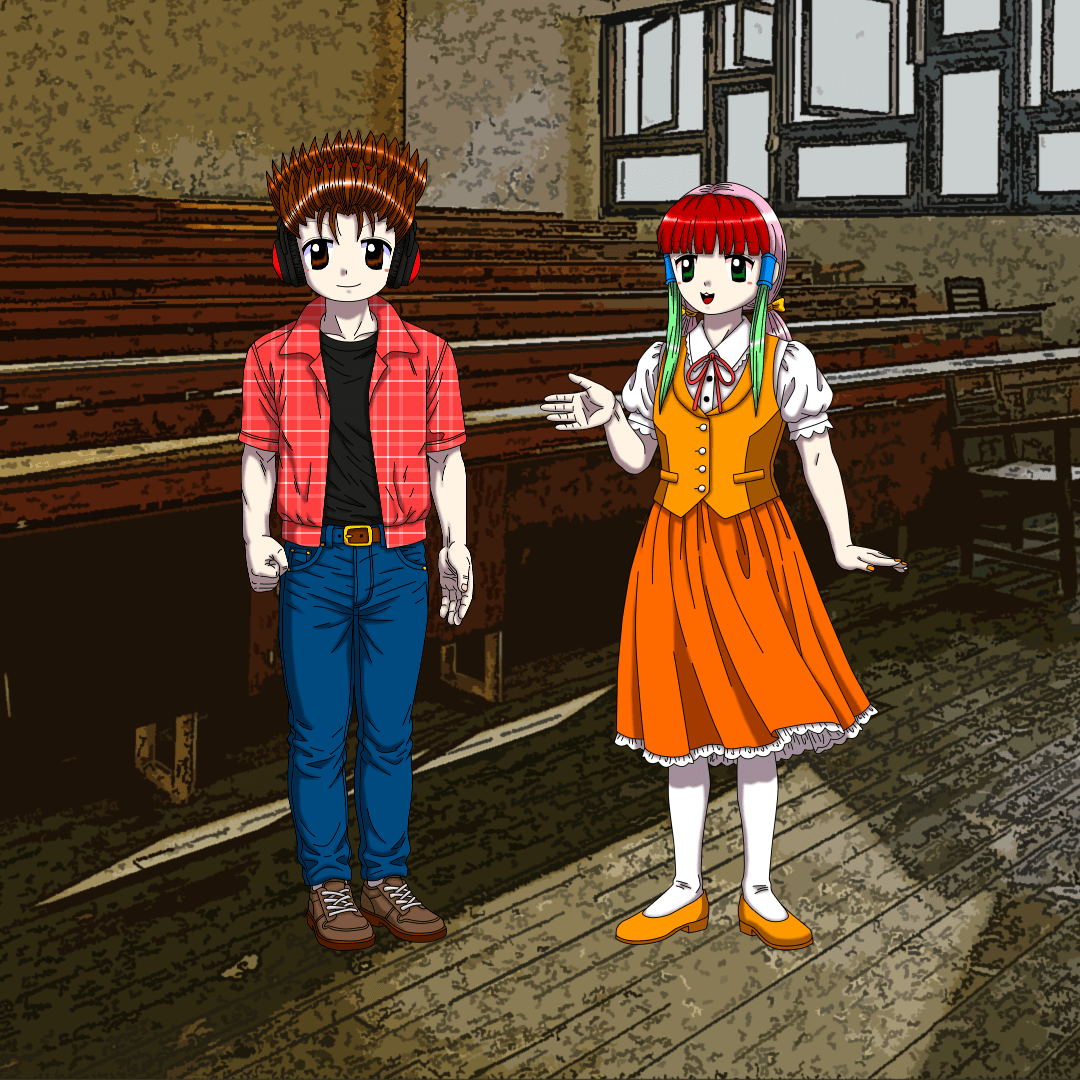
As August fades into September, the long summer days officially give way to a new season and the familiar return of the school year. Transitioning out of break means trading late-night routines for morning alarms, but heading back to campus brings plenty of excitement as well. It’s a great feeling to see your friends every single day, catch up in person, and dive into learning new things together.
Of course, the back-to-school transition comes with its fair share of challenges too. The excitement of reuniting with classmates is quickly balanced out by the daily grind of homework assignments, endless readings, and preparing for upcoming exams. Balancing your routine around study schedules and late-night prep sessions can certainly be tough after a relaxing summer, making the shift back into academic life feel like a bit of a double-edged sword.
Over the past month, things have also been moving at a fast pace here at Drillimation Systems. Beyond detailing major game releases and open beta progress, we have highlighted new milestones across social channels, revealed the annual profile icon update, and published various feature posts—ranging from convention security updates and event announcements to deep dives into game lore and development insights.
Key Developments
New Game in Development: Blockstar
Following the release of Shining Shattering Sky ~ Reverie of Breaking Unreality and the open beta rollout for Touhou Meishuugeki ~ Cursed Sweeper and Bewildering Parallel, work has officially begun on our next project, currently codenamed Blockstar. Announced a couple of weeks back in a post titled Pushing the Envelope: Prototyping Blockstar, the project represents a fresh direction for the studio as development transitions into early prototyping.
Stepping away from danmaku for a moment, Blockstar serves as a deliberate love letter to the golden age of PC casual gaming. Channeling the addictive, desktop-dwelling magic of late-1990s and 2000s shareware classics like Bejeweled, Zoo Keeper, and Chuzzle, the game reimagines the timeless match-three formula with modern flair, crisp mechanics, and high-energy chain reactions. Core focus areas during this initial design phase include:
- Engine & Tile Mechanics: Crafting a snappy, responsive grid engine to ensure fluid tile swaps, satisfying cascade dynamics, and precision combo multipliers.
- Casual Mode Architecture: Designing balanced gameplay loops that cater both to chill, endless puzzle sessions and timed arcade-style high-score runs.
- Visual & Audio Nostalgia: Prototyping colorful sprite art, expressive visual effects, and tactile sound design reminiscent of iconic PC puzzlers.
While Blockstar remains in its early prototyping stages, initial progress updates and concept breakdowns will continue to be shared across our official blog posts and social channels throughout the upcoming autumn season.
Leaping Into the Third Dimension
Yesterday, we put out a reel taking you behind the scenes of our artistic workflow. We break down the process of creating a custom 3D character model in an attempt to bring ZUN’s art direction into the third dimension, offering a detailed look at how these assets are structured and styled.
Alongside the showcase, we revealed that future project artwork may gradually shift away from relying on the default 3D pose models in Clip Studio Paint. By transitioning to fully custom 3D character models tailored to their distinct visual identity, we aim to achieve greater flexibility, distinct character proportions, and a more consistent aesthetic across upcoming promotional art and in-game illustrations.
GameMaker has long been known as a 2D-first engine, but recent engine updates and roadmap features—such as native glTF 3D model importing, scene graphs, and expanded 3D math helper functions—are opening up exciting possibilities for hybrid and fully 3D workflows.
The shift toward 3D in GameMaker isn’t about abandoning its 2D roots, but rather expanding how two-dimensional and three-dimensional elements interact. Games can leverage these capabilities in several key ways:
- Native Model Importing: Developers can import rigged and textured glTF models directly from tools like Blender or Clip Studio Paint, eliminating the need for complex custom vertex loaders.
- Scene Graphs & Perspective Cameras: GameMaker’s spatial scene graph simplifies dynamic lighting, depth layering, and camera projection. Combining custom 3D character models with perspective cameras allows games to blend traditional isometric/2D sprites with true 3D environments and animated backgrounds.
- Hybrid Workflows: Custom 3D character models (such as ZUN-style characters) can either be rendered in real-time or used to generate crisp, consistent sprite sheets for fast-paced action.
While GameMaker’s native 3D toolkit continues to grow, more ambitious 3D projects still rely heavily on specialized dependencies to bridge technical gaps:
- Community 3D Engines & Libraries: Third-party community libraries (such as BBMOD, Xor’s 3D Tools, or Fauxton 3D) extend GameMaker’s native renderer with advanced features like complex skeletal animation, global illumination, and custom shadow mapping without requiring low-level graphics code from scratch.
- External Asset & Shader Pipelines: Projects rely on clean asset handoffs from Blender, Clip Studio Paint, or Blockbench, using custom HLSL/GLSL shaders and material assets as essential external dependencies to achieve specific visual styles like cel-shaded anime or retro software rendering.
- Math & Engine Extensions: Handling 3D collision detection, camera matrices, and spatial particle systems depends on dedicated scripts and open-source math libraries (such as quaternion helpers and 3D raycasting) to keep performance tight and scalable.
By pairing GameMaker’s expanding native 3D capabilities with modular community dependencies, developers can transition into 3D design while preserving the engine’s rapid, flexible workflow.
Polishing Touhou Meishuugeki ~ Cursed Sweeper and Bewildering Parallel
With the official Steam launch fast approaching, we are entering the final stretch of polishing and fine-tuning every aspect of Touhou Meishuugeki ~ Cursed Sweeper and Bewildering Parallel.
Recent work focused on rolling out the Beta Version 1.0.1 update. Prepping this build allowed us to catch and address subtle bugs, refine overall stability, and deliver key quality-of-life adjustments based on ongoing beta feedback. The previous version was nearly unbeatable because of these issues.
Additionally, production on the game’s official trailer is complete! You can expect to see full video showcases debuting across our media channels very soon, while the official Steam store page is scheduled to go live later this week.
Statistics
The website’s subscriber count over the past month increased by 23 for a total of 2,613 today.
The follower count over the past month increased by 99 for a total of 8,100 today.
Bluesky
Instagram/Threads
We have continued our success with reels and received way more views than last month. Looks like we have definitely returned to our golden age on Instagram. More views means more followers. Over the past month, we received nearly 60,000 views – more than half of them were from an origins video that wasn’t even related to Touhou Project or the Drillimation Danmaku Universe.
YouTube
Similar to what we’ve achieved on Instagram, we also had similar success through Shorts.
Over the past month, content was viewed over 54,000 times and the subscriber count increased by 54.
Future Goals
The two biggest goals for September are to continuously focus on getting Cursed Sweeper and Bewildering Parallel out on Steam, but we will also continue work on Blockstar. The prototype and Classic Mode are nearly complete, and once they are done, you may even get the chance to try it out. Blockstar will begin its life as a browser game like many of those classic shareware casual games from the 2000s, and a downloadable version will be offered to those who may have difficulty playing it on the web. Of course, a deluxe edition with a single-player campaign mode will also be included.
Discover more from Drillimation Systems
Subscribe to get the latest posts sent to your email.


❤️❤️❤️
LikeLike
The plot twist: your best month on Instagram was carried by a video that isn’t even about your actual universe. The algorithm has jokes
LikeLiked by 1 person