
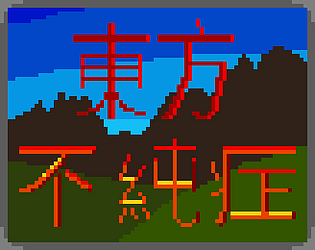
NOTE: This game is currently in alpha testing and is not the finished product. Any updates that add changes to the game’s content may make this review unreliable in the future.
I haven’t reviewed a game in a while. This was primarily because there wasn’t much to play at the moment after spending most of July reviewing titles from the Touhou Pride Game Jam. That brings us to Touhou ID. On paper, combining the real-time danmaku experience with the indirect control and dungeon-management principles of Dungeon Keeper and War for the Overworld sounds like an intriguing premise. Rather than firing direct shots, players construct bullet patterns using customizable spells, traps, potions, and rituals to establish defensive coverage.
In practice, however, the execution in this current alpha build presents notable friction. Placing strategic elements on the fly while navigating a dense, bullet-heavy environment creates an operational clash between planning and real-time dodging. This design dynamic makes the core loop feel less like a fluid tactical system and more like two opposing mechanics competing for player attention.
To understand why this friction occurs, one must look at how traditional arcade shooters construct their primary loop. In standard danmaku titles, moment-to-moment gameplay relies on direct, immediate feedback: players maneuver through tight projectile corridors while maintaining continuous offensive pressure. Touhou ID deliberately interrupts that rhythm by introducing spatial planning mechanics that demand a player’s full attention away from real-time maneuvering. By transferring player agency from rapid twitch reflexes to menu navigation and tile placement amidst a frantic screen, the experience frequently shifts from a flow-state action title into a demanding micro-management puzzle.
What to Know
Critic’s Lens
While Touhou ID cleverly attempts to hybridize the danmaku density of Touhou with the tactical, indirect control of Dungeon Keeper, its current alpha build suffers from mechanical friction as real-time dodging actively competes with placeable spell management.
Player’s Heart
Fans of the genre appreciate the creative premise and unique trap-building approach to bullet patterns, though many note that managing strategic cooldowns amidst a frantic swarm of enemy fire creates a steep and somewhat unpolished learning curve.
The Big Picture
Technical and Creative Polish
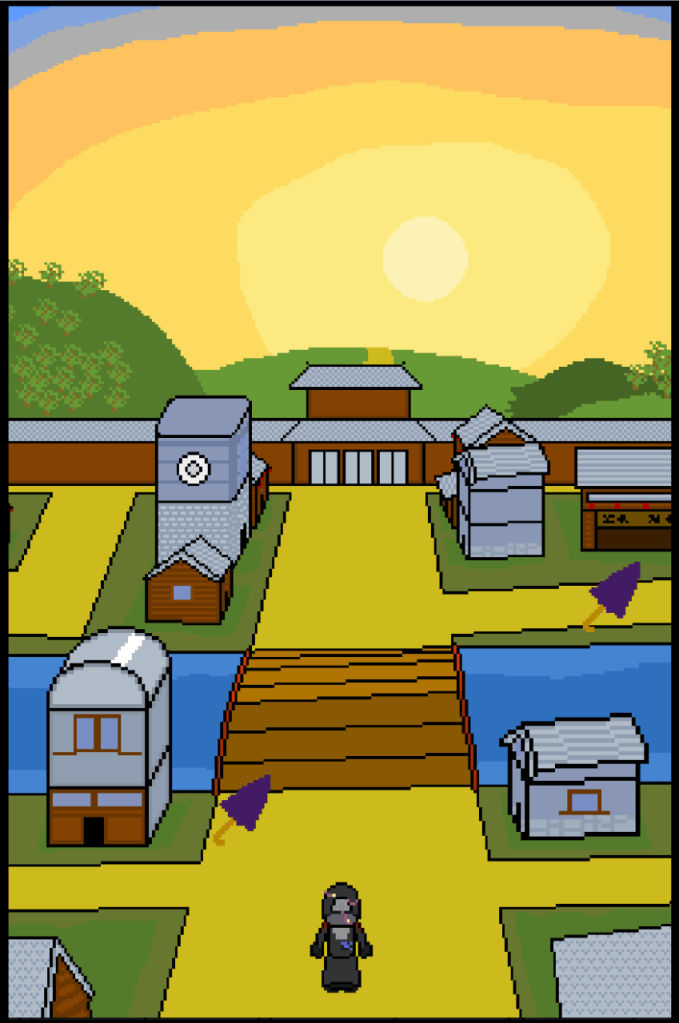
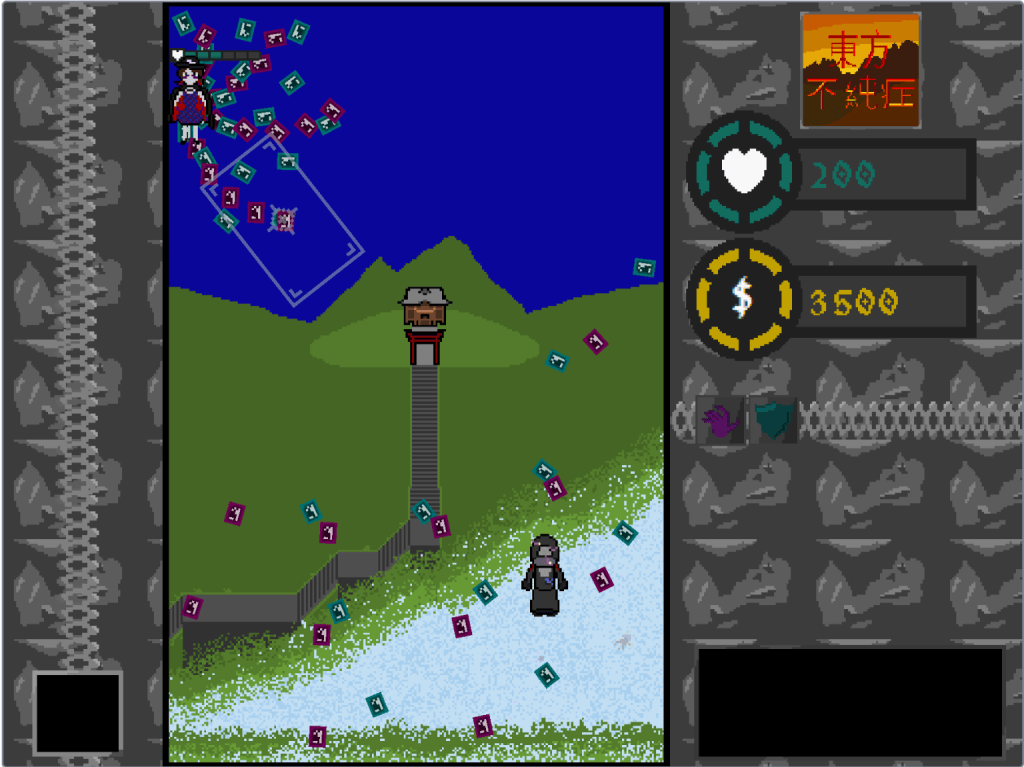
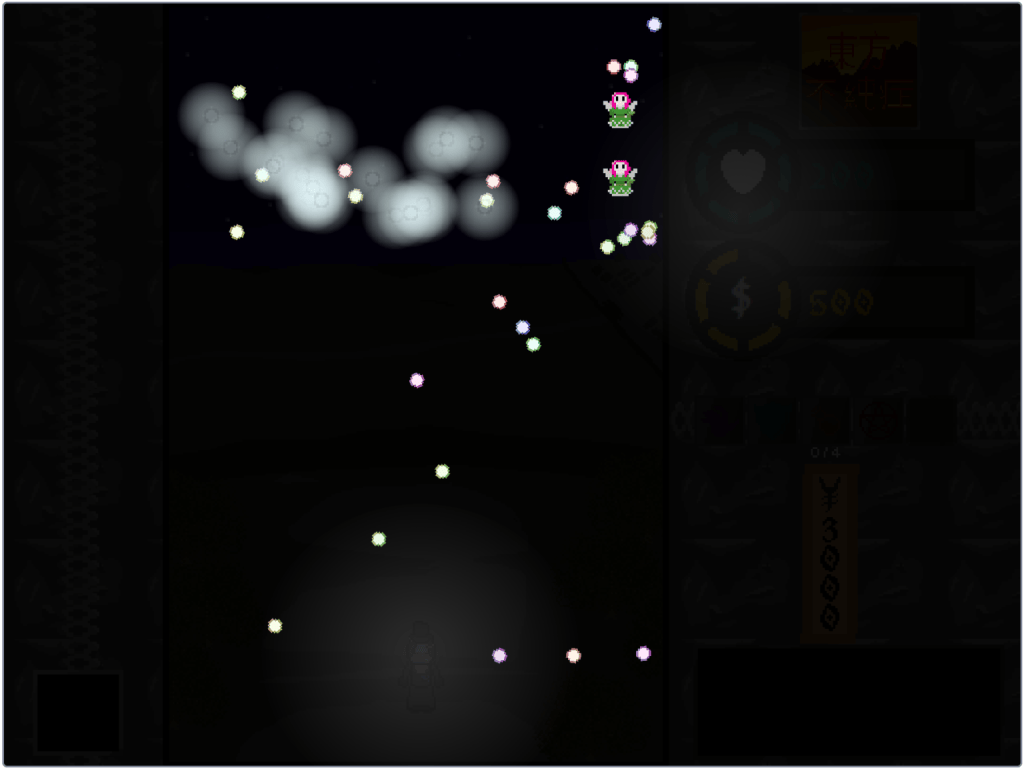
Looking at Touhou ID from a technical standpoint, you can immediately tell it was built inside Scratch 3, and that brings a lot of specific quirks along for the ride. The engine handles the fundamental danmaku patterns and player inputs, but the visual presentation is bare-bones, relying heavily on basic sprite work and UI layouts that feel like a prototype rather than a finished product. Frame pacing can get hit-or-miss when the screen gets filled with custom player-generated bullet patterns, traps, and enemy hazards all at once.
On the creative side, the game tries to blend two completely different genres together by taking dungeon-management mechanics and fitting them into a danmaku framework. The lack of visual flair, audio punch, and overall polish makes the experience feel like you are wrestling with the engine’s limits as much as you are dodging enemy fire. The underlying ideas show ambition, but the execution needs significant refinement to make those systems feel truly cohesive.
Ultimately, the technical constraints of the engine heavily dictate what the game can pull off on screen. While the concept of setting up traps and customized spell patterns instead of standard direct fire is creative, the technical presentation holds back its potential. It leaves the final product feeling like an interesting proof-of-concept rather than a fully realized title.
Mechanics
When you break down the actual mechanics of Touhou ID, you start seeing where the design decisions directly collide with how a danmaku game is supposed to play. Standard titles rely on immediate, high-precision movement where you focus purely on dodging micro-patterns while laying down continuous stream fire. Here, instead of direct weapons, your offensive capabilities are completely tied to selecting and deploying placeable spells, traps, potions, and rituals. Having to divert your eyes and hand coordination to manage tile placement and cooldown timers in the middle of a screen covered in bullet patterns breaks the natural rhythm of the gameplay.
The control scheme puts you in a weird spot where you are trying to handle real-time twitch-reflex dodging while simultaneously managing long-term spatial positioning. In games like Dungeon Keeper or War for the Overworld, indirect control works because you have the time and perspective to map out your defensive space. Translating that to a danmaku setup means that while you are trying to build out a custom wave of projectable hazards, you are constantly forced to interrupt your setup just to stay alive.
Ultimately, the core gameplay loop ends up locked in a tug-of-war with itself. The trap and spell mechanics require deliberate strategy and planning, but the constant pressure of enemy bullet waves punishes you for taking the time to execute that strategy. It leaves the underlying mechanics feeling like two entirely different games forced into a single layout, where neither system is allowed to fully shine.
Sound Design and Music
The audio presentation remains starkly minimal, echoing the project’s early alpha state. The audio relies heavily on stock sound effects and standard retro-style blips for bullet spawns, spell activations, and impact cues. While these audio indicators serve their basic functional purpose of alerting you to active mechanics on screen, they lack the weight, punch, and crispness needed to make deploying powerful spells or landing hits feel satisfying.
On the music side, the Touhou franchise is traditionally known for its iconic, high-energy compositions, but the implementation here is noticeably understated. Rather than driving the fast-paced, hectic energy of a danmaku setup, the tracks serve more as background atmosphere that loops quietly while you play. The audio mix feels flat, with sound effects often overpowering the background music rather than blending with it into a cohesive soundtrack.
Ultimately, the soundscape reflects the overarching technical limitations of being built within Scratch 3. While functional enough to provide basic visual-audio feedback during gameplay, the sound design lacks the dynamic flair and memorable musical identity that fans of both the Touhou series and arcade shooters typically expect.
Narrative Cohesion
The game operates under the traditional framing common to many fanmade Touhou Project creations. Rather than delivering a heavily cinematic or dialogue-driven story, the narrative exists primarily as a thematic backdrop to contextualize why you are setting up traps and firing custom bullet patterns across various spell cards and stages.
The primary challenge to narrative cohesion stems from the genre mashup itself. Blending the lore-heavy, shrine-maiden aesthetic of Touhou with the dungeon-management themes inspired by Dungeon Keeper and War for the Overworld requires a delicate balance. In this alpha build, that crossover relies mostly on abstract mechanical concepts rather than integrated story beats. While fans of Gensokyo will recognize familiar character tropes and danmaku conventions, the game does not offer much narrative justification for why these specific trap-building mechanics are taking place within the setting.
Ultimately, narrative cohesion takes a back seat to the underlying experimental gameplay loop. The story elements serve as a simple container to move you from one level or skirmish challenge to the next, leaving the plot feeling minimal and secondary to the technical and mechanical systems on display.
Engagement and Fun
Touhou ID presents an unusual dynamic where enjoyment largely depends on how much you appreciate experimental systems-building over fluid moment-to-moment action. The core satisfaction stems from the creative trial-and-error process—experimenting with different combinations of spells, traps, potions, and rituals to see how effectively your custom bullet patterns handle incoming threats. Setting up an effective combination that successfully clears waves without requiring direct offensive fire offers a genuinely rewarding tactical payoff.
However, the fun factor is frequently dampened by the operational friction of the controls. Because the game requires you to navigate dense, high-density danmaku bullet patterns while simultaneously managing menu navigation, cooldown timers, and tile placements, the moment-to-moment gameplay often feels more stressful than engaging. Instead of entering a flow state typical of traditional arcade shooters or dungeon-management titles, players are constantly forced to pause their tactical planning just to pull off survival-focused dodging maneuvers.
Ultimately, Touhou ID is most engaging when viewed as a novel mechanical sandbox rather than a polished pick-up-and-play shooter. Players who enjoy theorycrafting and unconventional genre mashes will find plenty of intriguing ideas to chew on across the available levels and skirmish modes. For those expecting the seamless, high-speed gratification of a standard danmaku title, the persistent mechanical clash between real-time dodging and strategic setup can make the overall experience feel more like work than play.
Replayability
Replayability in Touhou ID is driven primarily by its sandbox structure and the variety of level options included in the alpha build. The game provides three distinct campaign levels that progressively unlock more aspects, alongside a skirmish level designed to test your spell setups against an opponent using similar abilities. Additionally, a dedicated Lunar level and three optional challenge modes offer extra goals for players looking to test their tactical mastery.
The primary draw for replay value lies in experimentation with aspect combinations. Because you construct bullet coverage through a choice of spells, traps, potions, and rituals rather than relying on standard weapons, each run offers room to test alternative defensive layouts and spatial strategies. Discovering how different aspect synergies handle incoming waves provides a solid incentive to revisit stages and refine your builds.
However, the overall replayability is ultimately bounded by the build’s current scope and underlying technical constraints. While the optional challenges and skirmish mode add distinct parameters to tackle, the persistent mechanical friction between menu navigation and real-time dodging can make extended playthroughs fatigue-inducing. The content offers strong initial motivation for theorycrafting, but long-term engagement will depend heavily on future updates expanding the pool of available aspects and stages.
Learning Curve
The learning curve in Touhou ID is steep, driven less by execution complexity and more by how drastically it challenges traditional arcade shooter habits. Standard danmaku games reward rapid reflex movements and intuitive screen-reading, allowing players to build muscle memory quickly around dodging patterns while maintaining steady fire. Here, players are forced to instantly unlearn those instincts, shifting their mental energy toward active menu management, placement geometry, and resource oversight while under constant threat.
For newcomers, the initial hurdle lies in understanding how indirect offensive tools function within a real-time environment. Rather than pointing and shooting, players must learn the spatial ranges, activation delays, and potential drawbacks of various spells, traps, potions, and rituals. Early runs often devolve into trial-and-error chaos, as poorly placed traps or ill-timed spell triggers can easily backfire, creating additional hazards rather than offering defensive cover.
As players progress through the campaign levels, the game gradually introduces more aspects, but the core cognitive load remains demanding. Mastering the system requires balancing micro-dodging with macro-planning, a split-focus requirement that keeps the learning curve demanding throughout the experience. While successfully grasping these intersecting mechanics brings a distinct sense of accomplishment, the process requires patience and a willingness to endure frequent, punishment-heavy mistakes along the way.
Feel of Play
When evaluating the feel of play in Touhou ID, the game presents a distinct tactile feedback loop that diverges significantly from both traditional danmaku shooters and classic dungeon-management games. Instead of the fluid, high-speed momentum characteristic of arcade shooters, gameplay moves at a more calculated, segmented pace dictated by cooldown timers and placement delays. Activating spells, placing traps, and setting up rituals requires deliberate spatial intent, turning the act of firing into a process of territorial construction.
Because movement and offensive execution are tied to separate design goals, physical control over the screen feels deliberately weightier. Players cannot simply hold down a continuous attack button while weaving through enemy fire; every offensive action requires stopping or adjusting position to position hazards where they will be most effective. This creates a rhythmic start-and-stop cadence where moment-to-moment play shifts back and forth between active dodging maneuvers and precise spell deployment.
Ultimately, the feel of play prioritizes tactical foresight over pure reflex action. When a carefully constructed arrangement of traps and custom bullet patterns successfully clears incoming waves without direct intervention, the game delivers a methodical, puzzle-like satisfaction. However, when enemy bullet density forces immediate evasive action, the controls can feel intentionally restrictive, demanding constant adaptation from the player to maintain control over the field.
Final Verdict
The game stands out as a bold, ambitious experiment that dares to rethink how a danmaku shooter can operate. By swapping out traditional direct-fire weapons for a strategic suite of spells, traps, potions, and rituals, it offers a genuinely rewarding puzzle-like dynamic for players who enjoy deep tactical theorycrafting.
However, that innovation comes at the cost of persistent operational friction. Balancing the twitch reflexes required for high-density bullet dodging alongside on-the-fly tile placements and cooldown management creates a constant tug-of-war between two opposing genre philosophies. Paired with its bare-bones Scratch 3 presentation and minimal audio design, the title ultimately feels like an intriguing, novel proof-of-concept—one that holds immense potential if its competing mechanics can eventually be smoothed out into a cohesive rhythm.
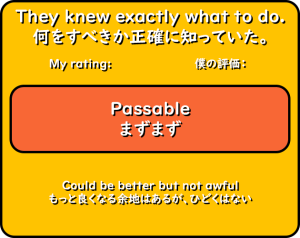
What do I rate it? I would say a 6 out of 10 and in the Passable category. Again, this is an in-development title, and it does have room for improvement. It would be even better if it were made in an engine other than Scratch.
If you’d like to try the game, I have the link below:
https://sashastep04.itch.io/touhou-id
Discover more from Drillimation Systems
Subscribe to get the latest posts sent to your email.


Not my expertise, yet interesting.
LikeLike