
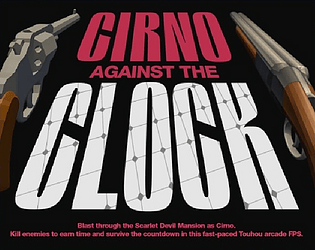
Welcome to another review, after I spent the past two weeks on the eighth Touhou Pride Jam. I am here today to talk about time—that unrelenting, unforgiving ticker that dictates every waking moment of our lives, or at least our gaming sessions. In the realm of fast-paced indie titles, time isn’t merely a backdrop; it is the currency, the hazard, and the ultimate arbiter of victory. It is the force that transforms simple mechanics into high-stakes encounters and turns a modest arcade shooter into a frantic test of reflexes.
Today, we direct our spotlight toward Cirno Against the Clock, a submission born from the pressure cooker of not the Touhou Pride Jam, but the high-pressure environment of the GMTK Game Jam 2026. Developed by kestanecihasanpubg (what an awkward name, I can’t even pronounce it), this fast-paced arcade shooter thrusts players into the shoes of the iconic ice fairy Cirno as she blasts through the Scarlet Devil Mansion.
At the core of the experience lies a single, central conceit: player health doubles as an active countdown timer, where every successful kill buys a few precious seconds of life. It is a system designed to keep momentum at a maximum and force players into constant aggression. But under the strict constraints of a game jam development window, it raises a fundamental question: does this relentless race against doom create a satisfying, high-octane gameplay loop, or does it collapse under the weight of its own temporal pressure?
Let us examine the evidence.
What to Know
Critic’s Lens
Cirno Against the Clock delivers a fast-paced, high-stakes FPS experience by smartly coupling player health to a relentless countdown timer. While its game jam roots are evident in tight difficulty curves and minimal onboarding, its frantic momentum and core loop offer a compelling test of reflexes.
Player’s Heart
Players praise the game’s incredibly addictive, high-octane tempo and satisfying “throw-and-catch” gunplay reminiscent of fast-paced arcade shooters. Though the strict time pressure and sudden deaths leave little room for error, the quick restart loop makes it hard to resist “just one more run.”
The Big Picture
Technical and Creative Polish
When you look at a game made in a matter of hours for a game jam, you expect a certain level of unpolished chaos, like an old NES title that wasn’t quite finished before it hit store shelves.
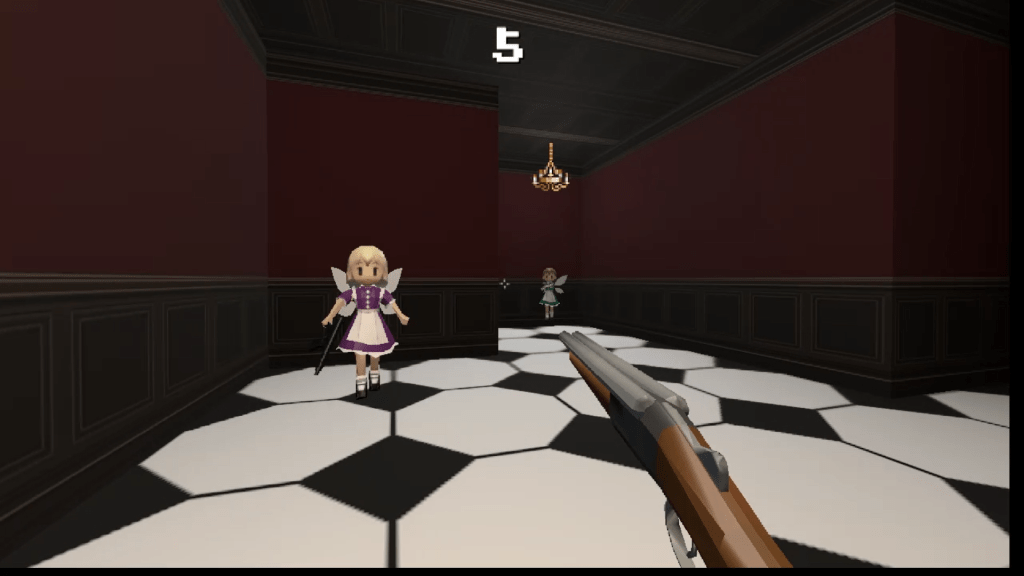
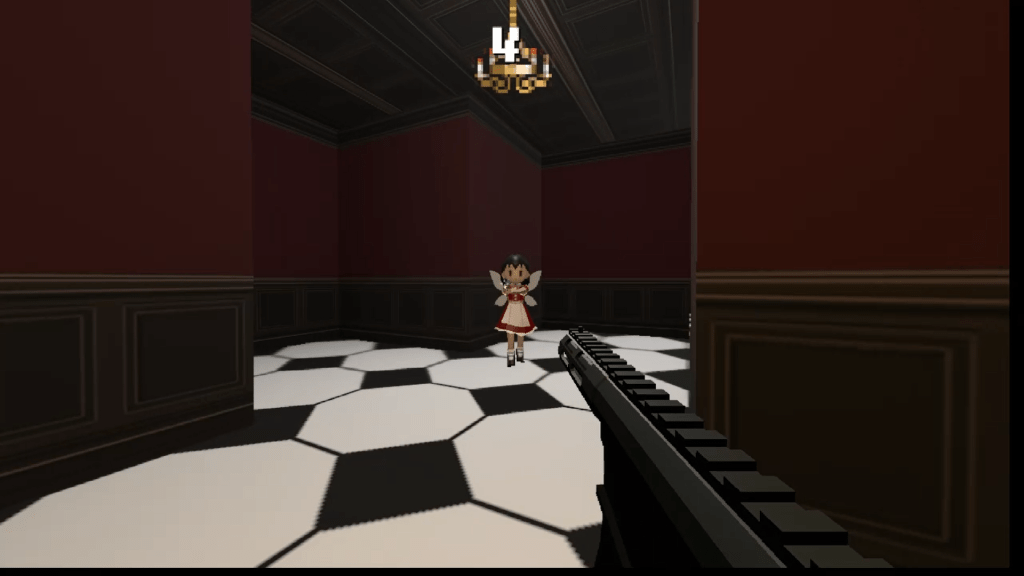
Visually, Cirno Against the Clock keeps things simple and retro. You’ve got weapon models sourced from CreativeTrio and low-poly environments that fit the fast-paced arcade aesthetic without cluttering your view. But the moment you grab the mouse, you notice the subtle rough edges. The camera movement and mouse sensitivity feel wildly tuned right out of the gate—turn your wrist an inch and you’re spinning like a top, which immediately forces you to dive into the options menu or radically adjust your playstyle on the fly. Then there are the interactive elements like doors: while picking up ammunition off the ground feels natural and automatic, opening doors requires very precise positioning without much visual feedback, leaving you awkwardly bumping into doorframes until you hit the exact interaction spot.
On the creative side, the soundtrack brings an energetic, fast-tempo synth beat that fits the high-stakes countdown, but the audio implementation clearly reveals the tight time constraints of development. Every single time you die and restart—which happens constantly in a game this brutal—the music resets back to the very beginning. Instead of letting the track loop seamlessly across respawns, you end up listening to the same opening fifteen seconds over and over again until you manage to pull off a longer run. It’s the kind of small technical detail that doesn’t ruin the experience, but definitely reminds you of the ticking clock the developer was facing behind the scenes.
Mechanics
Once you look past the audiovisual presentation, the moment-to-moment survival relies on a single, tight mechanical loop where your health and remaining time are the exact same resource. Every second that ticks down brings you closer to an immediate game over, forcing you to aggressively hunt down enemies to claim back vital extra seconds of life.
To keep up with that relentless pace, you’re handed a surprisingly versatile set of high-speed arcade controls. Beyond standard WASD movement, jumping, and shooting, the real heart of combat is a slick throw-and-catch weapon loop. You can hurl your current gun directly into an enemy’s face for quick impact damage and immediately snatch up whatever firearm they drop to keep your ammo refreshed mid-sprint. If you run completely dry on bullets or find yourself cornered in a tight hallway, pressing Q lets you throw out a swift kick to shove enemies back and buy precious breathing room. You are constantly juggling these offensive maneuvers while clearing room after room inside the Scarlet Devil Mansion, forcing you to balance split-second aiming with tight corridor navigation in the middle of absolute visual chaos.
Sound Design and Music
Zooming in strictly on the audio experience, the energetic synth soundtrack is designed to match the frantic pace of the gameplay and lock you into a focused flow state. From the moment you spawn, the high-bpm tempo keeps your heart rate up, mirroring the anxiety of the ticking health bar.
However, because runs frequently end in a matter of seconds due to the steep difficulty, the lack of music persistence turns into a double-edged sword. On one hand, reaching a fresh melody or a new section of the track serves as a reward for surviving longer than usual. On the other hand, during heavy trial-and-error sessions where you die rapidly, the constant audio cuts create a repetitive feedback loop. Implementing a persistent background track or a smooth transition upon respawning would have alleviated this friction, but as it stands, the audio design remains a direct snapshot of rapid game jam assembly.
Narrative Cohesion
Narrative cohesion is rarely the top priority for a game jam entry, but Cirno Against the Clock still manages to lean into its lighthearted premise with self-aware simplicity.
The game drops you straight into the boots of Cirno, the iconic ice fairy from the Touhou Project series, as she charges through the halls of the Scarlet Devil Mansion. There are no lengthy cutscenes, elaborate dialogue trees, or deep lore dumps—the backstory is kept as minimal as possible to prioritize immediate gameplay. While purists might note that seeing a Touhou character running around throwing firearms in a fast-paced FPS isn’t exactly standard canon, the sheer absurdity fits the chaotic energy of the format. It doesn’t attempt to construct a complex narrative, relying instead on character familiarity and high-stakes urgency to justify why you’re sprinting room to room blasting everything in sight.
Engagement and Fun
The overall fun factor stems directly from the game’s sheer, uncompromising speed. The constant threat of a ticking countdown timer creates a perpetual state of urgency that keeps your adrenaline pumping from the second you spawn. Throwing an empty firearm straight into an enemy’s face, instantly grabbing their dropped weapon mid-air, and continuing your sprint down a hallway feels genuinely empowering when executed smoothly.
However, that high-level engagement can occasionally hit a wall when the brutal difficulty curve catches up with you. Because success relies heavily on split-second accuracy and quick navigation through tight mansion corridors, running out of time or getting trapped by enemies can bring a promising run to a sudden, jarring halt. Yet, because restarting a run is instantaneous, the game successfully taps into that classic arcade “just one more try” dynamic that keeps you coming back for another attempt.
Replayability
Replayability isn’t built on long campaign trees, branching paths, or endless unlockables, but rather on the raw drive to master the core loop and beat your previous survival times.
The arcade-style structure and immediate restart cycle remove almost all friction between attempts. Because every run can end in seconds if you miss a few shots or mismanage the timer, death is swift—but jumping back in takes only a single button press. While the lack of randomized level layouts, extra playable characters, or alternate game modes means you are navigating the exact same environment every time, the satisfaction of refining your route through the Scarlet Devil Mansion keeps the momentum going. It’s a short, focused loop designed not for extended narrative sessions, but for quick, high-intensity bursts of score-chasing play.
Learning Curve
Rather than offering a gentle ramp-up, the learning curve acts as a steep wall you crash into headfirst. There are no tutorial prompts, target practice rooms, or slow-paced introductory levels to ease you into the mechanics. The moment you press start, the clock begins ticking, forcing you to decipher the controls while actively running for your life.
Adapting to the high-speed movement and the throw-and-catch weapon loop requires immediate trial and error, as a single missed shot or a second spent hesitating can cost you the entire run. Even basic environmental interactions—like figuring out how close you need to stand to trigger doors or learning the effective range of your melee kick—are learned strictly through failure. However, because the control scheme is straightforward and respawns are instantaneous, early frustration quickly gives way to muscle memory, turning what starts as a frantic struggle into a readable arcade rhythm once you get a few runs under your belt.
Feel of Play
The moment-to-moment feel—or “game feel”—is punchy, aggressive, and highly twitch-focused. Movement feels lightweight and rapid, pushing you to constantly sprint through corridors rather than taking cover or playing defensively.
The combat feedback relies heavily on physical weight and impact: throwing an empty firearm into an enemy gives an immediate, tactile sense of force, and snatching a fresh weapon mid-air keeps your momentum unbroken. The melee kick adds a satisfying layer of close-quarters disruption, providing an instantaneous way to clear physical space when enemies crowd you. Because your health is constantly draining, every action carries a sense of kinetic panic. When you’re in the zone, stringing together kicks, gun throws, and headshots feels fluid and exhilarating. The friction only arises when high speed collides with tight geometry, like accidentally snagging on doorframes or losing track of your crosshair during a sudden, frantic camera turn. Yet, even with those minor rough edges, the raw velocity and feedback loop give the game an unmistakably satisfying arcade punch.
Final Verdict
While Cirno Against the Clock delivers a high-speed, thrilling arcade loop, it’s held back by a few noticeable rough edges. The default mouse sensitivity is wildly overtuned right out of the gate, forcing you to adjust your settings before you can find a comfortable rhythm. Navigating tight mansion corridors and clearing doors requires uncomfortably precise alignment, periodically stalling your momentum in a game that relies entirely on fast pace. On top of that, having the background music reset to the very beginning on every rapid respawn leads to noticeable audio repetition during heavy trial-and-error sessions, while sudden difficulty spikes can bring a promising run to a sudden, frustrating stop.
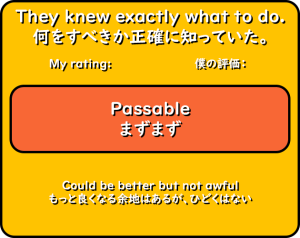
When you weigh those flaws against its core strengths, Cirno Against the Clock lands squarely at a 6 out of 10, placing it in the Passable category on the scale. It’s certainly not a flawless masterpiece, and its mechanical quirks will test your patience during rapid restarts, but underneath those control hiccups and repetitive audio rests a genuinely enjoyable, high-octane twitch shooter that delivers a great test of reflexes.
If you dare want to try the game, I have the link here:
https://kestanecihasanpubg.itch.io/cirno-against-the-clock
Discover more from Drillimation Systems
Subscribe to get the latest posts sent to your email.


Your niche is completely out of my radar but I still enjoy reading your work. It exhudes passion and I live it! Keep up the good work! GG!
LikeLiked by 3 people