
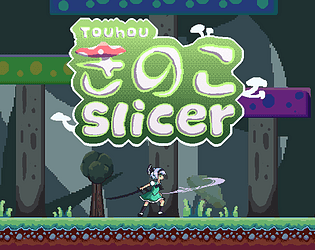
Hello, and welcome to another entry. Before we turn our attention to the mechanics, visuals, and overall quality of the game at hand, it is worth addressing the overarching context surrounding today’s title. Today, we stand at the threshold of a definitive milestone: this is, at long last, the final game from Touhou Pride Game Jam 8 to be featured.
It has not escaped our notice that a considerable portion of the audience has reached a point of absolute saturation. To say that our readers have grown weary—if not entirely fed up—with the seemingly relentless stream of coverage dedicated to this specific game jam would be a distinct understatement. The fatigue is understandable. Week after week, entry after entry, the sheer volume of jam titles can easily feel like an unending marathon.
However, all sagas, no matter how protracted, must eventually reach their conclusion. We are here to finally put a bow on this coverage, bring the series to its natural endpoint, and allow everyone to move forward into fresher pastures. So, without further ado, let us close out this chapter once and for all by taking a detailed look at Kinoko Slicer.

What to Know
Critic’s Lens
While Kinoko Slicer suffers from imprecise combat hitboxes and a somewhat restrictive viewport, its charming motion-comic intro, vibrant character designs, and addictive platforming mechanics deliver a brief yet delightful jam entry.
Player’s Heart
Players love the satisfying momentum of the wall-jumps and double-jumps, along with the cheeky mushroom puns. However, the precision required for slashing and the minor level-reset bugs can create a bit of friction during play.
The Big Picture
Technical and Creative Polish
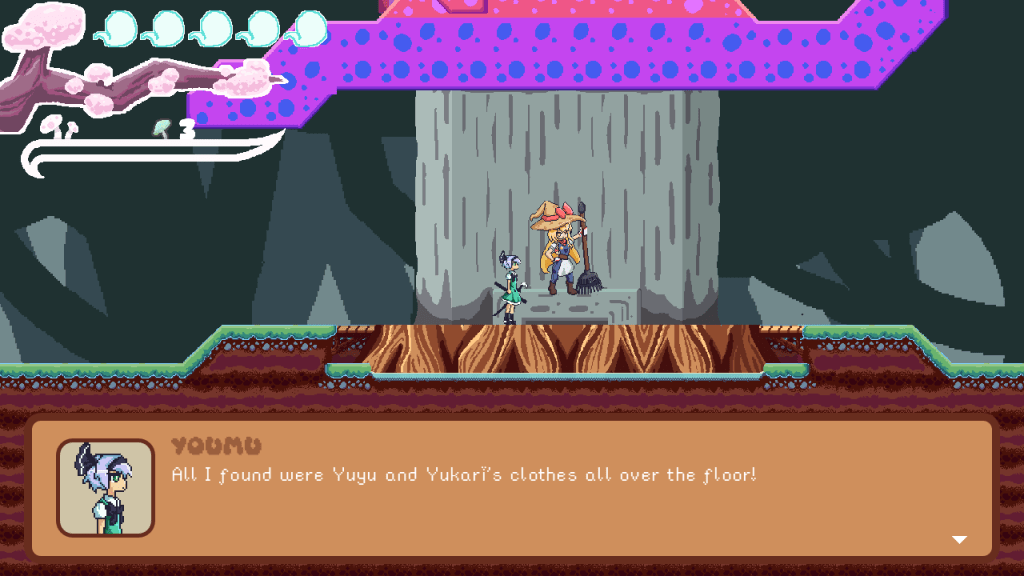
When you boot up Kinoko Slicer, the first thing that hits you is the presentation—and honestly, it’s pretty neat. Instead of a typical wall of text or static sprites, you’re treated to a motion-comic introductory sequence. The art style has a sharp, expressive comic quality to it, giving the game a distinct personality right out of the gate. The vibrant character designs and cheeky dialogue—loaded with mushroom puns—give the narrative a lighthearted charm.
However, once you actually get into the gameplay, some of the technical design choices leave you scratching your head.
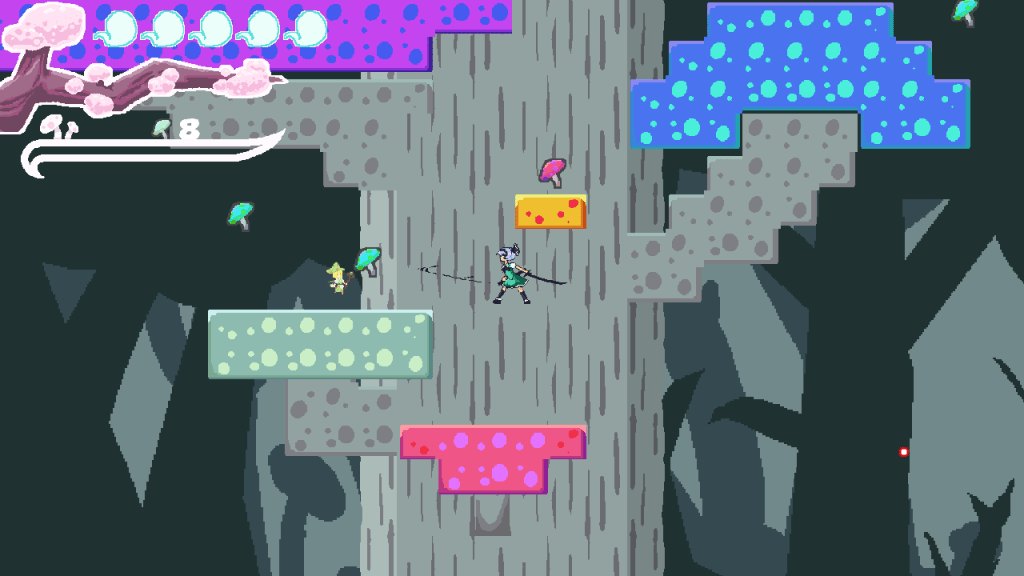
- Viewport and Camera: The camera is zoomed out significantly. While it gives you a broad view of the level structure, your character sprite appears small on screen, making precise movement and jump alignment feel a bit detached at times.
- Hitboxes and Combat Precision: The melee slash attack has a surprisingly tight hit frame. Even though you can slice incoming enemy projectiles, hitting basic enemies often requires pixel-perfect accuracy, leading to moments where a visually clean attack fails to register.
- Level Reset Quirks: Leaving and re-entering a room resets all the mushroom pickups placed across the environment. While it doesn’t wipe out your inventory score, having the stage reset visually every time you cross a room threshold creates a minor technical inconsistency during exploration. This does make it easy to collect more mushrooms and buy upgrades.
It’s a classic game jam trade-off: high marks on visual flair and creative ambition, tempered by a few mechanical rough edges in execution.
Mechanics
When you get down to playing Kinoko Slicer, the core loop feels like a classic 2D action-platformer. You control Youmu, and your main objective is to navigate stages using a fluid, fast-paced movement kit.
Now, how does the game actually control? Let’s break down the mechanics:
- Traversal and Physics: You’ve got your standard run, double-jump, and wall-jump. The physics carry a heavy sense of momentum and weight—which is pretty neat, though it almost feels like you should be able to crush enemies just by running into them. Once you get used to the speed, chaining jumps together creates a really satisfying flow.
- Combat and Slashing: Pressing
Zperforms a melee attack. While you can slice enemies and clear incoming bullets mid-air, the slash range is fairly weak and tight. Hitting targets demands pixel-perfect precision, which can feel a bit finicky during hectic encounters. - Shop and Collectibles: As you explore, you’ll find two types of mushrooms:
- Green Mushrooms: These serve as currency. You collect them to spend at a central shop for upgrades and essential progression items, including the boss key.
- Red Mushrooms: These restore lost health, but they don’t add to your currency total.
- Control Scheme: Controls are straightforward—
Zto slash,Xto jump,Enterto interact with dialogue or NPC shops, andEscto pause. However, this does create one flaw. If you’ve played Super Mario Bros. the A button jumps and the B button throws fireballs. While the A button is to Z key and the B button is to X key, it’s the complete opposite of what you’re used to.
Sound Design and Music
When it comes to audio, Kinoko Slicer takes a straightforward, retro-inspired approach that gets the job done without overcomplicating things.
Let’s break down how the sound and music hold up during gameplay:
- Sound Effects & Impact: The sound effects provide essential visual-audio feedback for your actions—slashing your sword, leaping off walls, and collecting mushrooms all feature distinct, crisp retro sound effects. While the audio cues are functional and responsive, the melee attack sound lacks a bit of heavy punch, which makes landing hits feel slightly light considering the momentum of the movement.
- Background Tracks: The soundtrack offers catchy, upbeat chiptune compositions that fit the fast-paced action and lighthearted atmosphere of a Touhou fan game. The music sets an energetic pace for the platforming, though because stage playthroughs can involve retrying areas, the short loop length of the tracks means you’ll hear the same main motif repeating fairly frequently.
Overall, the audio design captures the spirit of classic 16-bit action games, giving the short jam project a cohesive, energetic feel.
Narrative Cohesion
Story-wise, Kinoko Slicer takes a lighthearted, comedic approach to its Touhou fan fiction premise, framing the entire adventure around a classic, absurd rescue mission.
Let’s break down how well the story elements hold together:
- The Setup: The premise is simple and punchy—Yukari has allegedly kidnapped Yuyuko, and Youmu has to set off to rescue her with the help of a certain fungus-loving witch. It fits right in with the quirky narrative style typical of short game jam entries.
- Presentation: Rather than using long paragraphs of plain text, the story is delivered through a stylized motion-comic introduction. The character designs are sharp and expressive, giving the light story beats plenty of personality right away.
- Dialogue & Puns: The dialogue relies heavily on playful banter and constant mushroom puns. While it keeps the tone goofy and entertaining, it prioritizes humor over deep lore or complex storytelling.
- Pacing & Gameplay Integration: The story serves mostly as a fun wrapper to give you a reason to run around, cut down enemies, and gather mushrooms. Once you’re past the opening comic and NPC shops, the narrative steps aside to let the platforming take center stage.
Engagement and Fun
When you look at the big picture, the fun factor in Kinoko Slicer comes down to how satisfying it feels to master the movement kit. Once you get past the initial learning curve of the momentum physics, chaining together double-jumps and wall-jumps while sprinting through the stage gives the game a genuinely addictive, fast-paced rhythm. There is a real sense of speed and weight to Youmu’s controls, and clearing a tricky platforming sequence at full speed feels great.
Where the fun takes a slight hit, however, is in the combat precision. Because the melee attack range is so narrow and requires near-exact positioning, taking down standard enemies can feel more tedious than rewarding. You often find yourself stopping your momentum just to line up a precise slash, which directly contrasts with the fast, fluid nature of the platforming.
Luckily, the upgrade shop helps smooth out those friction points. Gathering green mushrooms to unlock upgrades and work toward buying the final boss key provides a solid, classic incentive to keep exploring and optimizing your routes through the stage. It creates a quick, satisfying gameplay loop that fits the scope of a short game jam title perfectly.
Replayability
When it comes to replay value, Kinoko Slicer keeps things short and sweet, typical of a game jam submission. Once you defeat the final boss and finish the story, there are no extra difficulty modes, unlockable characters, or secret levels to discover. However, the game naturally lends itself to speedrunning. The momentum-heavy movement mechanics encourage you to replay the stage just to see how smoothly and quickly you can chain double-jumps and wall-jumps together.
Interestingly, the way stage hazards and pickups are handled creates a unique quirk for casual replays. Every time you cross a room threshold and re-enter an area, the mushroom pickups scattered across the level reset. While this wasn’t an intentional feature, it actually allows players to quickly farm green mushrooms, test out different shop upgrade paths, or optimize their collection routes on subsequent runs. Once you’ve purchased everything and mastered the movement, though, you’ve pretty much seen everything the game has to offer.
Learning Curve
When it comes to picking up and playing Kinoko Slicer, the game presents a short but noticeable initial adjustment period. Mechanics-wise, jumping right into the action is simple enough since you’re only dealing with basic platforming controls like running, double-jumping, wall-jumping, and a single melee slash. However, mastering the tight attack range and getting used to the momentum-heavy movement takes a bit of trial and error early on.
The layout and shop system also carry a mild learning curve during your first run. The stage layout consists of a couple of main areas, and finding essential items like the boss key requires players to scroll down within the shop interface—something that isn’t immediately obvious at first glance. Once you realize how the shop works and get accustomed to the momentum of the physics, the controls click into place quickly, making subsequent navigation and platforming feel much more intuitive.
Feel of Play
When you put all these elements together, the overall “feel” of Kinoko Slicer is defined by a distinct contrast between its fluid movement and its delicate combat rhythm. On one hand, moving Youmu through the stages feels remarkably energetic. The heavy momentum and quick weight of the physics give platforming a satisfying sense of velocity, making double-jumps and wall-jumps feel punchy and responsive once you get into the groove.
On the other hand, the combat introduces a deliberate speed bump to that fast-paced flow. Because the attack range is small and requires precise alignment, combat encounters often force you to hit the brakes and carefully time your sword swings. Instead of seamlessly slicing through enemies on the move, you frequently have to pause your momentum to clear an obstacle or strike down a target, creating a push-and-pull dynamic between the game’s high-speed platforming and its strict hitboxes.
Ultimately, how the game feels to play depends on how you approach it. Once you purchase movement upgrades from the shop and learn how to anticipate enemy placements, the friction softens, leaving you with a short, snappy, and lighthearted action-platformer experience that captures the charm of a retro jam game.
Final Verdict
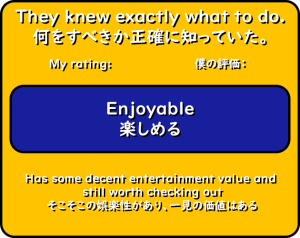
When you total up all the points, Kinoko Slicer lands firmly at a 7.5 out of 10, making it an enjoyable experience. However, there are a couple of flaws that prevent it from being in great territory:
- Slicing basic enemies requires pixel-perfect accuracy, which frequently halts your platforming momentum.
- The wide perspective makes player sprites tiny, making jump alignment feel slightly detached.
- Screen transitions refresh item pickups, which creates minor visual inconsistencies—even if it makes farming mushrooms easier.
- Reversing standard jump and attack bindings relative to classic platformer muscle memory can feel a bit awkward.
Despite those minor rough edges, the game delivers where it counts. The movement physics carry a great sense of weight, the motion-comic presentation is packed with personality, and the upgrade loop keeps the pace moving along nicely. It’s a short, charming action-platformer that serves as a solid capstone to our coverage.
And with that, we have officially reached the end of the line for Touhou Pride Game Jam 8. No more mushroom puns, no more jam entries, and no more endless marathon runs. We are finally done.
If you’d like to try the game, I have the link here:
https://reviani.itch.io/touhou-pride-jam-8-kinoko-slicer
Discover more from Drillimation Systems
Subscribe to get the latest posts sent to your email.

