
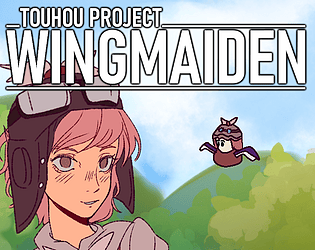
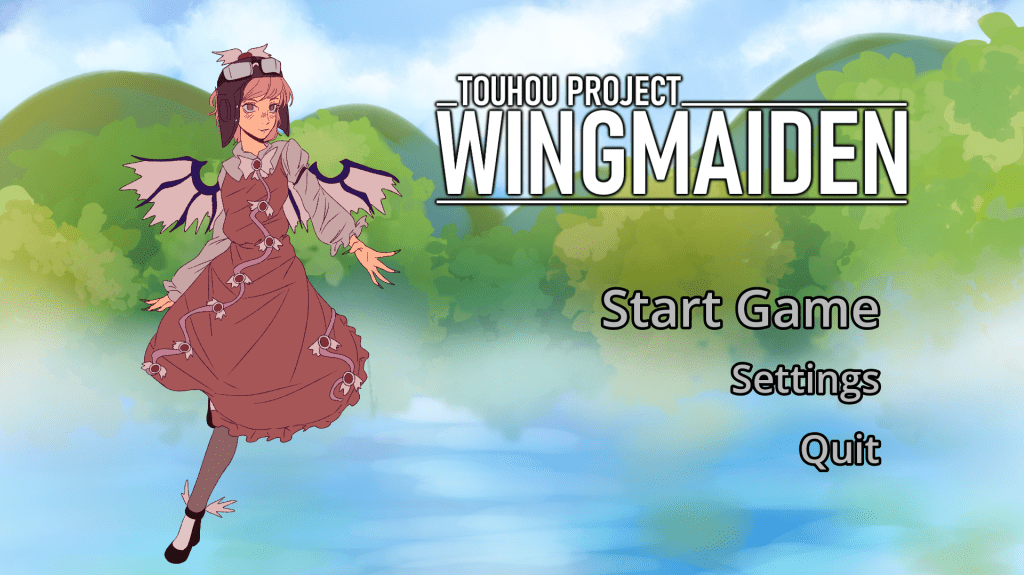
Today, we turn our gaze toward a peculiar synthesis of ideas—a title that dares to cross-examine two distinctly different genres in a single, ambitious sweep. In the grand landscape of indie game design, developers frequently face a choice: master the familiar conventions of an established genre, or attempt a hybrid experiment that redefines how players interact with space and turn efficiency. Touhou Project: Wingmaiden chooses the latter path. Developed by Rggcd and their team for the Touhou Pride Game Jam 8, Wingmaiden strips away the real-time danmaku chaos traditionally associated with the Touhou franchise and replaces it with calculated, turn-based aerial maneuvers reminiscent of classic games like Steambirds.
On paper, taking the dense bullet curtains of a danmaku shooter and translating them into discrete, phase-based planning segments sounds like a contradiction in terms. Yet, beneath its colorful sprite work and character-driven narrative, Wingmaiden presents a fascinating case study in mechanical adaptation. It asks a fundamental question: can the tension and kinetic energy of an aerial shmup survive when sliced into deliberate, turn-by-turn decisions?
Let’s break down how well this experiment holds up under the lens of design, presentation, and player experience.
What to Know
Critic’s Lens
Cleverly reimagining danmaku chaos as a deliberate, phase-based planning exercise, Touhou Project: Wingmaiden delivers a sharp, strategic spin on danmaku action that successfully translates frantic aerial combat into a thoughtful tactical puzzle.
Player’s Heart
Players love the satisfying Steambirds-inspired turn-based mechanics, charming character dynamics, and stellar soundtrack, though some note a slight learning curve with movement controls and empty turns on larger maps.
The Big Picture
Technical and Creative Polish
When you look at a game like Touhou Project: Wingmaiden, you have to analyze how its technical execution aligns with its creative ambitions. On a fundamental level, taking a genre defined by high-frame-rate precision and translating it into a turn-based tactical space is a major structural shift. It’s like taking a fast-paced arcade shooter and forcing it to run on the engine of a strategy game—it completely changes how collision data, movement vector planning, and enemy behavior must be processed.
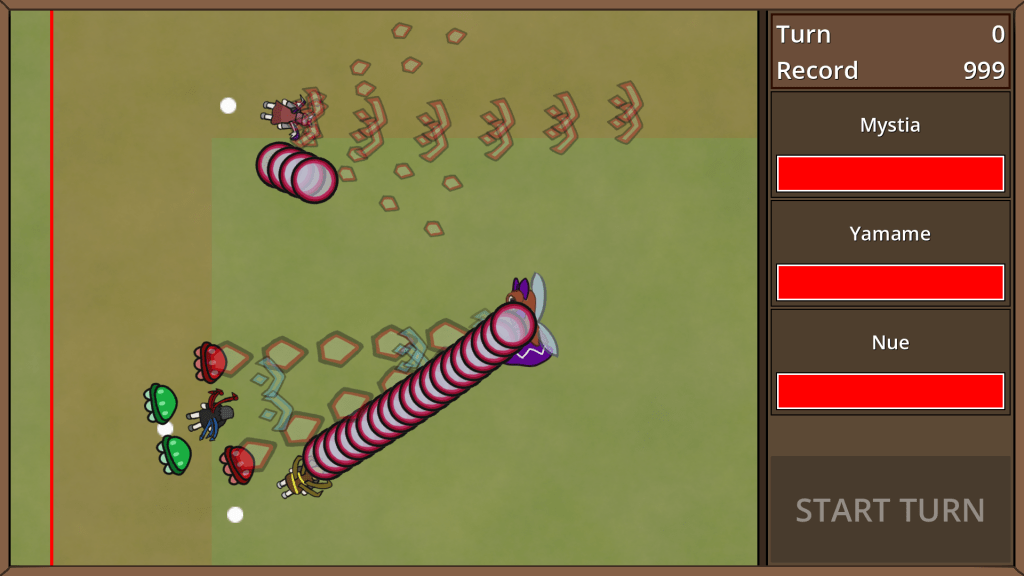
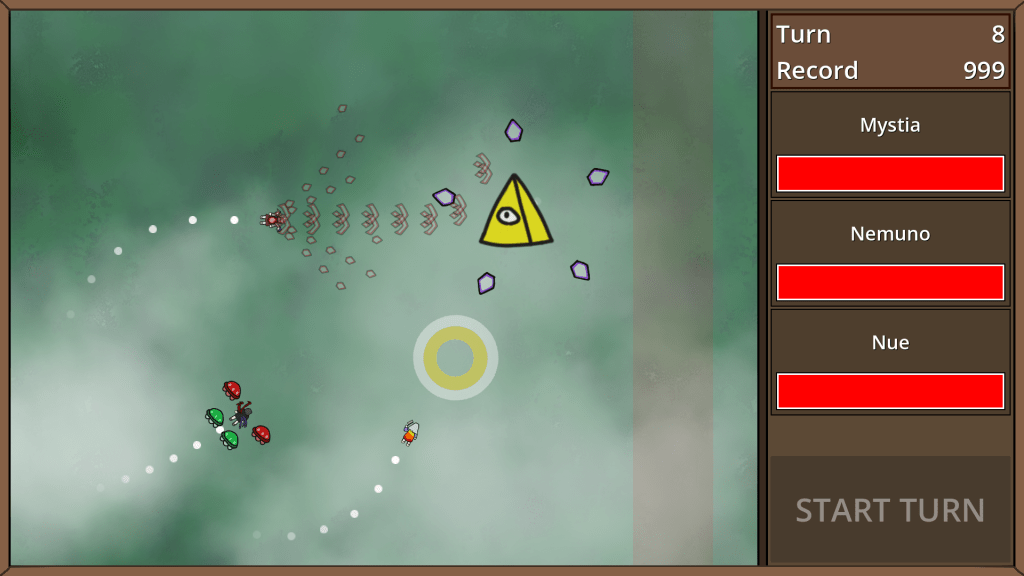
Visually, the game utilizes clean 2D sprite work and a functional user interface designed to handle vector trajectories and path prediction.
- Sprite Work and Clarity: The character models and enemy designs remain crisp against the backdrop, which is crucial for a game where precise positioning dictates survival.
- Particle and Visual Effects: In the HTML5 browser build, certain particle effects—most notably enemy destruction animations—do not render properly. While this does not break the core loop, it slightly detracts from the visual feedback of combat. Players looking for the full suite of visual polish will need to opt for the standalone desktop builds.
- User Interface: The UI efficiently displays movement cones, threat ranges, and action prompts without cluttering the screen, though navigating complex vector paths on larger grids can occasionally feel restrictive.
On the audio front, the sound design plays a massive role in maintaining the game’s pacing.
- Soundtrack: The music serves as a primary driver for the action, featuring high-energy composition that keeps the momentum going even during slow, calculated planning phases.
- Default Audio Mix: By default, the initial audio levels are remarkably loud. Players are strongly advised to visit the options menu upon booting the game to adjust master and sound effect volumes before jumping into a stage.
While there are minor technical quirks inherent to web-based jam builds, the core underlying architecture and creative direction hold together effectively to deliver a functional, distinct tactical experience.
Mechanics
At its core, Touhou Project: Wingmaiden relies on a phase-based planning model that converts traditional arcade reflex testing into a spatial and tactical puzzle. Instead of moving in real time, gameplay alternates between a Planning Phase and an Execution Phase. Via a core tactical loop:
- Vector Trajectory Planning: During the planning phase, players plot movement vectors and angle adjustments for their units. Movement isn’t unrestricted; units retain momentum and turn radii reminiscent of aerial dogfighting games like Steambirds.
- Threat Cone Assessment: Enemy attack patterns and bullet spawns are visualized on-screen before execution. Success relies on reading these threat zones and positioning units in safe corridors before hitting end turn.
- Synchronized Execution: Once vectors are confirmed, both player units and enemy waves act out their turns simultaneously over a brief real-time window.
- Character Synergy: Player units possess distinct abilities, firing arcs, and movement attributes. Balancing offensive capabilities with evasive positioning requires anticipating where bullet curtains will form several steps ahead.
- Grid and Map Navigation: Because maps can be expansive, positioning plays a critical role. Players must plan ahead when engaging newly spawned enemy waves on distant edges of the stage to avoid wasting turns in transit.
Sound Design and Music
In a genre hybrid that deliberately slows down the action, audio plays a pivotal role in maintaining momentum and feedback. The sound design in Touhou Project: Wingmaiden manages to sustain the high-stakes atmosphere of a danmaku shooter even while the player is frozen in thought during planning phases.
- Driving Track: The game features a standout, high-energy soundtrack composed by mar_rex. The music serves as the primary engine for tension, keeping player engagement high during slow, vector-plotting moments without becoming repetitive.
- Thematic Alignment: The composition strikes an appropriate balance between classic arcade intensity and the emotional undercurrents of the narrative, giving each dogfight a sense of purpose.
- Tactile Feedback: Crisp sound effects accompany vector confirmation, weapon firing, and wave spawns. The visual and audio cues align closely, giving execution phases a satisfying sense of weight.
- Default Mixing Issue: A notable drawback lies in the default audio configuration. Upon initial boot, master and SFX volume levels are excessively loud. Players are strongly encouraged to adjust the volume sliders in the settings menu before starting their first run to avoid an overwhelming audio experience.
While the audio package is relatively lean in terms of total track count, the quality of the primary themes and sound effects successfully bridges the gap between turn-based strategy and kinetic arcade action.
Narrative Cohesion
While Touhou Project: Wingmaiden centers its core loop around turn-based tactical maneuvering, its narrative provides a surprisingly grounded emotional anchor. Developed for the Touhou Pride Game Jam 8, the game integrates its storytelling directly into its structure, using aerial encounters as a backdrop for interpersonal reflection.
- Character Dynamics: The story follows Mystia and Kyouko as they conduct a “dinner date program” to observe other couples across Gensokyo. This setup creates an episodic framework where each tactical stage corresponds to an encounter with a different pair of characters.
- Thematic Integration: Rather than treating its LGBTQ+ themes as peripheral flavor, the narrative uses the journey to explore the evolving relationship between the two main leads. The central question—what Mystia and Kyouko mean to each other—acts as a unifying thread that gives purpose to the sequence of battles.
- Dialogue Flow: Narrative segments are presented before and after combat stages, featuring character interactions that balance playful banter with genuine introspection.
- User Control: The game allows players to progress through dialogue at their own pace or rapidly skip text using left-click holds, ensuring that players focused primarily on strategy can quickly return to the planning grid.
- Climax and Resolution: The narrative builds toward an open-ended concluding choice that resonates well with the preceding character arcs, elevating the writing beyond standard game jam expectations.
The narrative cohesion is strong, seamlessly weaving character dynamics with tactical stages to deliver a cohesive and thematic experience.
Engagement and Fun
Evaluating engagement in a hybrid title like Touhou Project: Wingmaiden requires looking at how well it balances two inherently conflicting feelings: the high-speed urgency of a danmaku arcade shooter and the slow, calculated deliberation of a turn-based strategy game.
- The “Aha!” Moment: The primary source of satisfaction stems from successfully forecasting complex bullet trajectories and vectoring your unit through narrow safe zones. Watching a plan unfold flawlessly during the execution phase provides a distinct sense of accomplishment.
- Risk vs. Reward: Because units retain momentum and turn limits, players must constantly weigh aggressive offensive positioning against leaving an escape route. Miscalculating a turn radius can leave a unit trapped in an incoming bullet wave, making every decision feel consequential.
- Pacing Drops on Large Grids: While combat encounters are tightly tuned, engagement can temporarily drop on larger stages. When new enemy waves spawn on distant edges of the map, players may need to spend multiple consecutive turns simply maneuvering across open space without engaging in combat.
- Learning Curve & Mastery: The game presents an initial adjustment period as players adapt to vector-based flight physics rather than direct, real-time control. Once the movement logic clicks, however, navigating tight bullet patterns becomes an engrossing tactical puzzle.
Wingmaiden delivers a compelling and uniquely fun loop for strategy enthusiasts and Touhou fans alike, proving that the core appeal of bullet-hell maneuvering can thrive in a turn-based format.
Replayability
In tactical strategy games, replay value often relies on branching paths, variable difficulty settings, or diverse party composition options. Touhou Project: Wingmaiden approaches replayability through a combination of character selection, tactical optimization, and potential post-jam expansions.
- Character Loadout Experimentation: Because different units bring distinct movement parameters and attack spreads to the grid, replaying stages with alternate character pairings changes the spatial puzzle entirely. Strategies that rely on wide-area coverage must be completely rethought when switching to focused, narrow-trajectory units.
- Score Attack and Turn Efficiency: For players driven by mastery, optimizing stage clear times and minimizing wasted movement vectors provides a compelling reason to replay stages. Finding the ideal path to eliminate enemy waves in the fewest possible turns adds an extra layer of strategy beyond simple survival.
- Compact Campaign: As a game jam project developed under tight time constraints, the core campaign is relatively concise. Players can complete the main narrative sequence in a single focused session.
- Future Expansion Prospects: The core mechanics establish a solid foundation that naturally lends itself to endless survival modes or user-created puzzle challenges, both of which the developers have expressed interest in pursuing for future updates.
While the current campaign length is modest, the depth of its turn-based mechanics and character variety offers solid short-term replayability for players looking to refine their tactical execution.
Learning Curve
Adapting traditional arcade genres to strategic, turn-based formats inherently introduces a shift in player expectations. Touhou Project: Wingmaiden manages this transition by leveraging visual indicators while requiring players to internalize a distinct style of movement logic.
- Shift from Direct Control: Traditional danmaku titles rely on instantaneous, micro-directional adjustments. In contrast, Wingmaiden requires players to manage momentum and turn radii, similar to flight-path planning games.
- Mastering the Turn Radius: Because units cannot turn on a dime or immediately halt momentum, players must learn to plot curves and predict where their unit will end up after several frames of movement. Early attempts often lead to accidental collisions with incoming bullet patterns until the movement parameters become intuitive.
- Clear Enemy Wave Warnings: The game incorporates explicit enemy spawn indicators and trajectory cones, giving players immediate visual feedback on incoming hazards before committing to a turn. This reduces trial-and-error friction and allows tactical planning to take precedence over guesswork.
- Accessible Dialogue and Interface: Menu navigation, action confirms, and text pacing are straightforward, allowing players to focus entirely on solving spatial puzzles rather than wrestling with UI complexity.
While the initial adjustment to vector flight physics presents a brief hurdle for arcade purists, the clear threat telegraphing ensures that the learning curve remains fair, rewarding strategic foresight over raw reflex speed.
Feel of Play
The tactile and moment-to-moment sensation of playing Touhou Project: Wingmaiden is defined by a distinct interplay between patient foresight and brief, high-intensity gratification. By removing real-time twitch controls, the game converts traditional arcade tension into a calculated, strategic atmosphere.
- The Planning Rhythm: The game operates at a deliberate pace. Selecting units, dragging vector lines, and adjusting attack arcs creates a rhythmic, methodical workflow. Rather than panicking under bullet floods, the player experiences a calm, analytical focus similar to setting up a chessboard.
- Execution Payoff: Hitting the end-turn button triggers a sudden surge of kinetic energy. Watching all movement vectors execute simultaneously—with units banking, weapon fire tracer lines cutting across the grid, and bullet patterns weaving around flight paths—provides a highly rewarding visual payoff for well-laid plans.
- Interface Responsiveness: Dragging vectors and confirming paths feels responsive and clear, ensuring that player failure stems from tactical miscalculation rather than clumsy inputs.
- Spatial Tension: The sensation of danger is constant. Even though the action freezes during turn planning, the visual overlay of incoming bullet cones maintains a steady level of pressure, keeping players on edge as they search for narrow corridors of safety.
The feel of play strikes a uniquely satisfying balance—delivering the dense visual spectacle of a danmaku shooter through the deliberate, intellectual satisfaction of a strategy game.
Final Verdict
When you stand back and look at Touhou Project: Wingmaiden as a whole, it’s a fascinating exercise in design. Taking a franchise defined by hyper-kinetic, real-time dodge mechanics and re-engineering it into a turn-based tactical framework isn’t just a simple genre swap—it changes the fundamental way a player interacts with space, timing, and threat assessment.
While the underlying mechanics hold together remarkably well, a few structural flaws prevent the gameplay loop from reaching its full potential:
- Pacing Drops on Expansive Maps: On larger stages, newly spawned enemy waves frequently appear on the distant edges of the grid. Because movement speed and turn radii are restricted, players are often forced to spend multiple consecutive turns simply traveling across empty space, causing temporary dead zones in the tactical pacing.
- Vector Pathing Friction on Dense Grids: Managing complex movement curves alongside overlapping enemy threat cones can occasionally cause visual and navigational clutter, making precision vector selection feel somewhat restrictive on busier maps.
- Initial Physics Learning Curve: The transition from direct, arcade-style movement to momentum-based flight physics requires a conceptual shift. Players accustomed to instantaneous direction changes must overcome a brief period of trial and error while adjusting to fixed turn radii and momentum retention.
Despite these mechanical hurdles, Wingmaiden achieves what it sets out to do. It successfully translates the core appeal of danmaku maneuvering—analyzing spatial patterns and weaving through narrow corridors of safety—into a thoughtful, phase-based planning puzzle.
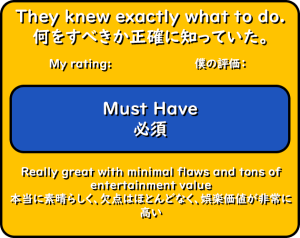
For strategy enthusiasts and Touhou fans looking for a distinct tactical spin on the series, it stands as a solid, well-executed hybrid experiment. It’s a Must Have and an 8 out of 10.
If you’d like to try the game yourself, I have the link here:
https://rggcd.itch.io/touhou-project-wingmaiden
Discover more from Drillimation Systems
Subscribe to get the latest posts sent to your email.

