
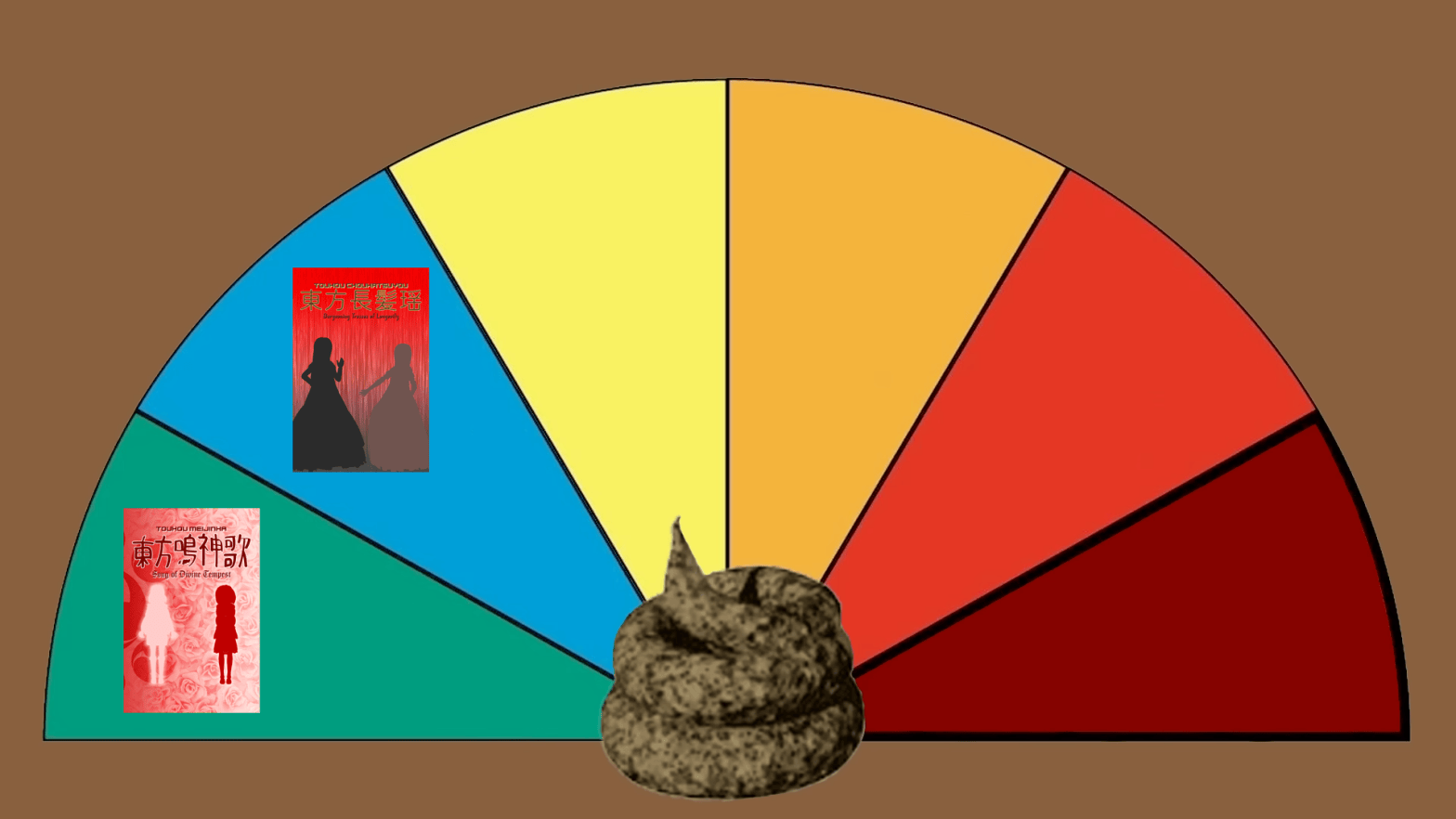
Yesterday, Cinemassacre dropped a brand new Angry Video Game Nerd episode reviewing Batman: Dark Tomorrow—a game infamous for its broken mechanics, confusing objectives, and borderline unplayable design. The experience was so catastrophically bad that James Rolfe did something unprecedented: he amended the long-standing AVGN Scale to officially add a seventh category dubbed Dark Tomorrow. This extreme tier is reserved strictly for games that go beyond standard badness—titles that are genuinely traumatizing, soul-sucking, hopeless, malevolent, venomous, and morally wounding.
It is rare for a benchmark rating system in gaming commentary to require an emergency expansion to measure absolute garbage. Such a major addition raises an immediate question for our own game evaluations: how does this new baseline for rock-bottom translate to my equivalent scale, and will any game in our coverage ever cross the threshold to actually deserve it?
The Major Code Red Category
Within our own evaluation system, the Major Code Red category has long stood as the ultimate red flag—reserved strictly for releases so fundamentally broken they fail to meet the basic definition of a functional video game. These aren’t just disappointing or poorly optimized titles; they are severe software disasters that serve as a direct warning to our audience: do not buy or play them, and do not waste your time giving them oxygen.
However, Rolfe’s creation of a brand-new tier below his absolute lowest baseline forces a deeper look at our own bottom line. Batman: Dark Tomorrow isn’t merely non-functional software in the traditional sense; it inflicts a specific brand of psychological drain and endless frustration on anyone behind the controller. While a typical Major Code Red game fails due to technical defects, bugs, or sheer laziness, the Dark Tomorrow tier represents something far more malevolent: a game that technically runs, yet actively punishes you for interacting with it.
If software can cross the line from purely broken into outright soul-sucking, it raises an important question for our scale—is Major Code Red still enough to hold these disasters, or does the abyss go even deeper?
Converting the Category Into Our Own Scale
When evaluating bad games, our framework relies on a distinct hierarchy: Debatably Bad, High Contamination, Very High, Severe Zone, So Horribly Bad, and Major Code Red. Each step downward represents a severe drop in playable quality. To keep our system clean, universal, and free from trademark entanglements, we intentionally avoid naming categories after specific video games. For example, our So Horribly Bad tier acts as our custom baseline replacement for what Rolfe long classified under Dr. Jekyll and Mr. Hyde—reserved for titles so fundamentally broken that standard criticisms no longer capture their flaws.
Adapting a seventh, lower level to match Rolfe’s Dark Tomorrow tier presents a unique branding challenge. A derivative label like “Sub-Code Red” simply lacks punch and feels uninspired. To capture a depth of failure that goes beyond non-functional software into active psychological punishment, our scale requires a distinct, original designation. I think it would be best to call this “Ground Zero.” This establishes an explicit floor reserved solely for software that isn’t just defective, but actively hostile to the player experience.
What Qualifies a Game as “Malevolent” vs. “Broken”?
To draw a clear distinction between a standard software disaster and a true Ground Zero candidate, we must separate technical negligence from active design hostility.
- “Broken” (Technical Disaster): Software that fails on a mechanical level. This includes missing collision detection, frequent crashes, broken physics, or unoptimized frame rates. These flaws stem from rushed development, tight deadlines, or poor execution. You can still see what the developers intended to do, even if the code completely fails to deliver it.
- “Malevolent” (Design Hostility): Software that inflicts active, psychological drain. These games might technically run without crashing, but they feature cryptically designed objectives, soul-crushing controls, unskippable cinematic loops, and arbitrary punishment mechanics that actively fight the player.
A game crosses from merely broken into outright malevolent when it stops being a product you struggle to play and becomes an experience that actively seems to hate you for trying. Technical bugs are frustrating, but deliberate, agonizing design is soul-crushing—and that emotional toll is what earns a title a place at the absolute bottom.
The Contenders
To see if Ground Zero holds up as a practical tier, we have to evaluate actual disasters across both big-budget studios and Steam’s most infamous catalog releases:
- The AAA Failure: Redfall (2023): Major Code Red
When a major studio releases an empty, bug-ridden shooter filled with brain-dead AI and broken mechanics, it easily lands in Major Code Red. However, Redfall is a story of studio mismanagement, rushed scope, and poor optimization—not active hostility. It remains broken software, but lacks the deliberate, soul-crushing malevolence required for Ground Zero. - The Mechanical Nightmare: FlatOut 3: Chaos & Destruction: Ground Zero Candidate
Infamous as one of the lowest-rated games in Steam history, FlatOut 3 transcends standard badness. With erratic vehicle physics that jerk randomly into scenery, unplayable control sensitivity, and nauseating camera angles, the game actively punishes basic player inputs. It isn’t just poorly made; the act of driving feels like a deliberate exercise in physical and mental frustration. - The Ultimate Collapse: The Day Before (2023): Definite Ground Zero
If any recent title inaugurated the Ground Zero tier, it is The Day Before. Beyond its non-functional servers, misleading marketing, and hollow gameplay, the entire release felt actively predatory and demoralizing. The experience left players feeling morally wounded and thoroughly deceived before being pulled from Steam days later—crossing the boundary from software failure into complete design malice.
Does the Scale Need an Emergency Expansion?
The debate over Dark Tomorrow and Ground Zero introduces a fascinating paradox in game evaluation: does a title in this abyss even qualify as a video game anymore? Historically, our Major Code Red category was designed as an absolute floor for releases so broken they completely failed to meet basic functional standards. Paradoxically, a malevolent game might actually possess enough working, code-complete elements to technically sit near So Horribly Bad, yet its soul-crushing, agonizing design drives the player far past standard thresholds into complete despair.
Ultimately, an emergency scale expansion needs to justify its existence through practical necessity. Having only ever assigned a single title to Major Code Red in our entire review history, officially adopting Ground Zero into our permanent lineup feels premature. While James Rolfe needed an emergency category for an extraordinary disaster, our current six-tier hierarchy remains flexible enough for day-to-day coverage. Ground Zero will remain on standby as an unofficial theoretical baseline—a deep abyss reserved only if a game ever arrives that is truly malicious enough to demand it.
Discover more from Drillimation Systems
Subscribe to get the latest posts sent to your email.


Hi thanks for reading and liking my posts. They are way different from yours. Yours is quite technical and I feel difficulty in understanding. However you have always supported my blogs. Whoever you are thanks to you.. Your display picture is too good.
LikeLike