

Game jams have long served as a foundational testing ground for the indie development scene, providing creators with a constrained window to execute highly specific thematic and mechanical concepts. Within the niche of fan-created content, these events often yield experiences that attempt to balance established intellectual properties with fresh gameplay loops.
Reisen & Youmu’s Haunted Outing, developed by a collaborative team consisting of zasfal, 翔 (Siang), Caramel64, and CryptGirl38, enters this arena as a submission for the Touhou Pride Game Jam 8. The game takes the familiar framework of the Touhou Project universe—specifically focusing on Reisen Udongein Inaba’s visit to Youmu Konpaku at Hakugyokurou—and introduces an abrupt, localized crisis involving waves of phantoms, ghosts, and fairies.
To evaluate a title born from a time-limited jam requires looking past the inevitable structural constraints of its format to see how well its core pillars function. A successful jam entry must quickly establish its identity, deliver responsive mechanical feedback, and justify its narrative hook within its brief runtime. This critique examines whether Reisen & Youmu’s Haunted Outing successfully translates its community-driven concept into a cohesive, mechanically sound action title or if the limitations of its development timeline compromise its broader potential.


What to Know
Critic’s Lens
Reisen & Youmu’s Haunted Outing successfully navigates the temporal constraints of its game jam origins, offering a mechanically sound bullet-deflection system and faithful fan service that outweighs its brief runtime and predictable wave-based structure.
Player’s Heart
Fans of the Touhou Project universe appreciate the charm of Reisen and Youmu’s localized crisis, noting that while the game is a quick play, the responsive combat loop and delightful soundtrack make it a highly engaging experience for casual and hardcore players alike.
The Big Picture
Technical and Creative Polish
When you look at a game made in a matter of days for a jam, you have to expect a certain level of rough edges. It’s the nature of the beast. But as a critic, you still have to look under the hood and ask: What were they thinking with the assets they had, and how well does it actually hold together?
Visually, the game leans heavily into its 2D spritework. The character animations for Reisen and Youmu capture the intended Touhou Project aesthetic well enough, but the visual clarity starts to take a hit when the screen fills up with projectiles. In a bullet-deflection game, readability is everything. If a sprite’s hitbox doesn’t perfectly match its visual footprint, or if the enemy phantom models blend too cleanly into the background environments of Hakugyokurou, it introduces artificial difficulty. It’s not broken, but it’s a classic constraint where a few more days of asset contrast optimization would have gone a long way.
On the creative side, the presentation opts for a straightforward, old-school arcade layout. The user interface does its job—tracking your score, waves, and health—but it lacks the extra layer of animated feedback or juice that makes menus feel satisfying to navigate. It’s completely functional, though it reminds you at every turn that you are playing a race against a game jam deadline. The execution is stable, free of major game-breaking bugs or structural crashes, which is a commendable technical achievement for a time-limited build, even if the overall package feels sparse around the margins.
Mechanics
When evaluating the underlying gameplay systems, the core loop is built entirely around a two-button mechanical structure: shooting and deflecting. The player controls Reisen, whose primary form of offense is a standard bullet stream used to clear incoming waves of phantoms, ghosts, and fairies.
The primary mechanical differentiator, however, is the bullet-deflection mechanic. Rather than relying solely on traditional Touhou micro-dodging, players are expected to actively time deflections to repurpose enemy projectiles. This introduces a risk-reward dynamic: remaining stationary or positioning oneself directly in the path of incoming fire is necessary to execute a deflection, altering the standard spatial management found in traditional shoot-’em-ups.
The enemy design relies on explicit wave-based spawning scripts. Different enemy archetypes dictate the mechanical pacing, throwing a mix of slow-moving ghost entities and faster fairy projectiles at the player. While the deflection mechanic provides an active defensive utility, the complexity of the mechanic is constrained by the game’s overall structure, which repeats these patterns sequentially without introducing major terrain variables or advanced status modifiers. The result is a straightforward, responsive control loop that executes its basic prompt cleanly but remains structurally flat across extended play.
Sound Design and Music
When you look at the audio presentation of a game jam project, the constraint of time typically forces developers to make a choice: do you lean on existing, royalty-free asset packs, or do you attempt to compose an entirely original soundscape?
The musical arrangement, handled by Caramel64, opts for the latter. The soundtrack adopts the energetic, synth-driven melodic structures characteristic of traditional Touhou Project titles. The composition functions effectively to establish a high-tempo atmosphere suited for wave-based combat, driving the pacing forward even when the visual layout remains static.
Where the audio package shows its rapid development timeline is in its sound effects deployment. Sound design in an action game isn’t just background noise; it is an extension of the user interface. It needs to provide immediate, distinct acoustic feedback for different gameplay states.
While the standard firing sound effects are functional, the auditory cues for successful bullet deflections lack a sharp, heavy impact sound that distinguishes them clearly from ordinary projectile hits. When the screen becomes cluttered with waves of phantoms and fairies, a distinct audio signature for an executed mechanic becomes vital for spatial awareness. The sound design checks the necessary boxes to ensure the game isn’t silent, but it lacks the meticulous layering and acoustic mixing required to make the combat actions feel genuinely impactful.
Narrative Cohesion
When evaluating a game jam project, the narrative is often where you see the most compromises due to strict time limits. Writers have to establish a premise, justify the gameplay loops, and resolve a conflict within minutes of total playtime.
The narrative setup, written by CryptGirl38, introduces a straightforward hook: Reisen is visiting Youmu at Hakugyokurou when an abrupt crisis manifests in the form of hostile undead and fairy waves. From a structural standpoint, the premise functions as an immediate justification for the action mechanics—you are under attack, so you must defend yourself.
Where the cohesion faces constraints is how the story interfaces with the pacing of the game. In a wave-based arcade setup, narrative progression typically happens in brief dialogue boxes before or after major combat sequences. Because the gameplay requires continuous mechanical engagement with repetitive waves of phantoms, the plot remains stationary for the majority of the runtime. The game establishes a clear objective—to identify the mastermind behind the haunting—but the transition from wave-to-wave defense to plot resolution relies on sudden text delivery rather than environmental storytelling or mid-stage narrative developments. It serves its foundational purpose to frame the Touhou Project fan setting, but it operates as a bookend to the action rather than an integrated, unfolding narrative.
Engagement and Fun
When looking at how a game captures and holds your attention, it all comes down to the core loop. For an arcade-style wave shooter, the fun factor depends entirely on the immediate feedback of its mechanics. If the core hook doesn’t land right away, the whole experience falls flat.
Reisen & Youmu’s Haunted Outing manages to create an engaging foundation by shifting the player’s focus away from standard evasion. By centering the gameplay on actively timing bullet deflections, the title forces you to engage with enemy projectiles rather than simply avoiding them. When a dense cluster of fairy bullets approaches, successful execution of the deflection mechanic provides a clear sense of mechanical satisfaction.
However, engagement is a balancing act between mechanical novelty and structural variety. Because the game relies on a repetitive loop within a static environment, the initial appeal faces diminishing returns. The lack of progressive stage hazards, unique environmental modifiers, or mid-wave mechanical twists means that once you understand the basic enemy scripts, the engagement shifts from active problem-solving to predictable pattern memorization. It delivers a functional and focused burst of arcade action, but its ability to maintain a high level of excitement is ultimately limited by its structural uniformity.
Replayability
When examining why a player would return to an arcade-style title after the initial playthrough, the evaluation shifts to the structural incentives provided by the design. In high-score-driven action games, long-term longevity typically relies on diverse unlockables, alternative gameplay modes, or dynamic ranking systems.
Reisen & Youmu’s Haunted Outing positions itself strictly as a brief, self-contained game jam experience. The primary incentive for subsequent playthroughs is the optimization of the score-tracking system. Because the wave scripts follow a fixed sequence, replay value is centered around mastering the timing of the bullet-deflection mechanic to maximize efficiency and achieve a higher final score.
However, the game does not feature secondary gameplay modes, branching narrative paths, or alternative playable characters with distinct mechanical configurations. Once the single, core campaign is completed and the mastermind behind the haunting is identified, the structural loop remains identical. For players who derive fulfillment from pure score-attack mechanics, there is a clear incentive to repeat the stage; for those seeking procedural variance or content progression, the replayability is constrained by the title’s singular, linear scope.
Learning Curve
When analyzing how a game introduces its systems to the player, you have to look at the onboarding process. In a fast-paced arcade environment, the layout needs to clearly communicate how to play without bogging the player down in dense text menus. You want to get straight into the action, but you still need to know what you are doing.
Reisen & Youmu’s Haunted Outing approaches this with a direct, hands-on mechanical introduction. Because the layout uses a streamlined two-button control setup for firing and deflecting, the immediate barrier to entry is low. A player can understand the basic inputs within the opening seconds of the first wave.
However, the true complexity of the learning curve lies in mastering the spatial timing required for the bullet-deflection mechanic. Unlike standard shoot-’em-ups where survival relies on continuous movement to avoid projectiles, this title requires you to intentionally position yourself in the trajectory of enemy fire to execute a deflection.
The game transitions quickly from its baseline introduction to high-density bullet patterns, forcing a rapid adjustment in player habits. While understanding how to shoot and deflect takes no time at all, learning the specific enemy spawn scripts and bullet velocities to consistently survive later waves presents a sharp upward curve that relies entirely on trial-and-error repetition.
Feel of Play
When analyzing the “game feel”—often referred to in development as “juice”—you look at the immediate tactile feedback that links the player’s physical input to the visual and kinetic actions on screen. It is what separates a sterile simulation from a responsive arcade experience.
In Reisen & Youmu’s Haunted Outing, the kinesthetics are defined by the contrast between free-form movement and defensive positioning. Controlling Reisen feels lightweight and nimble, allowing for quick adjustments across the screen during standard firing sequences. The basic directional movement responds without noticeable input lag, which is critical when attempting to maneuver around dense arrays of projectiles.
The primary shift in momentum occurs during the execution of the deflection mechanic. Because a successful deflection requires the player to purposefully intersect with an enemy projectile, the standard cadence of rapid dodging is intentionally broken. There is a distinct mechanical pause required to time the input correctly, creating a rhythmic push-and-pull dynamic to the combat.
While the physical handling of the avatar is precise, the overarching feel lacks secondary kinetic enhancements—such as subtle screen shake upon deflecting massive clusters, or visual hit-stop frames when executing a perfect parry. The translation from input to action is clean and reliable, ensuring the title handles exactly as intended, even if it misses the extra layer of visceral feedback that elevates the game feel of high-intensity shoot-’em-ups.
Final Verdict
When rendering a final judgment on a game jam submission, the evaluation must balance the title’s inherent structural limitations against the execution of its core mechanical ideas. A successful project does not need to offer an endless array of features; rather, it needs to prove that its central gameplay premise is robust enough to justify the player’s time.
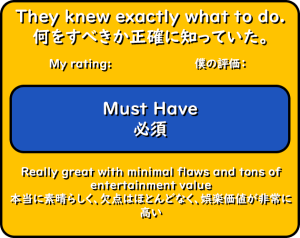
Reisen & Youmu’s Haunted Outing establishes a highly functional foundation within the brief development window provided by the Touhou Pride Game Jam 8. I give it an 8 out of 10 and I categorize it as a “must-have.” While the progression system remains structurally linear and the audio-visual presentation carries the expected constraints of a time-limited build, the underlying bullet-deflection loop is cleanly implemented, responsive, and engaging. It shifts the traditional spatial management of the genre into an active, risk-reward parry system that provides immediate mechanical satisfaction.
For players seeking deep procedural variety or extended narrative progression, the self-contained scope of the experience may feel brief. However, as an arcade-style proof of concept that respects its fan-universe framework while introducing an active defensive gimmick, the core gameplay loop functions at a high level of stability and entertainment value.
If you’d like to try the game, I have the link here:
https://reisenlol.itch.io/reisen-youmus-haunted-outing
Discover more from Drillimation Systems
Subscribe to get the latest posts sent to your email.


Very nice.
LikeLike