
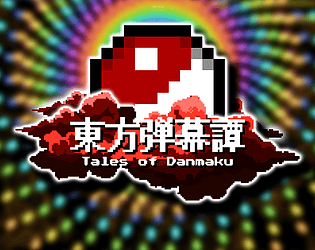
Hello players, and welcome to another review. It is no secret that Touhou 6: The Embodiment of Scarlet Devil stands as an absolute titan in the realm of shoot ’em ups, casting a massive, crimson shadow that the danmaku community has happily inhabited for over two decades. In fact, anticipation is reaching a fever pitch as fans look toward the official, upcoming remake scheduled to launch this autumn. Yet, while the gaming public waits to see how that corporate reimagining handles the legacy of the Scarlet Devil Mansion, a fascinating alternative has quietly emerged directly in our web browsers. Touhou ~ Tales of Danmaku enters the arena not as a simple, mechanical copycat, but as a fully open-source, pixel-art fan project that seeks to fundamentally re-examine how classic boss patterns intersect with character lore. It dares to ask a compelling question: can an independent, community-driven browser game capture the authentic spirit of an iconic masterpiece while paving its own distinct, mechanical highway? Let us find out.


What to Know
Critic’s Lens
Touhou ~ Tales of Danmaku is a remarkably polished and technically impressive fan project that trades generic bullet hell replication for thoughtful, lore-driven boss mechanics. While its narrative stays firmly rooted in familiar franchise territory, its smooth custom engine, authentic pixel art, and stellar collaborative soundtrack elevate it far above standard browser-game fare.
Player’s Heart
Players love the immediate accessibility of jumping right into the action from their browsers, praising the highly responsive micro-movement controls and intense, adrenaline-pumping risk-reward scoring loops. While the punishing difficulty can lead to a sharp learning curve on higher tiers, the generous practice framework and satisfyingly distinct character playstyles keep fans coming back for just one more try.
The Big Picture
Technical and Creative Polish
This isn’t some lazy, copy-and-paste job using a bloated, off-the-shelf modern framework. The developer built an entire custom HTML5 Canvas engine completely from scratch using TypeScript. It runs smoothly right in a tab, and because it’s totally open-source, you can look directly under the hood at how the code is put together. Visually, the game treats you to some genuinely high-quality, old-school 2D pixel art. The sprites, backgrounds, and firing patterns perfectly capture that classic, nostalgic aesthetic of late ’90s and early 2000s arcade cabinets without looking cheap or rushed.
The game utilizes dedicated, clear sprite assets for crucial gameplay indicators—like bosscharge.png and explicit warning.png lines. These additions make sure you can actually read the screen and anticipate major phase shifts when the screen gets completely flooded with projectiles. Right from the moment you hit the title screen, the game sets a professional tone. It features a beautifully drawn, atmospheric main menu background asset crafted by artist Brullov, which gives the overall presentation a highly polished indie game feel. The creative detail extends directly into the environmental sound design. For instance, during Cirno’s chilly encounter, the game layers a continuous, localized blizzard.wav audio loop that audibly emphasizes the shifting weather mechanics affecting your movement.
Mechanics
Underneath the new code, the game relies on the tried-and-true, classic Touhou Project mechanics. You’re dodging massive, intricate walls of bullets, shooting down incoming waves of enemies, and collecting falling power items to upgrade your shot strength. It handles exactly how you’d expect a proper arcade shooter to handle. The game gives you two completely different playable characters that change how you approach a stage. You have Reimu Hakurei, who uses her classic homing tracking amulets—great for focusing on dodging while the shots find the target. Then you have Marisa Kirisame, who is all about raw, linear power, utilizing a straight-line laser and her signature screen-melting Master Spark.
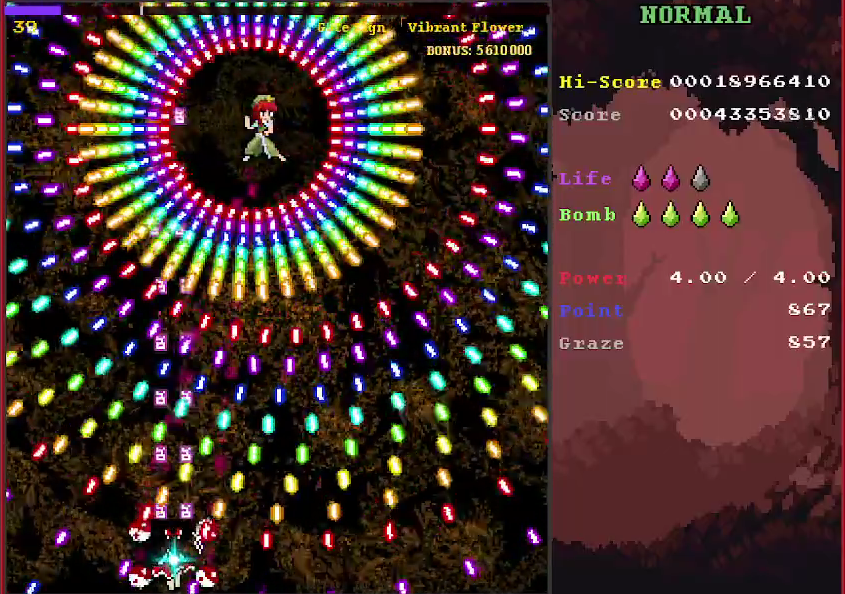
They didn’t skimp on the core mechanics either; the grazing system is fully implemented. If you want high scores, you are actively rewarded for getting your microscopic character hitbox dangerously close to enemy projectiles without actually colliding with them. It’s that classic risk-reward loop that keeps your eyes glued to the screen. To keep you from tearing your hair out, you’re equipped with limited extra lives and screen-clearing bombs. These act as your standard defensive panic buttons, instantly wiping the screen of bullets and saving you from a lethal hit if your reflexes slip for a split second.
Instead of making you replay the entire game just to practice a part that’s kicking your butt, the developer included dedicated Boss and Spellcard Practice modes. Combine that with four separate difficulty settings running all the way from Easy to Lunatic, and you have a mechanical suite designed to let you study the patterns at your own pace.
Sound Design and Music
This isn’t just a collection of standard MIDI tracks or reused audio assets. The game features an entirely original soundtrack composed of dedicated arrangements specifically built for this project by musicians TrojanHorse711 and ZahranW. It gives the game a unique audio identity while keeping it familiar.
The soundtrack includes custom arrangements of iconic series themes, with seven coming from Touhou 6: The Embodiment of Scarlet Devil and one from Touhou 8: Imperishable Night, tailored to the pacing of each encounter:
- Title Menu: “A Dream That Is More Scarlet Than Red”
- Stage 1: “A Soul as Red as a Ground Cherry” (Stage) & “Apparitions Stalk the Night” (Rumia Boss Theme)
- Stage 2: “Lunate Elf” (Stage) & “Tomboyish Girl in Love” (Cirno Boss Theme)
- Stage 3: “Deaf to All But the Song” (Mystia Boss Theme) & “Shanghai Teahouse” (Hong Meiling Boss Theme)
- Ending Credits: “Crimson Belvedere ~ Eastern Dream”
The sound design works hard to provide immediate audio feedback during intense bullet patterns. It uses distinct sound files like spellcard.wav for phase shifts, bosscharge.wav to warn you of a dense incoming barrage, and a crisp graze.wav chime that instantly tells you when you’ve successfully skimmed past a bullet. It helps you read the screen using your ears as much as your eyes. They even included localized, continuous environmental sound loops. For example, during Cirno’s fight, a dedicated blizzard.wav effect plays in the background. It’s a nice subtle touch that audibly reinforces the weather mechanics actively shifting your movement across the field.
Narrative Cohesion
This isn’t just a basic, asset-flipped remake that copies the exact text of Embodiment of Scarlet Devil. Instead, it acts as a fully reimagined alternate route. The developer completely rewrote the dialogue from scratch and mapped out an entirely different progression route for the characters as they make their way toward the Scarlet Devil Mansion. The script establishes an immediate, coherent mystery right away. Gensokyo is suddenly swallowed up by a bizarre crimson mist that literally dims the sun, sends the local fairies into an absolute frenzy, and coincides with expensive, suspicious cargo deliveries being flown straight into the woods. It gives the player a clear, unified objective to chase.
The narrative beats actually adapt to your choice of character. Dialogue exchanges and character interactions shift perspective seamlessly depending on whether you play through the incident as the duty-bound Hakurei Shrine Maiden (Reimu) or as the highly opportunistic magician (Marisa). It makes the interactions feel tailored rather than generic. The story does a great job of giving actual screen time and personality to traditionally minor, early-stage Touhou Project characters. Side characters like Mystia and Daiyousei are given elevated, more cohesive roles within the broader context of the crimson mist incident rather than just being standard, silent mid-boss speedbumps.
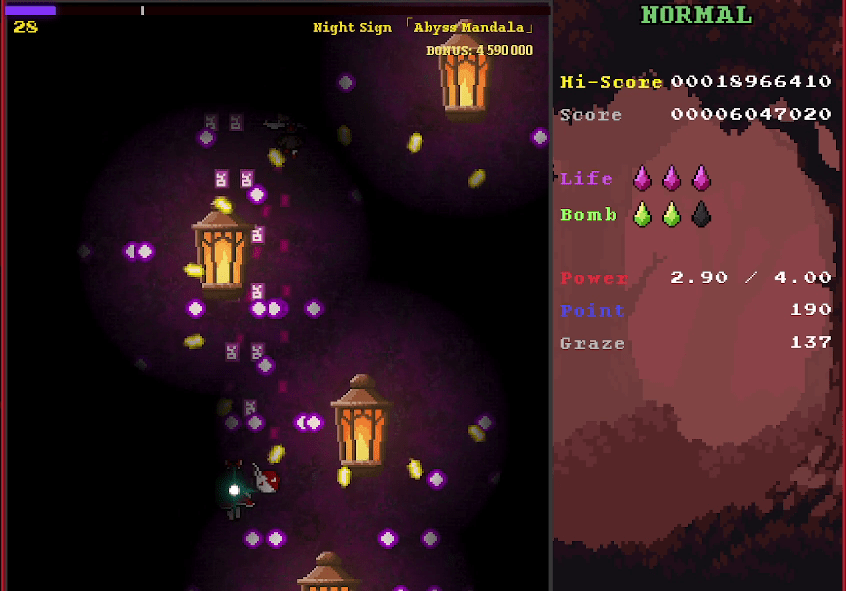
The writing and the design go hand-in-hand here. A boss’s canonical lore and unique abilities directly dictate how their mechanical phases play out in real-time. Rumia’s manipulation of absolute darkness and Cirno’s localized command over ice aren’t just throwaway plot points—they actively alter the boundaries of the playfield.
Engagement and Fun
The game moves completely away from generic, interchangeable bullet loops. Instead, it anchors its design directly to who the characters are in the lore, creating highly engaging moments—like having to read the screen in complete darkness against Rumia or compensating for a continuous physical drift during Cirno’s blizzard phase. It keeps you actively anticipating what unique mechanical twist is coming next. The grazing mechanic adds a genuine layer of excitement to the gameplay. Intentionally steering your microscopic hitbox right against a massive wall of projectiles triggers an immediate, satisfying stream of positive audio and visual reinforcement. It turns a defensive maneuver into a high-risk, high-reward point-chasing loop.
Swapping between the two main characters completely shifts your tactical approach to a stage. Reimu offers a reliable, comfortable style with her homing tracking amulets, while Marisa demands a high-intensity approach built around line-of-sight positioning and raw linear firepower. Having both keeps the core combat loop from feeling repetitive. Because it’s built natively for the web browser, the typical hoops of downloading large files or running desktop installers are entirely gone. You open a tab, and you are instantly playing full-scale arcade danmaku. That zero-friction entry point, combined with fast retries, makes it incredibly easy to fall into a “just one more run” mindset.
The high-tempo, custom-arranged boss tracks sync up beautifully with the visual intensity of the bullet fields. When you combine that soundtrack with the immediate, tactile sound effects—like the specific chimes for grazing or the charge warnings—the game establishes a highly responsive feedback loop that naturally heightens your adrenaline.
Replayability
Having two fully playable characters isn’t just a cosmetic swap. Running through the game as Reimu Hakurei completely alters your tactical approach compared to running it as Marisa Kirisame. Because their shot types and screen-clearing bombs are so fundamentally different, it forces you to learn two completely separate routing strategies for the exact same stages.
The game features a classic, four-tiered difficulty structure running from Easy, Normal, and Hard, all the way up to Lunatic. The bullet density, pattern speed, and overall aggression scale beautifully between these tiers, giving you a massive amount of room to replay the game and push your personal skills to the limit. The inclusion of dedicated Boss and Spellcard Practice modes drastically increases the game’s longevity. Instead of getting frustrated by a late-game pattern and quitting, you can endlessly replay individual, isolated boss phases to master the specific mechanics at your own pace.
They even included a dedicated, accessible Music Room feature. It allows you to go back and appreciate the entire custom collaborative soundtrack outside of live, high-stress gameplay, which adds a great layer of archival value to the overall package. Because the entire project is completely open source and written from scratch on a custom TypeScript engine, its replayability extends way past the default content. The code is transparent and open to community contributions, meaning players can actively modify, tweak, or expand the game themselves.
Learning Curve
The game doesn’t just throw you straight into the meat grinder. By including an “Easy” difficulty setting, it widens the gaps between projectiles and slows down the overall bullet speed. It gives players who are completely new to the danmaku genre a fair chance to learn basic routing and character movement without getting instantly obliterated. It features a proper, traditional four-tiered difficulty progression running from Easy, Normal, and Hard, all the way up to Lunatic. The scaling is handled tightly, letting you steadily build up your pattern-reading comprehension and reflexes as the screens get progressively more crowded.
They put in a dedicated Boss and Spellcard Practice mode, which honestly flattens the learning curve significantly. If a specific late-game pattern or boss phase is consistently kicking your butt, you don’t have to waste time replaying the entire stage just to get back to it. You can just isolate that exact spell card and grind it out until you have the muscle memory down. If you’ve played a Touhou Project game before, you can jump right in and apply your existing skills immediately because the core layout—shooting, bombing, and focusing—remains exactly the same. For newcomers, the game includes fully remappable controls, so you can configure a layout that feels comfortable for your hands right from the start.
Just like the classic arcade titles, your actual vulnerability is tied to a microscopic hitbox at the center of your character sprite, rather than the entire character model. This design choice gives learning players a hidden margin of error, allowing you to narrowly thread the needle through seemingly impossible walls of bullets.
Feel of Play
When the screen is filled with hundreds of projectiles, a game lives or dies by its controls. This game gives you pixel-perfect, highly responsive character handling. By holding down the dedicated focus key, you slow your movement speed down to a crawl, letting you make those tight, microscopic adjustments needed to thread the needle through dense bullet walls. Skimming your tiny, central hitbox dangerously close to a lethal projectile triggers a rapid, satisfying stream of sensory feedback. The rhythmic chime of the graze.wav sound file, combined with immediate visual indicators, turns a high-stress defensive dodge into an incredibly rewarding point-chasing loop.
There is a great sense of physical impact when you deploy your major defensive resources. Dropping a screen-clearing bomb—like Reimu’s tracking amulets or Marisa’s massive, linear Master Spark—instantly vaporizes everything in its path, blanking the bullet field and sending a massive cluster of power items falling directly into your collection zone. The feel of play shifts dramatically when you hit specific boss phases, most notably during Cirno’s fight. Her freezing blizzards create a continuous, screen-wide mechanical drift that physically forces you to push back against the weather just to maintain your position on the field. It adds a great, physical weight to the traditional movement.
They nailed the pacing between runs here. Thanks to instant browser loads, lightning-fast retry screens, and isolated practice options, all the traditional loading friction is completely gone. It makes it incredibly easy to lose track of time and fall right into a seamless “just one more try” gameplay loop.
Final Verdict
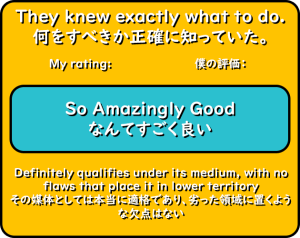
Despite the game using Embodiment of Scarlet Devil as the basis, it still ranks a very good 9 out of 10. Not only is the game a must-play, but it is also a highly polished title with minimal flaws and an immense amount of entertainment value. My only gripe about this title is not being a six-stage game like most other Touhou Project games.
When you look at the sheer amount of effort poured into this title, it’s impossible not to be impressed. Building a completely custom TypeScript engine from scratch that runs seamlessly inside a standard web browser tab is a massive technical achievement. It bypasses the bloated frameworks of modern gaming to deliver a pure, unadulterated retro arcade experience. The developer didn’t just copy the blueprints of Embodiment of Scarlet Devil; they respected the source material enough to reconstruct it into a fresh alternate continuity. Elevating minor characters, rewriting the dialogue, and designing intricate spellcards based strictly on character lore show a deep understanding of what makes the franchise special.
Mechanically, the game hits every necessary beat. The responsive micro-movement handling, the satisfying risk-reward of the graze scoring system, and the excellent creative audio choices—like layering a continuous blizzard loop during Cirno’s fight—work together to establish a flawless gameplay flow. Touhou ~ Tales of Danmaku is a triumph of independent, open-source development. It provides casual players with an accessible entry point while giving hardcore veterans a punishing, scaling challenge on Lunatic difficulty. It is an absolute must-play for shoot ’em up fans, proving that you don’t need a major corporate budget to capture the true, authentic spirit of a classic arcade masterpiece.
If you’d like to try the game, I have the link here:
https://nyuke235.itch.io/touhou-tales-of-danmaku
Discover more from Drillimation Systems
Subscribe to get the latest posts sent to your email.

