
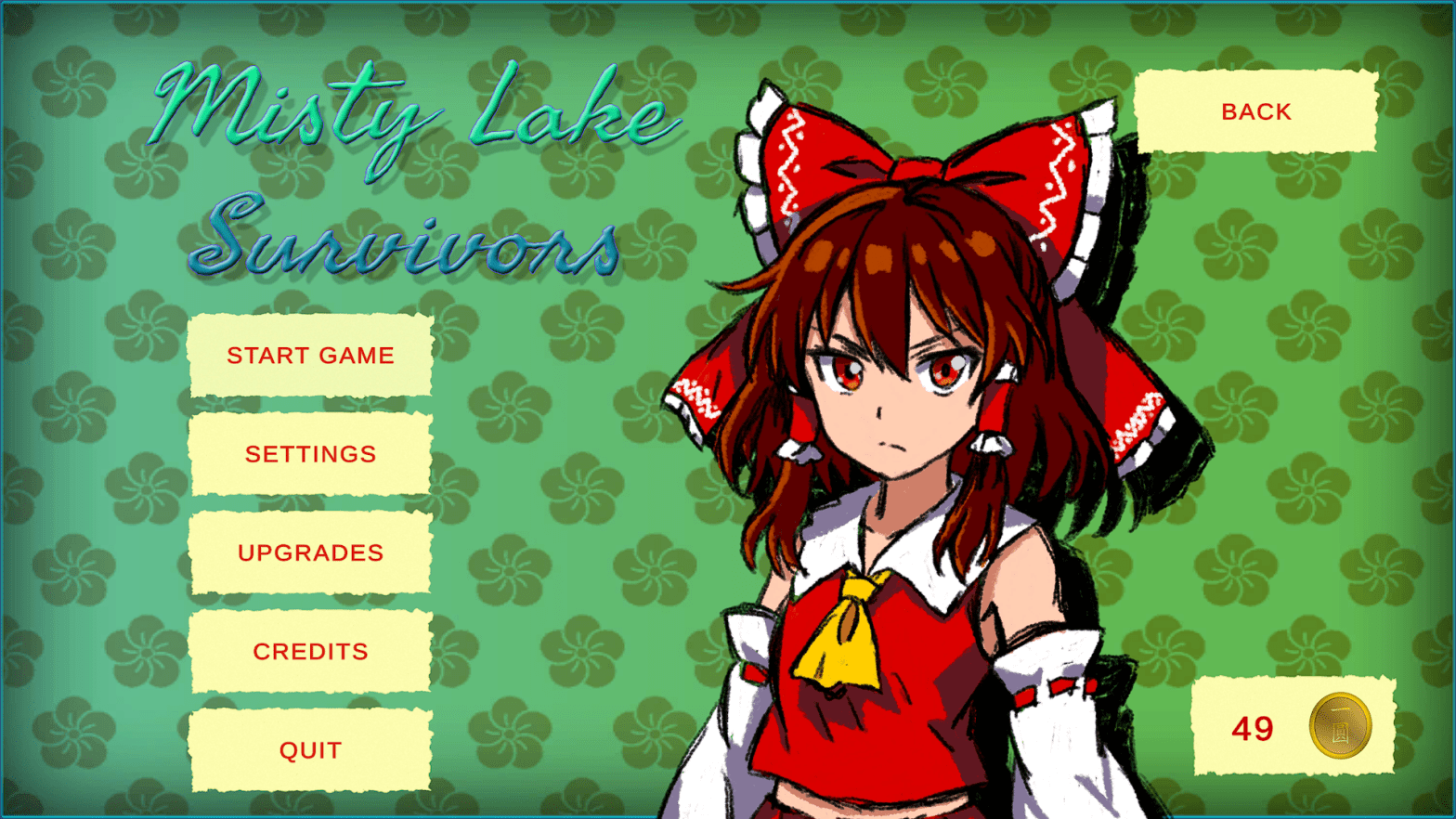
NOTE: This game is currently in alpha testings and only applies to this version. Actual in-game content may change and this review may not be reliable as time goes on.
The horde-survival genre, born from the spectacular success of Vampire Survivors, has become the modern developer’s ultimate playground – a blank slate where mechanics can be replicated, remixed, and recontextualized with remarkable speed. Enter Misty Lake Survivors – a Unity-built prototype that seeks to marry this hyper-addictive loop with the beloved long-standing universe of the Touhou Project. It stands as a striking microcosm of contemporary indie experimentation, utilizing a vast web of community asset packs and generative AI tools to construct its playable reality. Yet, as we examine this short-session roguelite, we find ourselves at a familiar crossroads where immediate mechanical engagement collides directly with technical limitations, most notably a non-functional browser save system and a narrative landscape defined not by iconic, mythical Touhou tracks, but by the royalty-free melodies of Kevin MacLeod.
What to Know
Critic’s Lens
Misty Lake Survivors serves up a technically raw but undeniably addictive loop that successfully marries Vampire Survivors mechanics with Touhou Project charm; however, its derivative royalty-free soundtrack and a broken browser save system prevent this promising indie prototype from truly taking flight.
Player’s Heart
Players love diving into quick, intense bullet-hell survival sessions with their favorite Touhou characters, finding the core gameplay loop highly engaging and full of replay potential. While the lack of authentic, mythical Touhou music and the frustration of losing progress due to a non-functional web save system sting, the community’s heart remains warm toward this ambitious, asset-remixed passion project.
The Big Picture
Technical and Creative Polish
What were they thinking? No, seriously, let’s look at this rationally. We have a Unity-built prototype here that attempts to pull off a pretty massive asset remix, but the technical execution leaves you scratching your head. It utilizes a massive web of community asset packs and generative AI tools to piece its world together. While it successfully establishes a playable framework, the seams are completely visible.
It’s like taking a bunch of different puzzle pieces from entirely different boxes, forcing them together, and expecting them to form a perfect picture. You end up with a game that functions fundamentally, but it lacks the cohesive visual and structural refinement you would expect from a traditionally developed title. It’s a fascinating experiment in modern indie asset utilization, but the lack of foundational polish makes it feel more like a collection of ideas rather than a completed project.
Mechanics
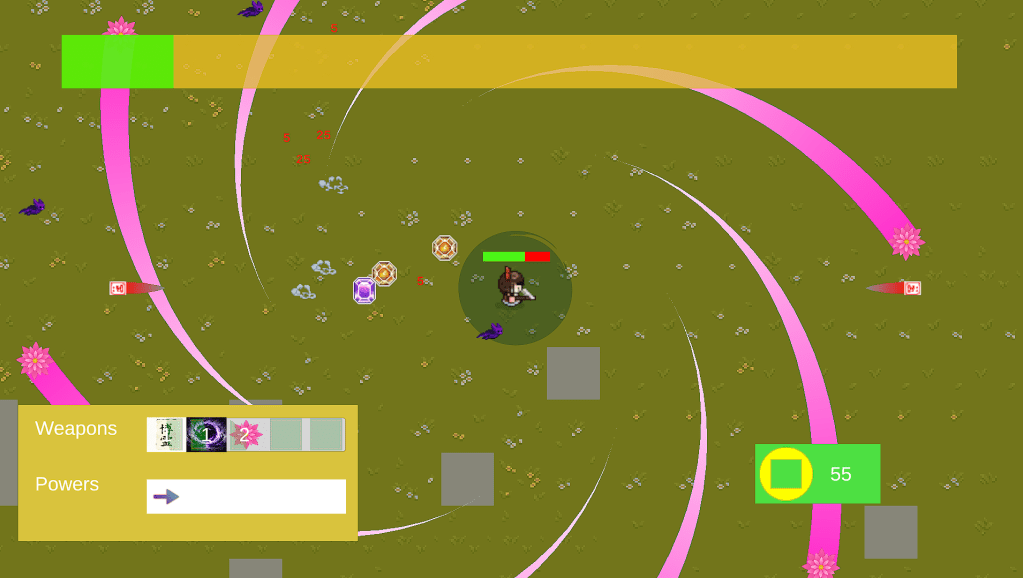
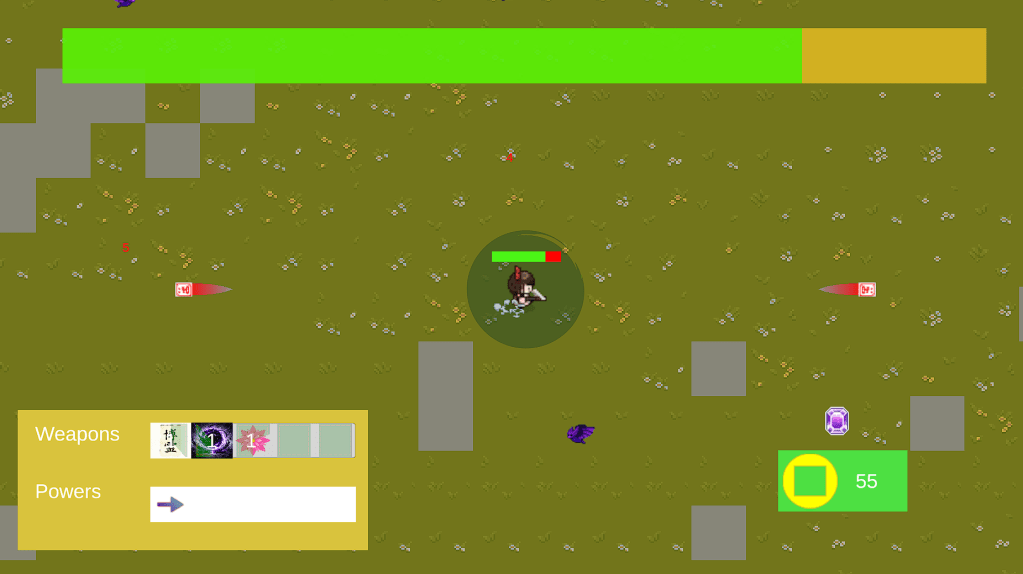
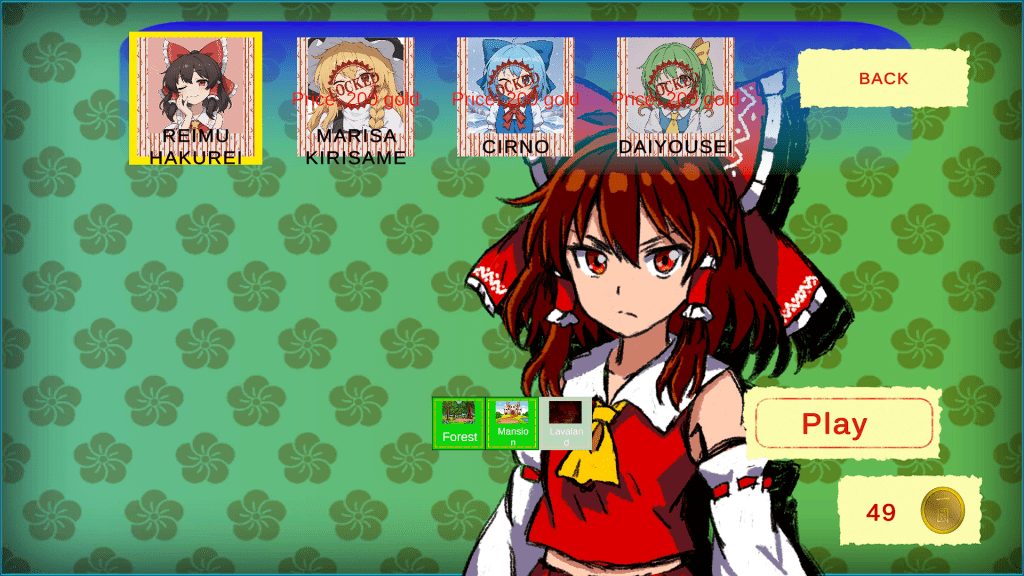
So, how does this thing actually play? Well, at its core, it is exactly what you would expect from a Vampire Survivors clone, but with a Touhou Project coat of paint. You control a character such as Reimu or Marisa (Daiyousei and Cirno can be purchased) and your primary objective is simply to move around the screen while your weapons fire completely automatically.
The gameplay follows a very specific, rigid loop. The routine is dodging incoming enemy waves, collecting experience points dropped by defeated targets, and leveling up to choose new items or upgrades. The twist is an attempt to bring a danmaku flavor to the horde-survival formula, meaning the screen can get cluttered with enemies incredibly fast.
While the fundamental mechanics work exactly as they are programmed to, the lack of nuanced mechanical depth or original gameplay hooks means you are essentially playing a repackaged version of a formula you have already seen a hundred times before. It is functional, it is straightforward, and it doesn’t try to reinvent the wheel.
Sound Design and Music
Now we have to talk about the audio, and this is where things get truly bizarre. When you think of the Touhou Project, you think of its iconic, legendary soundtrack – melodies that have been remixed thousands of times by fans all over the world. It is a core pillar of the entire franchise’s identity.
But what do we get here? Royalty-free music by Kevin MacLeod. Let’s look at this objectively. Instead of fighting off waves of enemies to fast-paced, mythical Touhou Project arrangements, you are walking around to standard, recognizable internet stock tracks. While Kevin MacLeod’s library is excellent for independent content creators and video backgrounds, placing it inside a specific fangame universe completely disconnects the player from the established atmosphere.
The sound effects themselves are functional, providing the necessary audio cues for hitting enemies and collecting items, but they lack any distinct punch. The audio framework technically works, but the creative choices leave a massive tonal disconnect between the gameplay and the source material it is trying to represent.
Narrative Cohesion
When you look at a franchise like the Touhou Project, you are looking at decades of incredibly dense, interconnected lore. There are hundreds of characters, complex relationships, and specific mystical rules governing the land of Gensokyo. So, how does this game weave all of that narrative together?
Well, it doesn’t. Let’s look at the structure objectively. There is no overarching story mode, dialogue sequences, or contextual framing to explain why these specific characters are fighting waves of enemies at the Misty Lake. The characters like Reimu, Marisa, Daiyousei, and Cirno are simply dropped into a sandbox environment. They function purely as mechanical avatars with unique bullet patterns rather than participants in a cohesive story.
For a prototype, omitting a complex narrative is a standard development shortcut, but it means the game relies entirely on the player’s pre-existing knowledge of the universe to provide any sense of meaning. There is no narrative progression to tie your sessions together, leaving the experience feeling purely mechanical.
Engagement and Fun
So, is this game actually fun to play? Let’s break it down as logically as possible. When you strip away the branding, the engagement factor relies entirely on your tolerance for doing the exact same thing over and over again. Because it relies heavily on the core loop popularized by Vampire Survivors, there is an immediate, primal sense of satisfaction when you are successfully dodging hundreds of enemies at once.
However, the engagement model is short-lived due to a few key factors. Moving around the screen and watching numbers fly off enemies provides a quick, casual dopamine rush that works perfectly for a 10-to-15-minute distraction. Because it’s a prototype, it lacks the deeper meta-progression layer like permanent character stat upgrades or unlockable achievements that keeps you coming back to other games in this genre.
It functions well enough to keep your attention for a session or two, but because the gameplay doesn’t evolve past the first few minutes, the fun factor plateaus incredibly fast. It’s an engaging proof-of-concept, but it struggles to hold your attention as an actual, complete game.
Replayability
So, what keeps you coming back to this game once the initial novelty wears off? Let’s analyze the replay value objectively. In a typical horde-survival game, replayability is driven by a massive roster of unlockable characters, secrets, and a robust progression system. Here, the loop is much more contained.
The replay structure relies on a few specific elements: You start with characters like Reimu Hakurei, and you have the option to purchase Marisa Kirisame, Daiyousei, and Cirno using gold gathered during gameplay. Each character brings a slightly different bullet pattern to the table. Without a deep system of permanent stat upgrades or achievements, the primary incentive to replay a stage is simply to survive longer or beat your previous score.
The core gameplay itself is engaging enough for short bursts, but because the web browser version’s save system doesn’t function properly, any long-term progression or accumulation of points is completely wiped out once you close the tab. This technical limitation significantly impacts your desire to boot the game up a second or third time, as you are essentially forced to start from scratch every single session. It works as a brief distraction, but it doesn’t offer the legs required for extended replay value.
Learning Curve
So, what is it like when you first boot this game up? Let’s examine the difficulty progression and how long it takes a player to understand what’s going on. In the broader horde-survival genre, the learning curve usually relies on figuring out which item combinations work best together. Here, it’s stripped down to the absolute basics.
The barrier to entry can be broken down into a few distinct phases. The game is immediately accessible. If you know how to use an analog stick or the arrow keys to move a character around a digital screen, you already know 90% of how to play this game. There are no complex button combinations or execution-heavy maneuvers to memorize. The actual difficulty doesn’t come from understanding the systems, but rather from navigating the screen real estate. Because it borrows elements from danmaku titles, the screen quickly becomes flooded with enemy avatars and projectiles.
The learning curve isn’t a curve at all; it’s a flat line that takes a sharp upward turn based purely on how many objects are rendered on screen at once. It requires no complex strategic thinking, just immediate visual reaction time. It is straightforward to pick up, but the difficulty spikes rely more on visual clutter than deep mechanical mastery.
Feel of Play
So, what is the actual, moment-to-moment physical experience of sitting down and playing this game? Let’s evaluate the kinetic feedback and control responsiveness as objectively as possible. In a survival title influenced by danmaku design, the physical sensation of control is everything.
The tactile feel of the game can be broken down into a few specific elements. The character handling is functional and responsive. When you press a directional key, your avatar moves instantly without any noticeable input lag or unwanted momentum. As you navigate the map, the screen becomes highly chaotic. While your weapons fire completely automatically, the sheer volume of projectiles and enemy sprites can occasionally make it difficult to track your character’s precise hitbox.
The game delivers a straightforward, standard digital translation of your inputs. It doesn’t feature advanced physics, complex acceleration curves, or heavy screen-shake effects to artificially enhance the impact. It feels exactly like what it is: a clean, functional, unembellished Unity framework that prioritizes basic mechanical execution over visceral, cinematic presentation.
Final Verdict
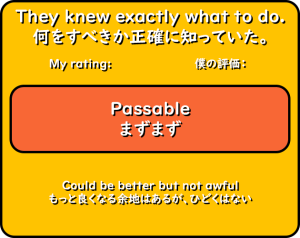
So, where does that leave us? It sits right at a 5.0 out of 10. It is the absolute definition of a middle-of-the-road experience. The core gameplay loop functions exactly as intended, but the technical flaws and creative shorthand hold it back from being anything more than a brief distraction. It lands squarely in the Passable category.
It is a completely playable Unity prototype that successfully delivers the immediate, casual engagement of the horde-survival genre using Touhou Project characters. But on the other hand, a broken browser save system that wipes your progress every single session and the complete absence of authentic Touhou Project arrangements drag down the overall execution.
It doesn’t cross the line into being bad, but it certainly doesn’t do enough to be called a great one. It is functional, but being flawed sits it perfectly right in the center.
If you’d like to try the game for yourself, I have the link here:
https://zabawne-gierki.itch.io/mist-lake-survivors
Discover more from Drillimation Systems
Subscribe to get the latest posts sent to your email.


The review raises a fair point about horde-survival games being a blank slate where mechanics are remixed quickly, and Misty Lake Survivors shows both the strength and weakness of building on asset packs and generative tools. Touhou is a natural fit for the genre given its bullet-pattern heritage. Noting that the review applies only to the alpha is a good practice for fan projects that change fast. (Disclosure: I run an unofficial PokeSurvivor fan guide, linked in my name.)
LikeLike