

Behold the interactive landscape of the modern independent gaming scene – a digital theater where expectations are routinely subverted and genre definitions are increasingly blurred for the sake of creative expression. Enter Not Ultrakill – a danmaku title developed by fumorin as another entry from Bullet Hell Jam 7 that deliberately positions itself against the monolithic shadow of an entirely different genre giant. On its surface, the title functions as a literal and categorical disclaimer – an explicit declaration of what the experience is not. Yet, beneath this protective layer of satirical marketing and self-aware titling lies a strictly traditional, fiercely uncompromising shooter that relies heavily on classic arcade conventions while simultaneously grappling with the systematic chaos of a high-pressure crunch period. It is a fascinating case study in how mechanical complexity and structural oversights can coexist within a single, brief window of development, proving that a game need not be the historic titan it names to demand our undivided analytical attention.
What to Know
Critic’s Lens
A masterclass in genre-defying minimalism that is both a sincere love letter to classic arcade shooters and a self-aware subversion of the industry’s own ‘titan’ complexes. While it undeniably stumbles under the weight of its own crunch-induced technical inconsistencies, particularly regarding scoring balance and UI visibility, Not Ultrakill remains a razor-sharp, adrenaline-fueled experience that proves a game’s worth is measured in mechanical integrity rather than its proximity to the blockbuster it cheekily refuses to be.
Player’s Heart
If you’re looking for a punishingly fun time that doesn’t take itself too seriously, this is it. It’s a chaotic, screen-filling bullet hell that feels great to play, even if it feels like the game is actively trying to kill you (and sometimes the UI, too). It’s not perfect – the difficulty spikes are brutal and the scoring system is a total mess, but it’s got that addictive ‘just one more run’ quality that makes you forget you’re playing something that isn’t actually Ultrakill. An absolute must for anyone who enjoys high-octane twitch gameplay and doesn’t mind a little bit of glorious, unhinged jank.
The Big Picture
Technical and Creative Polish
When looking at the nuts and bolts of Not Ultrakill, the experience presents a fascinating contrast between high-level conceptual ambition and the unavoidable realities of a rapid development cycle. On one hand, the mechanical foundation is remarkably sturdy; the shot feedback and core movement feel precise, echoing the tactile satisfaction found in genre staples like Touhou Project. The developer has clearly prioritized the “feel” of the game, ensuring that every projectile and maneuver carries a sense of weight and purpose.
However, it is equally evident that this polish did not reach every corner of the project. The user interface, for instance, presents some clarity issues, most notably with the bomb indicators, which can occasionally blend into the background during particularly intense screen-filling sequences. Additionally, the scoring system acts as a distinct point of curiosity; due to an oversight where enemies were coded with boss-level attributes, the game experiences a level of score inflation that complicates the traditional arcade progression. These are quintessential examples of “jam-period” trade-offs, where the focus on creating a playable, high-octane experience occasionally leaves behind the refinement of secondary systems. It isn’t a broken experience by any means, but rather one that displays the honest, unvarnished fingerprints of its creator’s creative process.
Mechanics
When you peel back the layers of Not Ultrakill, you’re looking at a structural design that lives and dies by its arcade roots. At its core, the game adopts a classic danmaku architecture, favoring twitch-based reflexes over complex modern progression systems. You have your standard shot output, movement that feels tight and responsive, and a bomb mechanic that acts as your primary survival tool when the screen inevitably fills with enough projectiles to obscure your own character.
However, the implementation of these mechanics reveals a few jam-made quirks. The control scheme maps essential actions to the face buttons, which, while functional, requires a bit of a learning curve if you’re trying to focus your movement while firing simultaneously. The game also features a bomb system that relies on visual cues in the top-right corner; unfortunately, these indicators can be difficult to track amidst the visual chaos of the boss patterns. It’s a design that assumes a certain level of genre literacy, placing the burden of mastery entirely on the player’s ability to route and memorize patterns. It’s not necessarily a flaw, but it does create a steep, uncompromising barrier to entry that you’ll either find refreshing or quite a bit to manage during your first few runs.
Sound Design and Music
When it comes to the auditory landscape, the game manages to punch well above its weight class, especially considering it was cobbled together during a high-pressure jam environment. The soundtrack is, in a word, stellar; it captures that specific, high-octane energy you’d expect from a danmaku title, acting as the primary driver for the game’s “just one more run” loop. It’s got a pulse, a drive, and a melodic sensibility that keeps you locked in even when you’re staring down a screen full of projectiles.
The sound effects, however, are a bit of a mixed bag. You get that satisfying, crunchy feedback for your own shots, which is absolutely essential for a game like this – if the feedback doesn’t feel good, the whole thing falls apart. But the secondary sound effects, particularly the warning cues and interaction feedback, occasionally get lost in the shuffle of the explosive soundtrack. It’s not that the sound design is bad; it’s more like an arcade cabinet in a busy bar – it sounds great, but you have to really lean in to catch all the nuances. It’s a classic case of the music doing a lot of the heavy lifting to keep the atmosphere intact, and for the most part, it succeeds in keeping the tension high and the player engaged.
Narrative Cohesion
If we are being honest, discussing “narrative” in the context of this game is a bit like looking for a deep, philosophical subtext in a chaotic fireworks display. The game doesn’t exactly present you with a complex plot, branching dialogues, or a world-building exercise designed to move you to tears. Instead, its narrative is purely functional – a satirical framing device that exists to justify the “not” in its title. It’s a bold, tongue-in-cheek meta-commentary on the nature of game development itself, specifically the tendency for independent projects to reference (or purposefully pivot away from) the heavy hitters of the industry.
The game is self-aware enough to acknowledge its own existence as many players have affectionately dubbed it a joke game, and it wears that badge with pride. It doesn’t attempt to build an epic, and it doesn’t need to. The cohesion here isn’t found in a sequence of story beats, but rather in the unwavering commitment to its own joke. Every design choice, from the “Not” in the title to the intense, borderline-unplayable projectile patterns, serves to reinforce the idea that this is a creator having a laugh at the expense of expectations. It isn’t a narrative experience in the traditional sense, but as a piece of performance art disguised as a high-octane shooter, it maintains a remarkably consistent voice from start to finish.
Engagement and Fun
The engagement loop is essentially built on the classic, high-octane “shmup” philosophy: it is designed to be punishing, quick, and aggressively demanding of the player’s reflexes. It effectively captures that classic arcade-style adrenaline where the goal isn’t necessarily to progress through a deep, branching storyline, but rather to survive the screen-filling chaos long enough to see what pattern the developer throws at you next. For those who enjoy the “twitch-heavy” nature of danmaku games, the engagement is immediate and intense.
However, the “fun” factor is occasionally interrupted by the realities of its jam-based development. As many players have noted, the difficulty curve feels less like a smooth climb and more like a vertical wall, which can be disorienting if you aren’t already familiar with the specific rhythm of the genre. When the mechanics like the bomb system work in harmony with the gameplay, it is a rewarding, high-speed experience. When the technical inconsistencies, such as visibility issues with UI elements or abrupt difficulty spikes, interfere with your ability to read the screen, it shifts from “challenging” to “frustrating” in a split second. Ultimately, it’s a game that respects the player’s skill enough to throw them into the deep end, even if it sometimes forgets to provide the life raft.
Replayability
When you look at this project, “replayability” is baked right into the DNA of the genre. It’s a classic arcade loop: you play, you fail, you learn, and you go back in for another round. Because the game is so aggressively difficult and demands such precise pattern recognition, the sense of accomplishment you get from finally clearing a stage is, frankly, the main reason you’ll keep coming back. It’s that old-school desire to master the machine, even if the machine is currently acting like it wants to break your spirit.
However, the game’s replay value is a bit of a double-edged sword. On one hand, the short, punchy nature of the stages makes it perfect for quick “just one more run” sessions. But because the scoring system, as the developers themselves have candidly admitted, is currently skewed by an oversight involving enemy boss-tier attributes, high-level play devolves into a rather specific, repetitive meta-game. Instead of iterating on your dodging skills, you’re often incentivized to spam bombs and lean into specific exploits to maximize your score. It’s still fun, and it’s still intense, but it shifts the focus from pure “shmup” mastery to “understanding the broken systems.” It’s a great way to kill an hour, but it’s the kind of game that’s defined more by its chaotic, one-off explosions of energy than a long-term, deep-seated mechanical progression.
Learning Curve
If you’re expecting a gentle introduction, you’re in for a rude awakening – and honestly, that seems to be the entire point. The game features no tutorial, no hand-holding, and absolutely no explanation of its core systems. It’s an “all-or-nothing” approach that essentially demands you already possess a baseline level of “shmup” literacy. You’re expected to intuit that your movement, shooting, and bomb management are the keys to survival, even when the screen is so crowded with projectiles that finding your own hitbox becomes a game of blind luck.
The real challenge isn’t just the enemy patterns; it’s the lack of communication from the game itself. As the developer has candidly admitted, the decision to omit an explanation of mechanics like identifying the bomb indicators or handling the touchy gamepad sensitivity was a design oversight that definitely spikes the difficulty unnecessarily. You are essentially left to learn through a cycle of immediate failure and rapid iteration. While some players find this “baptism by fire” exhilarating, it undeniably creates an uncompromising barrier to entry. You don’t learn the game; you endure it until you eventually internalize its brutal, high-speed rhythm.
Feel of Play
When you get down to the brass tacks of how the game actually handles, the results are, to put it mildly, a bit of a Jekyll-and-Hyde situation. On one hand, the core movement and shot feedback are legitimately great – the character is snappy, the projectiles have a satisfying “punch,” and there’s a certain tactile rhythm to the gameplay that echoes the best of the classic Touhou Project titles. When everything is clicking, it’s a high-octane joyride that makes you feel like an absolute master of the screen.
On the other hand, you can really feel the “jam” constraints in the edges of the experience. The sensitivity on the gamepad is – let’s be polite and call it “unrefined”, which makes precision maneuvers during the more claustrophobic patterns feel like you’re trying to perform surgery with a sledgehammer. The hitboxes are another point of contention; they aren’t always where you’d intuitively expect them to be, which can lead to some frustrating moments where you thought you squeezed through a gap, only to have your run abruptly ended. It’s a game that feels fantastic to play when you’re in the flow state, but it has a tendency to remind you of its own rough edges just when you’re starting to get comfortable. It’s not necessarily a deal-breaker, but it’s definitely something you have to learn to work around rather than with.
Final Verdict
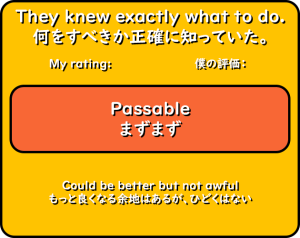
When you step back and look at the whole game, it is a fascinating, if clearly imperfect, piece of work. It’s an experience that definitely has its rough patches, from the GUI visibility hurdles to the scoring system that basically fell apart under the pressure of a jam deadline, but it manages to be genuinely fun in spite of those quirks. You can feel the developer’s intent in every screen of chaos; it’s a high-octane adrenaline rush that captures the spirit of the genre even while it’s openly poking fun at itself.
I rate this a 5.5 out of 10. It isn’t going to revolutionize the medium, and it certainly isn’t the most polished game you’ll ever play, but for what it sets out to be, a self-aware, brutal, and occasionally unhinged arcade experience, it delivers. It’s the kind of game that reminds you that even when a project is held together by duct tape and high hopes, it can still provide a few hours of genuinely solid, twitchy entertainment. It’s not perfect, but it’s far from awful.
If you’d like to try the game, I have the link here:
https://fumorin.itch.io/not-ultrakill
Discover more from Drillimation Systems
Subscribe to get the latest posts sent to your email.

