
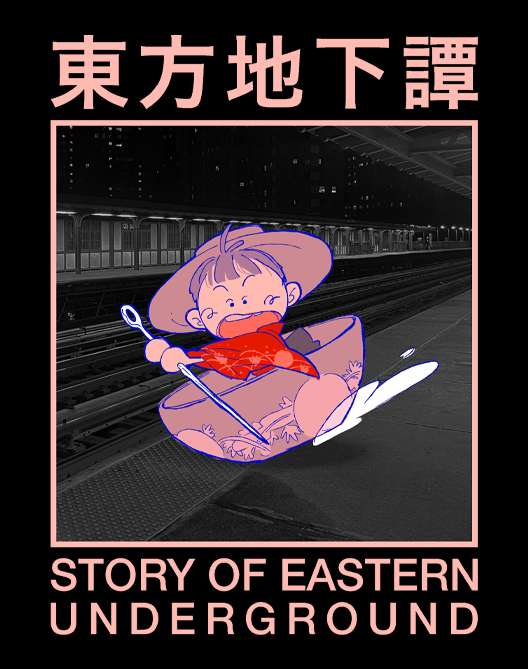
To everyone in between, today we are talking about Story of Eastern Underground – a six-stage Touhou Project fangame developed by tboddy for the NES and Famicom as part of Bullet Hell Jam 7. Now, on paper, this is exactly the kind of project that commands our utmost respect – a genuine piece of homebrew software written in nesfab and built to run on actual, physical retro hardware rather than just wearing a nostalgic coat of paint. It takes a beloved, hyper-precise danmaku franchise and crams it into the tight, unforgiving architecture of an NES cartridge, telling a bizarrely grounded tale about therapy sessions on the subway and feeling small in a massive city. But while we must praise the sheer technical ambition required to make a functional danmaku game on an NES, we also have to look closely at how it actually handles. When you strip away the novelty of the hardware constraints, we are left with a game that struggles to explain its own mechanics to the player, leaving many trapped in the dark subway station.


What to Know
Critic’s Lens
Story of Eastern Underground is a remarkably ambitious feat of NES homebrew engineering that successfully translates Touhou Project‘s signature danmaku intensity onto genuine NES architecture. However, its mechanical opaque nature and unforgiving learning curve may leave less-experienced players in the dark.
Player’s Heart
Fans of retro homebrew love the nostalgic 8-bit aesthetic, the clever sprite work, and the fact it runs beautifully on real retro hardware with minimal sprite flickering. While the classic arcade-style gameplay is incredibly addictive, casual players note that the game doesn’t do a great job of explaining its power-up and pickup mechanics, making the steep difficulty a bit frustrating for newcomers to the genre.
The Big Picture
Technical and Creative Polish
When you look at this game, it takes you right back to the late 1980s, but it’s doing things under the hood that would make a seasoned Famicom or NES programmer do a double-take. Take a look at the sprites. On the original console, if you put more than eight sprites on a single horizontal scanline, the hardware just gives up and the extra sprites disappear. Normally, developers fixed this by making the sprites flicker back and forth between frames, which makes your eyes bleed after five minutes. But here, the game manages to throw a respectable pattern of danmaku at you with almost zero flickering.
Now, when the screen gets entirely flooded with danmaku, the game does experience some temporary slowdown where the framerate drops. But in the scrolling shooter genre, slowdown isn’t necessarily a flaw – it acts as an accidental blessing that gives you a few extra frames to react and dodge through a tight gap. There’s also a minor MMC3 scanline timing bug present in certain emulators like Mesen, but knowing that this whole thing was built in a week using nesfab makes the technical restraint impressive. It feels like an authentic piece of homebrew that understands the exact limits of the hardware it’s running on.
Mechanics
When you boot up the game, the core controls are as classic as they get. You use the D-pad to move Shinmyoumaru, the A button to fire your main shot, and the B button to drop a bomb. On paper, it operates just like a standard scrolling shooter. The twist here is that the developer implemented a dynamic rank system – the better you play, the more aggressive the game’s AI becomes, pushing the NES hardware to throw tighter danmaku patterns at you.
Where things get tricky, though, is how the game communicates its progression to the player. As you defeat enemies, they drop power-up chips and point chips. Collecting power-ups widens your shot spread, which is essential for survival. However, the game lacks a proper tutorial or visual indicator to explain what these items are doing. If you get hit, you instantly lose all your accumulated power. The game throws you a small bone by letting you try to scoop up your lost chips as they float away, but because the pickup system isn’t clearly explained, newcomers are going to spend their first few runs completely confused about why their weapon strength keeps fluctuating. It nails the strict penalty of an arcade cabinet, but it leaves you entirely on your own to figure out the math behind it.
Sound Design and Music
When you fire up a game made for the NES, your ears are usually expecting to be greeted by some iconic, driving chiptune tracks utilizing the console’s built-in APU channels. However, if you boot up Story of Eastern Underground expecting a full, melodic soundtrack to dodge bullets by, you’re going to be met with a whole lot of silence. Aside from a brief musical ditty that plays on the title screen, the actual stages themselves completely lack background music. It’s a stark choice, especially for a Touhou Project fangame where music is traditionally half the appeal, and it leaves the atmosphere feeling a bit empty as you descend into the subway.
What the game does have, though, is a highly responsive set of retro sound effects. Every time you fire your weapon, defeat an enemy, or scoop up a floating chip, the console rewards you with these crisp, classic arcade dings and blips that act as immediate audio candy. The sound design handles the technical side well too, and because the audio isn’t competing with heavy music tracks, you never get that annoying channel-stealing issue where a sound effect abruptly cuts out a piece of the melody. The sound effects that are there feel perfectly authentic to the hardware, but you can definitely tell this was built under a tight one-week deadline where a full 8-bit soundtrack just didn’t make the cut.
Narrative Cohesion
Now, if you told me someone made an 8-bit NES crossover about a tiny inch-high Touhou Project princess wandering around the gritty underbelly of a subway, I’d think you were reading from a crazy fanfiction forum. But that’s exactly the story Story of Eastern Underground tries to pull off. You play as Shinmyoumaru Sukuna, who discovers that magical tsukumogami tools are being mysteriously vacuumed out of Gensokyo through a strange, buzzing dimensional rift located right behind Kourindou. Naturally, she grabs her Miracle Mallet and dives headfirst into the portal to investigate.
Instead of landing in another magical wonderland, she pops out right onto the grimy, exhausting concrete of a subway mezzanine. The game presents a surprisingly grounded, almost melancholic premise about feeling microscopic inside a massive, overwhelming metropolis, framing your journey through the city boroughs and down below the station as a metaphor for therapy sessions on a subway train. Because it’s an NES game built under tight jam constraints, you aren’t getting long, elaborate cutscenes or massive text dumps to flesh this out. It relies almost entirely on its brief intro premise and environmental sprite work, like dodging subway-dwelling rats and pigeons, to carry the mood. For an 8-bit homebrew, the juxtaposition between traditional folklore and urban infrastructure actually holds together remarkably well, giving the brief adventure a distinct identity without needing a mountain of dialogue to explain itself.
Engagement and Fun
When you sit down with a retro shooter, the ultimate question is always: does it feel good to play? For an 8-bit homebrew project thrown together in roughly a week for Bullet Hell Jam 7, Story of Eastern Underground manages to deliver a surprisingly addictive core gameplay loop. Controlling Shinmyoumaru feels precise, which is an absolute necessity given the sheer volume of projectiles you have to weave through.
Replayability
When you look at a classic arcade-style shooter, the desire to play it again usually hinges on beating your high score or testing yourself against the game’s toughest modes. For an NES homebrew title, Story of Eastern Underground structures its replay value around a neat, built-in challenge loop. Because the developer implemented a dynamic rank system, the game automatically gets tougher the better you perform, altering bullet speeds and patterns. This means a second or third run won’t play out exactly like your first one, giving veteran Touhou Project fans an incentive to keep coming back and push the system to its absolute limits.
That said, you have to remember this is a compact package. It offers a straight, barebones six-stage arcade climb with no extra practice modes, alternate characters, or hidden unlockables to stretch out the clock. Once you manage to see the ending screen and survive the drop down below the station, you’ve essentially seen the entirety of the content on the cartridge. It’s a brief, self-contained challenge that relies completely on your own desire to master its patterns and perfect your routing, rather than offering external rewards to keep you hooked.
Learning Curve
When you jump into an old-school shooter, you expect a challenge, but you at least want to know what the rules are. With Story of Eastern Underground, the learning curve is less of a smooth slope and more like slamming face-first into a brick wall under the station. The game captures that uncompromising 1980s arcade difficulty, but it inherits one of the worst habits of the era: a total lack of in-game explanation.
When you start out, enemies drop two distinct types of items: Power Chips and Point Chips. The game never stops to explain the math behind these – you just have to figure out through pure trial and error that Power Chips widen your shot spread. The real kicker is the punishment system. The moment an enemy projectile or a stray subway rat clips your hitbox, you don’t just lose a life; your weapon power is instantly reset back to zero. While the game lets you try to frantically scoop up your floating chips as they drift away, trying to recover your gear while navigating dense bullet patterns turns the game into a chaotic trial by fire. It heavily rewards seasoned bullet-hell veterans who already understand macro-level genre mechanics, but it completely leaves casual newcomers to fend for themselves in the dark.
Feel of Play
When you strip away the technical data sheets and look purely at how it feels to have the controller in your hands, Story of Eastern Underground manages to pull off a very specific kind of old-school magic. The game captures that distinct, heavyweight characteristic of classic 8-bit arcade titles. Moving Shinmyoumaru across the screen feels direct and responsive; there is no slippery momentum or floatiness to blame when a bullet clips your hitbox. It feels exactly like an authentic Famicom-era shooter should – demanding absolute physical precision from your thumbs.
However, the sensory experience is a bit lopsided. On one hand, diving straight into a cluster of projectiles to trigger that crisp audio feedback of scooping up chips feels incredibly satisfying. On the other hand, the complete lack of screen-shaking impact, visual flashing, or background music leaves the actual moment-to-moment combat feeling incredibly isolating. When you combine the silence of the subway tracks with the punishing mechanics of losing your shot width instantly upon taking damage, the feel of play shifts from an energetic arcade rush to a quiet, tense exercise in survival. It’s a raw, unpolished experience, but it successfully captures the mood of feeling completely isolated in a massive, overwhelming environment.
Final Verdict
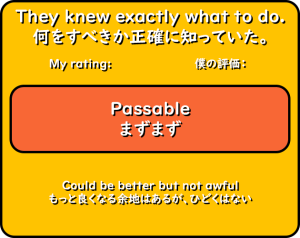
It is a functionally sound, highly ambitious piece of genuine 8-bit engineering that avoids major hardware pitfalls like intense sprite flickering. However, the complete lack of an in-game soundtrack, combined with an opaque pickup system and a punishing weapon-reset penalty, keeps it from reaching the higher ranks. I give it a 5.5 out of 10.
It’s a project that deserves immense respect for what it accomplishes technically on real hardware within a tight time constraint, but the raw, unpolished gameplay structure means it safely lands right in the middle of the road. There is room for improvement; the three flaws I just mentioned led to my opinion being mixed. Another flaw is the character moving too fast. Slowing Shinmyoumaru down, in addition to composing a soundtrack, explaining the game’s controls and items through a tutorial, and lessening the punishment on the player when they die can all make the game better.
If you’d like to try the game, I have the link here:
https://tboddy.itch.io/soeu
Discover more from Drillimation Systems
Subscribe to get the latest posts sent to your email.
 Drillimation Systems
This is an incredibly thoughtful and well-crafted review.
What makes it stand out is how skillfully you balance technical analysis with genuine appreciation for the artistry and ambition behind the project. Even readers unfamiliar with NES hardware or danmaku shooters can clearly feel why Story of Eastern Underground is such an impressive achievement.
LikeLike
I was a big NES fan when I was younger, but never heard of this game.
LikeLiked by 2 people