
Today, we’re looking at a title that packs a surprising amount of kinetic energy into a very small window of development. Himawari CATASTROPHE! is an arcade-style hack and slash that emerged as a standout from the 15th Touhou Fan Game Jam, taking home first place overall. It is a game that understands the fundamental appeal of the visual and auditory feedback that makes every interaction feel significant. While it operates on the lean scale one expects from a weeklong project, it attempts to bridge the gap between a simple jam entry and a professional proof of concept through high-quality voice work and a competitive scoring system. Today, we’re going to examine how it balances that frantic, fast, and loose gameplay with the technical constraints of its creation.
What to Know
Critic’s Lens
A vibrant, high-octane celebration of arcade action, Himawari CATASTROPHE! overcomes its minimalist narrative and steep learning curve with sheer mechanical polish and sensory juice. While the lack of an in-game tutorial and some minor audio balancing issues may leave newcomers dazed, the tight combat loop, elevated by stellar voice acting and competitive online leaderboards, makes this a definitive standout for fans of the genre.
Player’s Heart
Players are head over heels for the pure adrenaline and incredible juice packed into this jam entry, with many calling it a high-water mark for the Touhou Project fan community. While the lack of a tutorial and the cramped one-handed control scheme caused some early-game fumbling, the addictive loop of chasing high scores on the online leaderboards and the top-tier voice acting have fans begging for a full-scale campaign.
The Big Picture
Technical and Creative Polish
It has these vibrant, splashy visuals that really pop. For a game made in a week, the animations are surprisingly smooth. It doesn’t feel like a stiff, jittery mess; it feels fluid, which is more than you can say for some big-budget titles from the NES era. Even when the screen gets frantic, you can actually tell what’s going on. It’s a smart bit of telegraphing that keeps the chaos from feeling like unfair garbage. It guides your eyes exactly where they need to be.
Jackie Ha’s performance as Tenshi Hinanawi is a big standout, and she has given the game a soul. Usually in jam games, you’re lucky to get a grunt or beep, but here, the personality is baked right into the combat. It makes cutting through waves of enemies feel like a professional production. This proof of concept actually has the polish of a finished arcade cabinet. From the GUI to the particle effects, everything feels like it was designed by people who actually put their heart into the feel of the game.
Mechanics
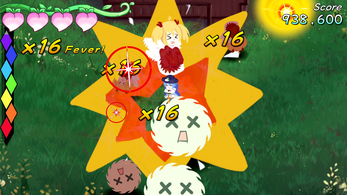
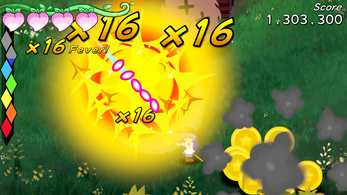
The game prioritizes the fast and loose feel. You’re not just mindlessly mashing; there’s a rhythm to it. You rack up these massive hit combos, and the game actually rewards you for staying aggressive. It’s got that hook that the best arcade games have where you must keep playing for that high score. Your big tactical payoff is the Earthquake Move. Once you’ve built up enough momentum, you can trigger an Earthquake that clears the screen. It’s a great way to handle crowd control when things get a little too cluttered for comfort.
The game features an online leaderboard, which changes the whole dynamic. It’s not just about surviving; it’s about mechanical mastery. You have to figure out the most efficient way to use your specials to maximize your score, turning the whole experience into a competitive pursuit. It offers two difficulty modes: Normal for beginners and Lunatic for those looking for the greatest challenge. It demands a lot of precision, especially when you’re trying to weave through enemy attacks without getting hit.
My only complaint is there isn’t much in the way of a tutorial, throwing you into the deep end and having to figure out how to attack and dodge. It feels like a throwback to the old games where you had to actually read the manual or just experiment until you stopped dying.
Sound Design and Music
The soundtrack by Armand is exactly what you’d want for a fast-paced arcade title. It’s got this driving energy that matches the speed of the combat perfectly. It doesn’t just sit in the background; it actually pushes you forward. When things get chaotic, the sound effects can get pretty intense. There’s a lot here, but some have noted that the explosions can layer on top of each other until they become violently loud. It’s a minor technical gripe, but including a volume slider allows you to keep it from being a total assault on your ears.
On the technical side, the game uses audio cues for enemy attacks that work right alongside the visual cues. It’s a smart way to give you information without having to constantly stare at one corner of the screen. Again, having that voice performance for Tenshi makes the world a difference. The combat lines aren’t there for flavor – they’re timed well with the action, making the whole audiovisual package feel like a cohesive, professional work.
Narrative Cohesion
It’s about as minimalist as you can get. You’re Tenshi Hinanawi, and you’re basically just tearing through the Garden of the Sun to clear out a catastrophe. It’s an arcade game at heart, so the plot is really just a coat of paint to get you into the action, which is fine. It doesn’t need to be anything more than that. It actually makes sense for Tenshi – she is known for being a bit of a celestial brat who goes looking for trouble, so having her hack and slash through waves of enemies fits her personality perfectly. The gameplay and the character are actually on the same page for once.
You eventually run into Yuuka Kazami. Now, if you know her lore, she’s the Queen of the Garden, so having her be the final hurdle makes total sense, even if the game doesn’t sit you down and explain the reason behind the fight. It just feels like a natural conclusion to the stage. Even without a lot of dialogue and cutscenes, the whole thing feels cohesive. Between the background art of the garden and voice acting, it feels like a genuine piece of the Touhou Project universe. It doesn’t need a 20-minute intro to tell you what’s going on; the environment does the talking.
Engagement and Fun
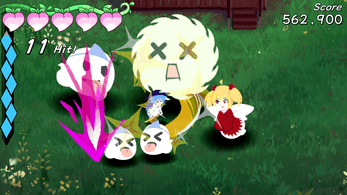
Every time you land a hit, you get these vibrant visual effects and screen shakes that make the combat feel impactful. It’s not just a flat experience; it’s kinetic. It’s the kind of feedback that makes your brain happy to keep pushing buttons. Racking up massive hit combos against waves of enemies feels great. There’s a frantic, high-energy flow to the combat that keeps you locked in. You aren’t just playing a game; you’re managing a chaotic screen of enemies, and coming out on top feels rewarding.
Mechanics like the Earthquake move serve as excellent finishers. When you’ve built up enough momentum and finally trigger it to clear the screen, it feels like a genuine accomplishment. It’s a smart way to give the player a powerful get out of jail free card that actually feels earned. Even when things get totally out of control, the game stays fair. Those attack signals give you just enough time to react. It keeps the engagement high because you feel like your survival is based on your own skill and reflexes, rather than just random luck or bad programming.
Having Tenshi with full voice acting adds a lot to the fun. It’s not just a silent sprite on a screen; it gives the gameplay a distinct personality and makes the whole experience feel less like a tech demo and more of a professional piece of entertainment.
Replayability
Since it’s an arcade game at heart, the replay value is built right into the online leaderboard. It’s not just about reaching the end; it’s about doing it better than everyone else. That competitive drive is what keeps you coming back to see if you climb a few more ranks. You aren’t going to see everything on your first run. As you play more, you start to figure out the nuances, like the best time to trigger the Earthquake or how to keep a combo going through a wave of enemies. It rewards you for actually learning the game rather than just getting lucky.
If the Normal difficulty starts feeling like a walk in the park, you can bump it up to Lunatic, where it demands precision. It gives the game a longer tail for people who really want to test their reflexes. A full session only takes around five minutes. That’s a smart move because it lowers the barrier to entry. It’s easy to talk yourself into playing one more round when you know it’s not going to take up an entire hour of your life. Since this is a jam game, it’s more of a proof of concept than a 40-hour RPG. But for what it is, it manages to pack a lot of replay value into a very small package by focusing on tight, repeatable gameplay instead of filler.
Learning Curve
There isn’t an in-game tutorial to speak of. You’re just dropped into the Garden of the Sun and told to get to work. It’s a bit of a hurdle at first because you’re trying to figure out the scoring and the specials while a hundred things are trying to kill you. It’s the kind of game where you’ll probably die a few times just to learn what the buttons do. One of the biggest things that players seem to miss is the spacebar to dodge. It’s absolutely essential if you want to survive the later waves or the boss, but since it’s not explicitly shown on screen, you either have to read the manual notes or just stumble onto it by accident. It’s a classic read-the-manual moment, but in a modern jam game.
The default control scheme of using Z, X, C, Shift, and the cursor keys means your left hand is doing a massive amount of work. It’s a bit of a physical learning curve just to get your fingers used to that layout without catching a cramp. It’s manageable if you have a controller, which I used to play this game, but it definitely takes some finger gymnastics to get the hang of it. It takes a few runs to really see the game. Between the items, danmaku, and the background, it’s a lot of visual information to process. You have to train your brain to look for those attack warnings through the chaos. Once it clicks, it feels great, but those first few minutes can feel like a total sensory overload.
Figuring out how to actually get a high score is its own challenge. The game doesn’t explicitly tell you that a certain number of moves or combo timings is better for your rank. You have to experiment, watch the numbers, and basically teach yourself the meta of the game through trial and error.
Feel of Play
The movement feels fast and loose, which is exactly what you want in an arcade hack-and-slash. It prioritizes speed and aggression, making you feel like you’re actually in control of the chaos rather than just being a victim of it. There is a heavy emphasis where every strike comes with screen shakes, vibrant particle effects, and layered sound effects, creating a visceral sense of destruction that makes every combo feel rewarding to pull off.
Despite how frantic the screen gets with danmaku and enemies, the controls stay responsive. You feel a direct connection to Tenshi’s actions, especially when you’re weaving between those red attack warnings. It doesn’t have that floaty, unresponsive feel that plagued so many old action games. The combination of the driving soundtrack and combat sound effects creates this frantic atmosphere. It keeps your adrenaline high, which is perfect for these short five-minute play sessions.
Some players have mentioned that the game is so fast it can actually be physically demanding. It’s a button-mashing friendly experience that requires quick reflexes, giving it a very hands-on feel that keeps you engaged until the very end of the run.
Final Verdict
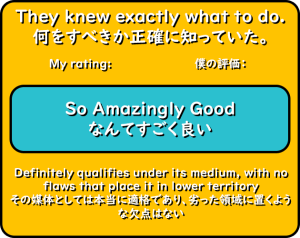
This game is a surprising gem and a 9 out of 10. Usually, when you hear the phrase “made in a week,” you expect a buggy, unplayable mess that looks like it was programmed on a calculator. But this actually feels like a professional arcade cabinet shrunk down into a jam submission. It’s got that high score quality that the best 1980s action games had, where you’re constantly trying to outdo your own and others’ high scores and climb that online leaderboard.
The production value is what really sticks with you. From the smooth animations to Jackie Ha’s performance, it’s clear the team put a lot of heart into the feel of the game. It’s polished, responsive, and most importantly, fun to play. It does have some rough edges though. The lack of a tutorial means you’re going to spend your first few runs fumbling with the controls, and those explosion sound effects can get violently loud when they start layering on top of each other. It’s definitely a proof of concept rather than a full-scale adventure and it prevented the game from receiving a perfect 10 out of 10 and being in the Greatest of All Time category. For what it aims to be, it hits the mark.
In short, it’s a frantic, high-octane celebration of everything that makes arcade hack-and-slash games great. If you’ve got five minutes to spare and a high tolerance for button mashing, this is absolutely worth your time. It’s a first-place winner for a reason.
If you’d like to try it, I have the link here:
https://crows-nest.itch.io/himawari-catastrophe
Discover more from Drillimation Systems
Subscribe to get the latest posts sent to your email.


Back subscribe 😍
LikeLiked by 1 person