
Well, well, well… look what the algorithm dragged in.
Just a few short days ago, I had the distinct pleasure of pulling back the curtain on the new owners of a Touhou remix channel, watching their little house of AI-generated cards come tumbling down overnight. Naturally, with this Thanksgiving weekend winding down, I thought to myself: “Why stop at one?” Why not strap on the rubber gloves, dive back into the digital dumpster, and excavate whatever fresh, algorithmic slop has oozed out of the latest Touhou Project fangame jam?
Now, I could give each of these brave new pioneers of prompt-engineering their own dedicated hit piece—though I’m sure that would send Ciel into a tailspin the exact microsecond this post hits my Discord server. So, in the spirit of holiday mercy, I’m sparing you the bloat. I’m dragging six different titles—jam entries or otherwise—into the spotlight, dissecting the AI-slopped parts, and stuffing them all into one glorious, festering compilation.
Pinball Tales

Alright, first up on the chopping block is Pinball Tales by Chikeneren. Right now, this thing is sitting on a pristine, five-star rating. Yeah, well, enjoy it while it lasts, because I’m about to take a giant dump right on that score!
Looking at the description, they admit AI was used in the code, the graphics, AND the audio. What is left? Did a human even touch the keyboard, or did they just mash their face against it and let an algorithm do the rest!? And the assets? It’s like a Frankenstein’s monster of pre-existing crap! They ripped the reverse-engineered Space Cadet Pinball for the base, grabbed one of the sound effects from some random “Oceanwavescrushing” file on Wikimedia Commons, and padded out the soundtrack with royalty-free tracks from OpenTracks alongside Touhou remixes from Yue2, YouFulca, ajapa, and Namapann. It’s the ultimate asset-flip.
Stepping away from the rage, the story revolves around Reimu’s donation box being destroyed and robbed, so she must go out to get the money the robbers stole back. What do you play to retrieve it? Pinball. The only difference is you hit bosses who are spewing danmaku at you, technically making it one intense game of pinball.
And apparently, it’s also on Android. So if you really want to experience this algorithmic fever dream while in the restroom, hey, knock yourself out!
Pros
- Has a lot of quality-of-life features, including toggleable audio, three different languages (English, Japanese, and Chinese), and controls on how to hold or drag the plunger.
- Has three different boards, including two Touhou-themed ones (one of them has to be unlocked) and an unrelated pirate sea board.
- Since it is a pinball game, the controls are very easy to understand as it only uses standard cursor keys. Left and right control the flippers, down charges the plunger, releasing it launches, and up nudges the table if it gets stuck.
- Massive single-player story mode, complete with lots of different objectives and things to unlock to keep the player in for hours. Cutscenes are presented with pictures in place of dialogue, making it easy to understand the story without reading a single word.
- They do respond to criticism and bug reports if you want to suggest improvements to the game.
Cons
- Lack of originality on the audio side, particularly with the tracks they didn’t arrange or the use of royalty free ones.
- If you’re playing the web version, if you switch to a different tab and return to the tab running the game, the options menu opens up.
My Verdict
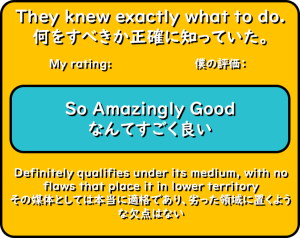
You know what? I’m actually not mad because the game doesn’t suck. I was expecting things to be an unplayable broken piece of AI-generated dog crap, but it’s actually a really great pinball game! It’s bug free, it’s packed with content, and it plays great. Even if the music touts itself as an asset flip, it is a legitimately fun game. Against all odds, this thing earns itself a 9 out of 10.
If you want to play this, I have the link here:
https://chickeneren43.itch.io/pinball-tales
A Hundred and Twenty Seasons in Bloom
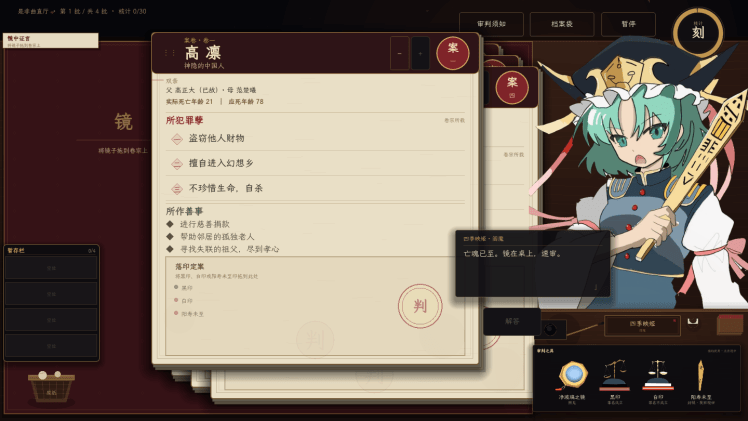
NOTE: This game is currently in alpha testings and is not the finished product. Any updates to this game may make this review unreliable in the future.
Here’s the first jam entry I’m tackling. At last I’ve arrived at a title that at least shows some real human originality for the artwork and soundtrack—credit where it’s due to sijiyinji—yet it still leans on AI for the code and localization. Made by NikolaTheCat, who lists Deepseek for programming and mental support and uses AI for English and Japanese translation, this one raises a classic question: am I about to run into a translation train wreck, or just unpolished puzzle logic?
You play as Shiki Eiki, the Yama, processing the massive pile of case files that arrives once every sixty years. Using the Jōhari Mirror, you connect and unravel the mysteries linking the cases. The controls stick strictly to the mouse: drag the mirror onto a case file to bring evidence to light, drag a stamp onto a file to deliver your verdict, use the lower-left corner to temporarily store or discard evidence, and click “Answer” on the right to respond to mystery questions. Even the developer admits the logic and puzzle flow aren’t fully polished yet—hence the included walkthrough.md file to help you actually get through the story.
Pros
- For quality-of-life options, there are separate sliders for music and sound effects. Like the previous game, it is also playable in English, Chinese, and Japanese. If you’re concerned about motion sickness, there is a reduce motion option.
Cons
- As the game’s logic and puzzle flow are not fully polished, don’t play the game without downloading the walkthrough.md file. You’re gonna get lost in seconds and won’t be able to experience the complete story.
- The Retry this Case Button doesn’t work.
- The GUI can get crowded, making it hard to know where to go when evidence piles up on screen.
My Verdict
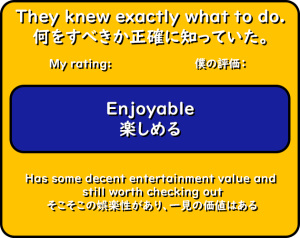
For an alpha prototype built for a game jam, there’s a solid foundation here. You get genuine human artwork and music from sijiyinji alongside practical quality-of-life options like separate audio sliders, multi-language support, and a reduce-motion toggle. Even with AI used for coding and translation, the core premise of playing Shiki Eiki investigating case files with the Jōhari Mirror has potential.
That said, the rough edges are hard to ignore. Having to rely on walkthrough.md just to keep up with unpolished puzzle logic and dealing with a non-functional “Retry this Case” button holds it back from feeling smooth right now. Still, with those fixes and polish down the line, it’s worth keeping an eye on—earning a 7 out of 10 as it stands.
If you want to try the game, I have the link here:
https://nikolathecat.itch.io/seikieiki
Touhou Bonk

NOTE: This game is currently in alpha testings and is not the finished product. Any updates to this game may make this review unreliable in the future.
Alright, so this next one isn’t even a jam entry, and right away it’s bragging about using AI across the code, graphics, sounds, and text—plus a whole heap of pre-made assets! You’ve got music arrangements with ACE Music, bullet sprites from Void dancer, effects from Patch and Hugo Duprez, and sound effects pulled from Helton Yan, Soundeffectlab, Shapeforms Audio, Juhani Junkala, Kenney, and artisticdude. It’s like someone dumped half the internet’s asset libraries into a blender and hit purée!
On paper, though, it’s actually kinda nuts: you get a hard, Bonk-style Castlevania arrangement of Bad Apple!!, drop into a Megabonk-inspired world instead of Gensokyo, pick from 116 playable characters, and tear through 15 regions stretching from Embodiment of Scarlet Devil all the way to Fossilized Wonders—complete with 704 spell cards (also playable in Spell Practice), four difficulties, and modes like Classic, Today’s Incident, Daily Requests, Boss Rush, and Endless.
And unlike the last one where you just lazily click around with a mouse, this thing demands both your keyboard and mouse! You move with WASD and steer the camera with the mouse across a 3D field like Vampire Survivors, grab power items, level up, and build out your spells and items. When you’re ready to get your ass kicked, you ring up the stage boss at its altar and fight every single boss spell card in a classic vertical danmaku view, clear the region to unlock the next one, and recruit new characters. Let’s see if this oversized asset-soup actually holds up or if it’s going to make me lose my mind!
Pros
- Playable in ten languages.
- Quality of life features include playing the game in windowed, borderless, fullscreen, window size, or letterbox.
My Verdict
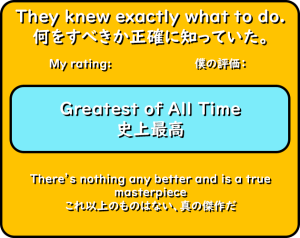
You know what? I’m actually stunned. I went into this expecting an AI-generated, asset-flipped dumpster fire that would make me want to shove a cartridge up my butt, and instead… it’s absolutely awesome! You’ve got 116 playable characters, 15 regions, 704 spell cards, ten languages, actual display options that don’t wet the bed, and a gameplay loop that mashes 3D field action together with classic vertical danmaku boss fights. Yeah, it uses AI and pre-made assets, so what!? They knew exactly what to do! It’s pure, fun, and against every single expectation I walked in with, it earns a perfect 10 out of 10!
If you want to try the game, I have the link here:
https://touhoubonk.itch.io/touhoubonk
A Tiny Tiny Clever Commander Leads the Mice Army
I had such a great time with Touhou Bonk, but I need to move onto the next one, and it certainly can’t have the same level of awesomeness and perfect score. According to the AI disclosure, they did use machine learning to get help when they would get stuck. I’ve used machine learning for tackling parts that were tough to fix in my own projects, but everything else—from the programming, sound effects (pulled from Soundeffectlab), music, and graphical work—is manmade.
The goal of the game is to assume the role of Commander Nazrin and lead an army of mice to grow big and find treasures. It plays very similarly to Pikmin; you work your way through three stages, gathering more and more mice and evading obstacles. When you reach the end, you claim a part of the jeweled pagoda.
You use both a keyboard and mouse to play. Your mice follow your mouse cursor; left-click counts them, right click stops them or releases them from an object if they’re eating one, Q quits a stage, and R restarts a stage.
Pros
- Playable in two languages.
- If you lose all your mice, you can restart the stage without much of a penalty.
Cons
- No quality of life features such as adjusting music and sound effects volumes.
- No way to pause the game other than quitting back to the main menu.
My Verdict
For a Touhou Fan Game Jam 17 entry with almost everything built by hand—aside from a little machine-learning help when getting stuck—this Pikmin-style mouse-herding romp is a pleasant, low-stress little time-waster. Being able to restart a stage without getting punished when your mice wipe out keeps the pace moving, and having two languages is a nice touch.
That said, it could really use a proper pause button so you don’t have to quit to the main menu just to step away, along with volume sliders for the music and sound effects. Still, for what it is, it’s a fun little jam game that earns an 8 out of 10.
If you want to try the game, I have the link here:
https://stabbyknives.itch.io/a-tiny-tiny-clever-commander-lead-the-mice-army
Captain Murasa
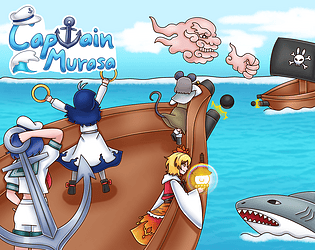
There’s already a song named “Captain Murasa,” so of course she has to get her own dang game! Just like the last one, they admit to using AI assistance when they got stuck, while everything else—including contributions from multiple musicians—is manmade. At least this is a post-jam version that supposedly fixes several issues, so maybe it won’t make me want to toss my controller through a window right out of the gate.
The opening visuals look like something straight out of Undertale. Now, Gensokyo doesn’t really have massive bodies of water outside of Misty Lake—certainly not open seas—partly because it’s an isolated society. Suddenly, a whole sea pops up out of nowhere with some mysterious crap hidden across it! Once word gets around, people start searching the waters, and word reaches Myouren Temple, so Byakuren Hijiri dispatches Minamitsu Murasa, Ichirin Kumoi, Shou Toramaru, and Commander Nazrin aboard the Palanquin Ship to track it down.
And what do you actually do once you’re in it? It’s basically another Vampire Survivors clone, except it doesn’t have even a fraction of the charm or chaos of Touhou Bonk. You just shoot shark fins, grab upgrades, and survive as long as you can until the story drops a cliffhanger right as it gets going. Great. Let’s see how fast this ship sinks!
Pros
- Has basic quality-of-life features such as an audio slider, complete with separate channels for music and sound effects.
Cons
- Just another generic Vampire Survivors clone.
- The hitbox is a little too large, resulting in cheap deaths.
- Plot ends on a cliffhanger once it starts.
My Verdict
For a Touhou Fan Game Jam 17 entry with hand-made art, writing, and music—and only light AI assistance when stuck—Captain Murasa has a fun premise with Murasa and her crew setting sail, plus separate music and sound effect sliders. The post-jam patch also shows the team is actively trying to smooth out the rough spots.
That said, playing like another standard Vampire Survivors clone, taking cheap hits from a forgiving-in-the-wrong-way hitbox, and cutting the story short on a cliffhanger hold it back. It’s a decent little jam entry that lands at a 6 out of 10.
If you want to try the game, I have the link here:
https://ikqfang.itch.io/captain-murasa
Scarlet Survivors

NOTE: This game is currently in alpha testings and is not the finished product. Any updates to this game may make this review unreliable in the future.
I’ve finally made it to the last game on this godforsaken list, and of course the title has “Survivors” slapped right in the name! Every Vampire Survivors clone has to shove that word in there like a neon sign. Half of everything I’ve covered in this lineup is already a clone, and my brain is practically turning to mush from the sheer repetitiveness of it all! Maybe—just maybe—this one won’t make me want to headbutt a brick wall. At least the visuals and audio are all manmade, even though AI was used again for the code and in-game text.
And what’s the grand, earth-shattering plot? It’s Touhou 6: The Embodiment of Scarlet Devil all over again! The Scarlet Mist rolls into Gensokyo, you duel bosses inside sealed danmaku arenas, and you march through the Scarlet Devil Mansion. At least the voxel look actually has some style to it—let’s see if it’s enough to keep me from losing my mind at the finish line!
Pros
- Playable in three languages: English, Japanese, and Turkish
- Lots of quality of life features, including music and sound, visual effects opacity, low effects mode, FPS limit, positions of the controls, and remappable buttons.
- The voxel graphics look really impressive.
Cons
- Again, just another one of those Vampire Survivors clones.
My Verdict
You know what? It’s another Vampire Survivors clone, so part of me wants to chuck this alpha build straight into the sun! Yet at the same time, I can’t completely stop on it—the voxel look actually pops, the visuals and audio are manmade, it supports three languages, and it’s loaded with quality-of-life features like low-effects mode, FPS limits, control positioning, and remappable buttons. Compared to half the broken garbage out there, it actually respects your settings.
Even so, after sitting through yet another Survivors retread with AI-assisted code and text still in alpha, it doesn’t quite blow me away. Give it time to cook and stand on its own a little more—for now, Scarlet Survivors limps across the finish line at a 7 out of 10.
If you want to try the game, I have the link here:
https://remilya356.itch.io/scarlet-survivors
Conclusion
Well, Christ on a bike—I actually survived all six of them without losing my dang mind! Going into this lineup, I expected an uninterrupted parade of broken, AI-spit asset flips that would make me want to chuck my keyboard into the sun. Instead, against every single expectation I dragged in here, none of these are outright garbage. Sure, plenty of them leaned on AI for code, translation, or brainstorming when the devs hit a wall, and half the list turned into Vampire Survivors clones—but when humans actually care about the art, music, controls, or basic quality-of-life settings, even an AI-assisted project can turn out alright.
Looking back at the carnage, Touhou Bonk stood head and shoulders above the rest by taking a 3D field approach and mashing it together with vertical danmaku boss battles. Right behind it, Pinball Tales shocked the heck out of me by turning a Frankenstein asset-soup into a legitimately fun, feature-packed pinball game, while A Tiny Tiny Clever Commander Leads the Mice Army delivered a charming Pikmin-style romp. A Hundred and Twenty Seasons in Bloom and Scarlet Survivors both show real promise beneath their rough edges or familiar formulas, and Captain Murasa floats along as a decent, if cliffhanger-cut and slightly clunky, sea-faring survival entry.
At the end of the day, AI isn’t a magic wand that makes a good game on its own—and it doesn’t automatically ruin one either if actual human craft and fun gameplay are steering the ship. Now if you’ll excuse me, I’m going to go lie down and recover from Survivors fatigue.
Discover more from Drillimation Systems
Subscribe to get the latest posts sent to your email.

