
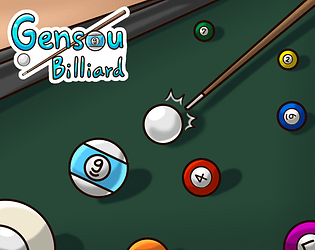
NOTE: This game is currently in alpha testings and is not the finished product. Any updates to the game that add or change content may make this review unreliable in the future.
Welcome to a domain where traditional table sports intersect with spell card mechanics, where the shrine maiden’s financial ruin becomes the catalyst for competitive cue sports, and where game jam constraints meet the chaotic reality of indie development. I am speaking, of course, about Gensou Billiard—a fan-made Touhou Project spin-off developed by Ikqfang, featuring character artwork by Alice G Arunya, and created for the Touhou Pride Game Jam 8.
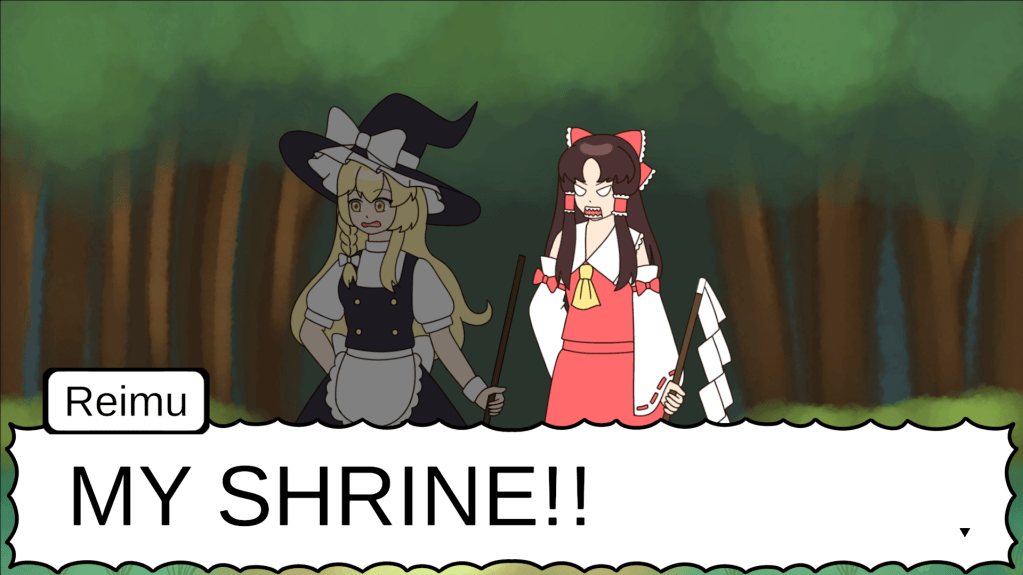
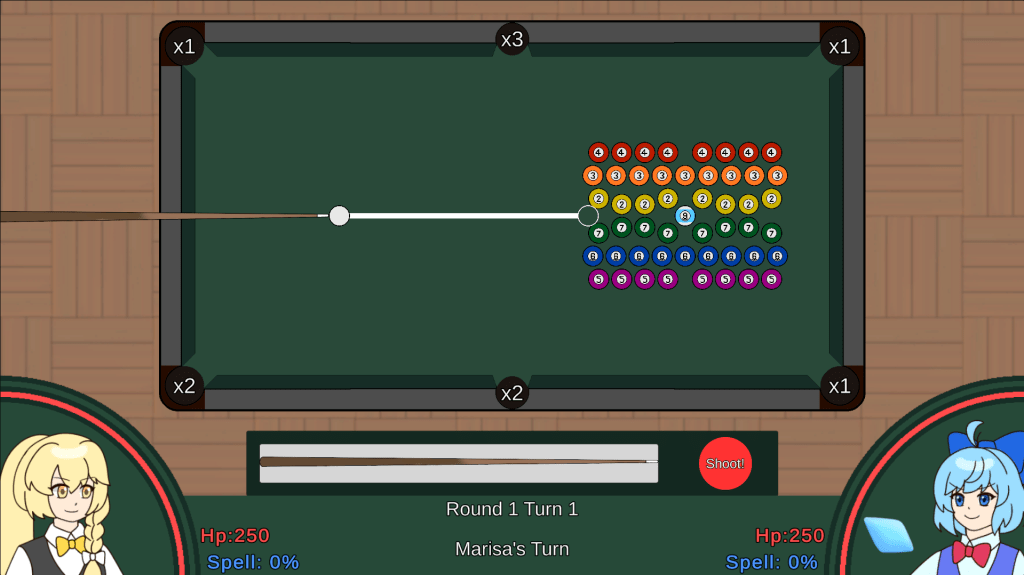
On its surface, the premise presents a straightforward slice-of-life drama from Gensokyo: Reimu Hakurei finds her shrine abruptly destroyed, leaving her without a home. In response, Marisa Kirisame enters a local billiards tournament to secure the prize money needed to rebuild. Yet beneath this narrative hook lies an experimental hybrid of standard pool rules and arcade-style combat mechanics. Players must navigate cue angles, power gauges, and character-specific spell cards that can sweep across the table and drastically alter the state of play.
However, as a prototype submitted under strict game jam deadlines, Gensou Billiard arrives in an overtly raw state. It currently operates without sound or music, relies on temporary placeholder assets, and features pacing and balance parameters slated for post-jam revision. Today, we examine how this prototype functions in its current form, how its mechanics hold up under scrutiny, and what its foundational ideas suggest for its future development.

What to Know
Critic’s Lens
Combining traditional cue sports with high-octane spell card mechanics, Gensou Billiard serves up an inventive arcade concept, even if its game jam constraints leave it feeling visibly unpolished and technically raw in its current prototype state.
Player’s Heart
Fans enjoy the chaotic fun of unleashing screen-clearing spell cards and the charming Touhou crossover premise, though many note that slow ball physics and the current lack of audio hold back the overall momentum.
The Big Picture
Technical and Creative Polish
When looking at the technical assembly of Gensou Billiard, the game jam constraints are immediately apparent in its visual presentation and bug profile. Character art is divided between finished illustrations by Alice G Arunya and temporary placeholder sprites used to fill out the narrative scenes. In the story sequences, skipping dialogue or advancing text rapidly can cause persistent background artifacts, such as an orange/white screen filter that fails to clear or intro elements—like a rock sprite—that linger on-screen across subsequent scene transitions.
The control layout operates via keyboard and mouse, using standard keys to angle shots and shoot. However, the game lacks an in-game keyboard option to fine-tune shot power, requiring players to rely entirely on timing or preset UI elements. Dialogue progression also exhibits quirks where pressing ‘Z’ or clicking may stall at scene boundaries, requiring ‘C’ to manually jump to the next segment. Furthermore, the prototype operates without any sound effects or background music, leaving visual cues as the sole indicator of table collisions and spell card activations.
Mechanics
At its foundation, Gensou Billiard merges traditional eight-ball cue sports with fighting-game-style meter management. Players aim shots using the ‘A’ and ‘D’ keys to set cue trajectory, while pressing the spacebar to execute strokes. However, because the prototype lacks dedicated key commands to adjust shot power fine-tuning, control over shot velocity relies entirely on timing and UI gauges. Ball movement exhibits minimal momentum preservation, causing standard positional play and bank shots to decelerate faster than typical digital pool simulations.
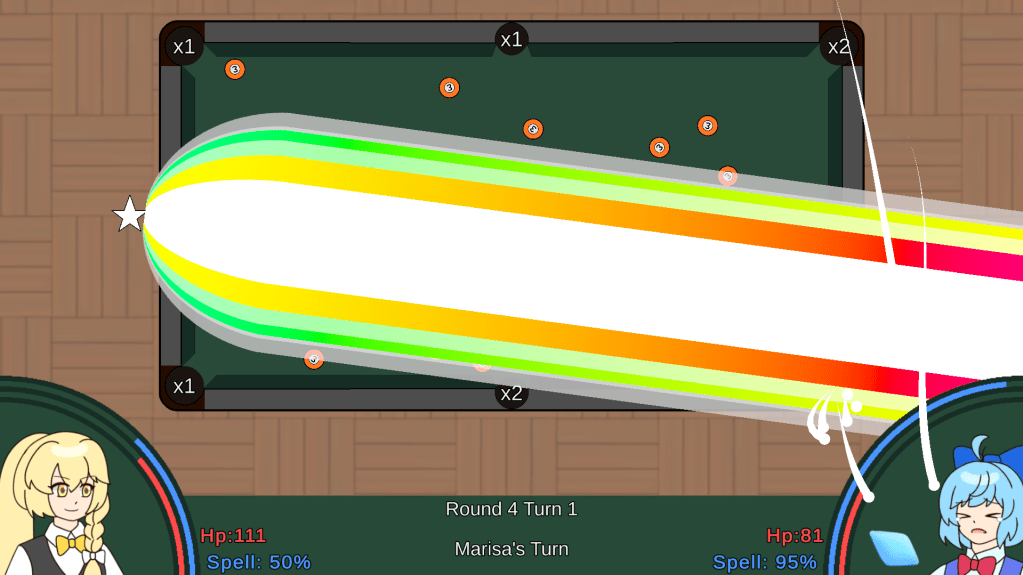
The primary gameplay differentiator lies in its spell card gauge system. Successfully pocketing balls or taking shots builds character-specific meter. Once triggered, spell cards alter table conditions by sweeping away multiple balls across large radii or clearing entire sections of the table at once. Because these abilities possess substantial screen-clearing power, match outcomes often pivot away from positional billiards precision toward meter optimization—deciding when to unleash a super attack versus avoiding actions that feed the opponent’s gauge.
Sound Design and Music
In its current prototype release, Gensou Billiard features an entirely silent audio presentation. There are no background music tracks to accompany dialogue or billiard matches, nor are there sound effects for cue impacts, ball collisions, pocketing, or spell card activations.
Consequently, gameplay feedback relies exclusively on visual indicators, such as table animations and gauge UI changes. According to developer notes on the project’s itch.io submission page, the omission of audio stems from the strict time constraints of the Touhou Pride Game Jam 8, with dedicated sound design and music slated to be added in post-jam updates.
Narrative Cohesion
The story setup of Gensou Billiard follows a traditional Touhou Project narrative formula: an unexpected incident disrupts daily life in Gensokyo, prompting a protagonist to resolve it through a game or sport. In this instance, Reimu Hakurei’s shrine is destroyed, leaving her homeless and driving Marisa Kirisame to enter a local billiards tournament to win the rebuilding funds.
The visual novel-style story sequences transition between scenes using character portraits and dialogue. However, pacing and continuity during these narrative segments can feel uneven due to the sheer volume of characters introduced and technical quirks in scene transitions. The developer noted that overscoping the cast size within a game jam timeframe required relying heavily on placeholder sprites alongside finished character art by Alice G Arunya. Furthermore, rapid dialogue progression can trigger visual bugs—such as background filters failing to clear or intro elements, like a thrown boulder sprite, persisting into subsequent scenes.
Engagement and Fun
The core enjoyment of Gensou Billiard stems from its chaotic, arcade-style power-ups layered over classic cue sports. When spell cards trigger, they deliver instant visual gratification by sweeping across the table, clearing large groups of balls, and swinging momentum dramatically. This creates an entertaining back-and-forth dynamic where players must balance traditional shot setup against strategic meter management—deciding whether to execute a standard pocket shot or hold back to avoid feeding their opponent’s gauge.
However, the game’s overall engagement is weighed down by pacing inconsistencies. Standard billiard play feels notably sluggish due to the ball physics lacking natural momentum preservation, making early rounds drag when played without active spell card meters. Additionally, because the super abilities are so potent, matches often shift from precise position-based pool into high-stakes super-attack battles, which can make win conditions feel heavily reliant on meter optimization rather than traditional table play.
Replayability
In its current game jam prototype state, the replayability of Gensou Billiard remains comparatively limited, primarily serving as a proof-of-concept for its core mechanics. The main story campaign offers a linear progression through a single set of billiard matches. Once completed, there are currently no alternate story paths, customizable match rules, or local/online multiplayer modes to encourage immediate secondary playthroughs.
However, the foundation for future replay value exists within its character roster and spell card mechanics. The developer has noted plans for post-jam updates that will introduce a dedicated free play mode alongside four additional playable characters, each possessing unique spell cards that alter table physics and super attacks. Until those additions and planned features—such as stage hazards and save systems—are implemented, long-term longevity relies mainly on testing different spell card strategies and aiming for cleaner, higher-efficiency wins across the existing campaign rounds.
Learning Curve
The learning curve in Gensou Billiard presents an accessible baseline coupled with a sharper adjustment phase regarding its controls and UI. Because the underlying gameplay is built on familiar eight-ball pool rules, players can grasp the foundational objectives immediately. Aiming with the keyboard and striking with the spacebar provides a low barrier to entry for standard shots.
However, the learning curve grows steeper when adapting to the prototype’s unique mechanical limitations and UI quirks. Without dedicated keys to fine-tune shot power, mastering cue velocity requires players to internalize gauge timing rather than relying on precise numerical inputs. Additionally, because the game lacks an interactive tutorial and audio cues, players must learn the nuances of table collisions, momentum deceleration, and character-specific spell card ranges entirely through visual experimentation during live matches.
Feel of Play
The tactile experience of Gensou Billiard presents a notable contrast between traditional sports simulation and high-variance arcade action. At its base level, standard cue interaction feels deliberate—and at times sluggish—due to ball physics that exhibit heavy friction and minimal momentum retention. As a result, positional play relies heavily on direct alignment rather than complex multi-cushion bank shots or natural roll-out strategy.
The overall feel transforms dramatically once spell cards enter the equation. Activating a super ability instantly shifts the tempo from slow table management to chaotic, high-energy spectacle. The visual impact of screen-clearing spell effects sweeping across the felt provides immediate satisfaction, completely altering ball placements and resetting table dynamics in a single move. This creates a gameplay loop defined by two distinct speeds: a quiet, mechanical setup phase followed by explosive, game-altering super attacks.
Final Verdict
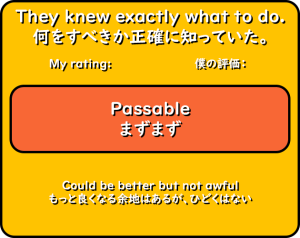
Gensou Billiard presents a creative proof-of-concept for fan-made arcade sports, successfully blending traditional eight-ball pool rules with high-octane Touhou spell card combat. Earning a 6 out of 10 and landing in the Passable category, its foundational strengths are counterbalanced by several notable issues inherent to its game jam prototype state:
- Complete Absence of Audio: The game operates without sound effects or background music, removing tactile auditory feedback for shots and spell activations.
- Unpolished Mechanics and Controls: Ball physics lack natural momentum preservation, causing standard play to feel sluggish. Additionally, the lack of dedicated key commands for fine-tuning shot power forces reliance on timing gauges.
- Limited Playable Roster: The prototype currently features only one playable character who has her own spell card attack. Expanding the roster to include multiple playable characters with unique abilities would significantly enhance strategic variety and match dynamics.
- Visual and Technical Bugs: Story sequences rely heavily on placeholder sprites, with rapid text progression triggering persistent background artifacts and lingering scene elements.
- Single-Player Constraints: Replayability remains low due to a linear single-player campaign lacking alternate story paths, customizable rules, or local/online multiplayer modes.
While these rough edges hinder its immediate momentum, the core concept remains undeniably fun and holds clear potential for post-jam updates.
If you’d like to try the game, I have the link here:
https://ikqfang.itch.io/gensou-billiard
Discover more from Drillimation Systems
Subscribe to get the latest posts sent to your email.
 Drillimation Systems