
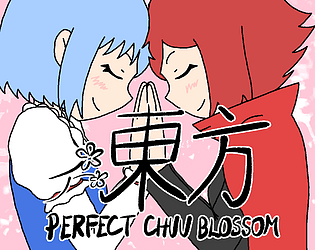
Historically, the Touhou Project fan-game ecosystem has thrived on subverting and remixing traditional mechanics, often filtering established genres through a highly specific, community-driven lens. Enter Perfect Chuu Blossom, a horizontal shoot ’em up developed by Strelly and Kayo Mayo for the Touhou Pride Game Jam 8. It offers a distinct mechanical departure from standard danmaku fare by replacing free-form analog dodging with deliberate grid-based movement.
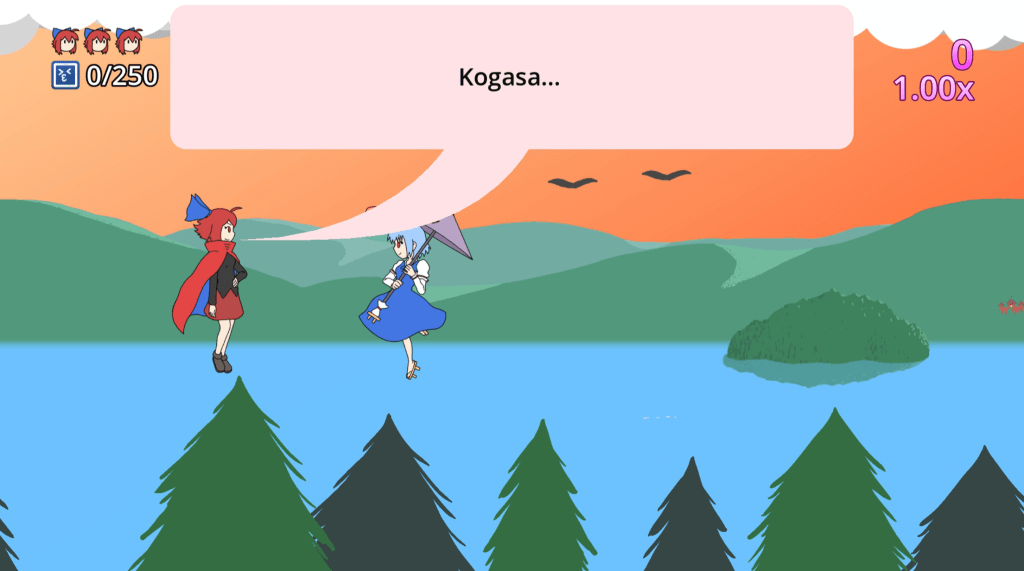
On paper, the narrative framing sets up a whimsical, comedic premise: Sekibanki and Kogasa plan a romantic rendezvous at a scenic kissing spot, only to find themselves in a high-stakes race against Alice and Marisa to get there first. It is a lighthearted foundation that immediately establishes the game’s identity. However, as is often the case with experimental jam entries, the core question is not whether the concept is charming, but whether its restrictive mechanical grid and balancing choices support or hinder that charm throughout its brief runtime. Let us examine how this grid-bound romance fares under scrutiny.
What to Know
Critic’s Lens
Perfect Chuu Blossom succeeds as a visually vibrant and conceptually ambitious fan-game that cleverly remixes traditional danmaku tropes. However, its restrictive grid-based movement and steep mechanical learning curve may frustrate players looking for a smoother, more traditional shoot ’em up experience.
Player’s Heart
Players love the game’s charming, lighthearted narrative framing and the high-quality art, music, and entertaining background details. While many appreciate the unique teamwork mechanics between Sekibanki and Kogasa, a significant portion of the community notes that the controls can feel a bit stiff and the difficulty spikes can make the short runtime surprisingly brutal.
The Big Picture
Technical and Creative Polish
When you look at Perfect Chuu Blossom, the presentation shows a lot of genuine effort. It is built on the Godot engine, and for a jam project, it handles everything thrown at it without any technical hitches or performance drops. The character sprites feature smooth animations that add a lot of personality to the screen.
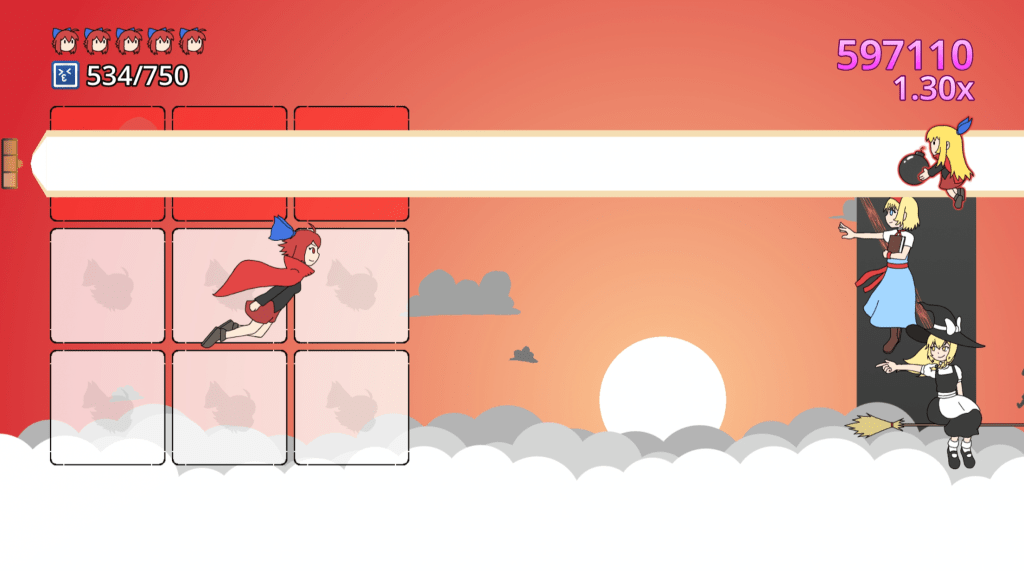
But what really catches your eye are the backgrounds. As you progress through this danmaku race, the environments don’t just loop endlessly; they actually change dynamically to reflect the progression of the chase. If you pay close attention, there are tons of entertaining visual gags and small, in-passing details tucked into the scenery that make the game world feel surprisingly alive. It is a highly cohesive and visually appealing package that demonstrates a clear dedication to detail from the creators.
Mechanics
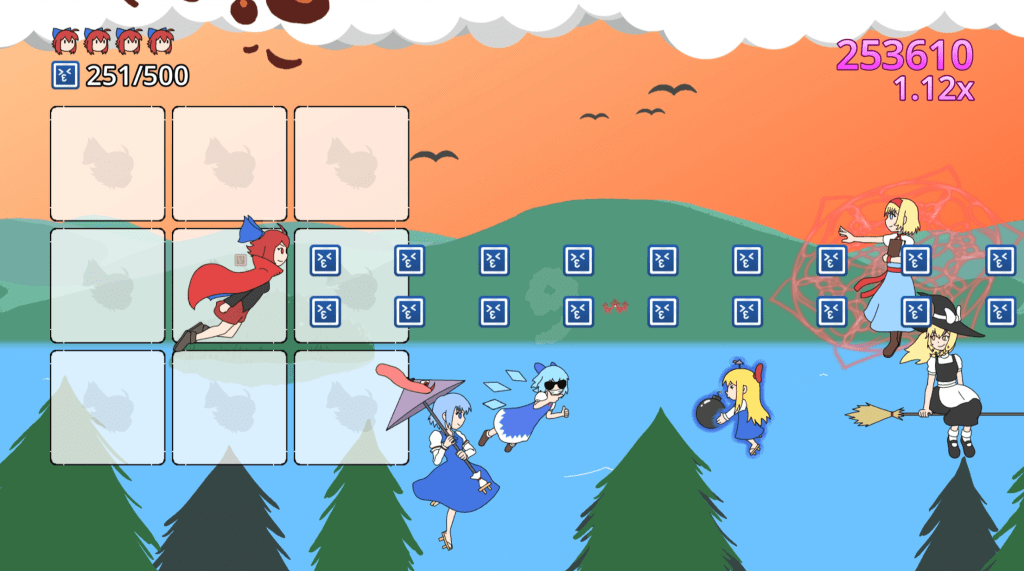
When you break down the actual gameplay of Perfect Chuu Blossom, it all comes down to a fundamental subversion of traditional danmaku controls. Instead of giving you the standard pixel-perfect, free-form analog movement you expect from a shoot ’em up, this game locks you entirely onto a rigid movement grid. You are forced to navigate through waves of incoming attacks by making deliberate, block-by-block adjustments. It completely shifts the dynamic from fluid dodging to highly calculated, rhythmic positioning.
The core loop relies heavily on character teamwork mechanics between Sekibanki and Kogasa. Sekibanki can decouple and position her head independently around the grid to alter her coverage, though in practice, you often have to rely on memorized stage layouts to make the absolute most out of this placement. Meanwhile, you have to manage Kogasa’s utility actions, which introduce a strict cooldown window. You cannot just spam her abilities; there is a noticeable delay before she can be called into action again, demanding that you time her inputs perfectly alongside your grid movements. It is a unique concept on paper, but balancing the stiffness of the grid with these multi-part character cooldowns creates a mechanically demanding experience.
Sound Design and Music
When it comes to the audio presentation in Perfect Chuu Blossom, the soundtrack serves as a major highlight of the experience. The music is composed to capture the energetic, fast-paced essence of a traditional Touhou Project game while keeping the tone fittingly playful for a lighthearted romantic race. Each track features memorable melodies and driving rhythms that complement the chaotic nature of the onscreen action, giving the short runtime a great sense of momentum.
On the sound design front, the game utilizes distinct, crisp audio cues to help you navigate the mechanical complexity of the grid. Because player actions like Kogasa’s utility skills are governed by strict cooldown windows, the audio effects provide subtle but necessary feedback to let you know exactly when an ability is ready or is executed. The sound effects for bullet grazes and enemy hits are satisfyingly sharp, ensuring that despite the unconventional grid layout, the game maintains the familiar, tactile audio feedback that shoot ’em up fans expect.
Narrative Cohesion
From a narrative perspective, Perfect Chuu Blossom sets up a lighthearted premise that establishes a clear, immediate goal for the player. The comedic tension of Sekibanki and Kogasa racing across Gensokyo to beat Alice and Marisa to a romantic rendezvous point provides a fun, low-stakes framework for a game jam entry. It serves its purpose well by justifying the fast-paced, screen-scrolling chase format of the gameplay.
However, when looking closely at how that narrative holds together alongside the core mechanics, a slight disconnect emerges. The plot frames the journey as an urgent, emotional race to prove the power of the couple’s bond. Yet, the rigid, highly deliberate nature of the grid-bound movement and strict ability cooldowns force the player to approach the game with cold, calculated precision rather than frantic, high-speed momentum. While the charming character interactions and dynamic environmental transitions do an excellent job of visually illustrating the story’s progress, the mechanical execution feels more like solving a strict spatial puzzle than engaging in a chaotic, romantic dash. It is an entertaining story, but one that operates somewhat independently of how you actually have to play the game.
Engagement and Fun
When evaluating the entertainment value of Perfect Chuu Blossom, the game establishes an engaging hook by blending high-stakes shoot ’em up tension with a lighthearted, comedic premise. For players who enjoy mechanical novelty, the sheer contrast of navigating a danmaku field on a rigid grid offers a fresh, puzzle-like engagement that sets it apart from traditional entries in the genre.
However, the overall sense of fun is highly dependent on a player’s tolerance for abrupt difficulty spikes. Because the mechanical layout demands such precise positioning and strict cooldown management, the learning curve can occasionally feel restrictive rather than liberating. When the screen fills with obstacles, the boundary between a rewarding challenge and mechanical frustration can wear thin, particularly during a first playthrough. Ultimately, the game is at its most entertaining when you stop treating it as a traditional twitch-reflex shooter and begin treating it as a fast-paced spatial puzzle—though reaching that comfort zone requires a patient investment from the player.
Replayability
When looking at the long-term replay value of Perfect Chuu Blossom, the game’s core structure leans heavily on its identity as a short-form game jam entry. Because a complete playthrough spans a brief runtime of roughly ten minutes, the initial curiosity factor plays a major role in drawing players back for a second or third attempt to fully grasp the mechanics.
The primary driver for extended engagement comes from the inclusion of traditional arcade-style scoring and an extra-lives system tied to point collection. For players who enjoy self-improvement, refining their route through the grid to achieve a high score or executing a perfect 1-CC (One Coin Clear) run offers a clear, structured objective. Additionally, the developer’s design choice to ensure that using a continue carries no penalty other than a point reset keeps the barrier to entry low, allowing players to practice stages freely. However, beyond the pursuit of optimal point routing and high-score optimization, the static nature of the stages and layouts means that once the unique spatial puzzle is solved, the motivation to return relies almost entirely on a player’s personal passion for score-chasing.
Learning Curve
When analyzing the learning curve of Perfect Chuu Blossom, the game demands a significant shift in player habits right from the outset. Because it strips away the fluid, pixel-perfect evasion typical of standard danmaku titles and enforces a rigid grid, players cannot rely on established muscle memory. Adapting to a block-by-block movement style while navigating dense bullet patterns creates an immediate mechanical hurdle.
Compounding this difficulty is the necessity of multitasking under pressure. Players are required to simultaneously manage Sekibanki’s independent head placement and time Kogasa’s utility actions around a strict cooldown window. Because maximizing these mechanics effectively often relies on memorizing specific stage layouts rather than pure reflex, a first playthrough can feel deceptively unforgiving. The game provides an infinite continue system to mitigate this, allowing players to practice stages freely. However, the initial ten minutes are characterized by a steep and concentrated learning process as players adjust to treating a shoot ’em up as a spatial logic puzzle.
Feel of Play
When discussing how Perfect Chuu Blossom actually feels in the hand, it settles into a rhythm that is fundamentally distinct from the fluid, kinetic energy of traditional danmaku titles. Because the game layout operates entirely on a strict movement grid, the physical sensation of playing shifts away from smooth, continuous gliding and into a sequence of sharp, deliberate, and rhythmic taps. Every adjustment you make across the board feels more like inputting commands into a fast-paced spatial puzzle than guiding a character through free-form flight.
This structured movement design infuses the encounter with a highly tactile, stop-and-go momentum. For some, this mechanical stiffness provides a clear and rewarding sense of structure, where navigating a dense wave of obstacles successfully feels like executing a flawless, calculated sequence of inputs. For others, especially those accustomed to the instantaneous micro-dodging of classic shoot ’em ups, the forced reliance on hard grid boundaries and multi-part character cooldowns can initially feel restrictive or intentionally stubborn. Ultimately, the feel of play trades the classic, reflexive high of a twitch shooter for a more deliberate, methodical style of engagement that rewards anticipation and spatial awareness over pure survival instincts.
Final Verdict
Ultimately, Perfect Chuu Blossom stands as a commendable and refreshing experiment within the Touhou Project fan-game landscape. By boldly trading the fluid, pixel-perfect evasion of traditional shoot ’em ups for a highly structured, rigid movement grid, developers Strelly and Kayo Mayo have delivered a title that functions more like a fast-paced spatial logic puzzle than a traditional twitch shooter.
The presentation is a major success, offering smooth animations, an energetic soundtrack, and dynamic backgrounds packed with entertaining visual gags that make the game world feel genuinely alive. However, the core gameplay carries a steep learning curve and concentrated difficulty spikes. Balancing the stiffness of the grid with multi-part character cooldowns and independent head placement means your first ten-minute playthrough can feel deceptively punishing, requiring layout memorization and patience rather than pure survival reflexes.
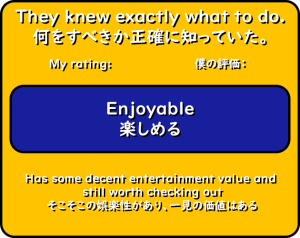
While its long-term replayability relies almost entirely on an individual player’s passion for traditional arcade-style score-chasing, the inclusion of an infinite continue system ensures that players can practice and enjoy the experience without unnecessary frustration. For those willing to adapt to its unique mechanical constraints, it offers a distinct and clever challenge. For its strong conceptual execution paired with a few mechanical hurdles, the game earns a 7 out of 10, placing it firmly in the Enjoyable category as an experience that has decent entertainment value and is well worth checking out.
If you’d like to try the game, I have the link here:
https://strelly.itch.io/perfect-chuu-blossom
Discover more from Drillimation Systems
Subscribe to get the latest posts sent to your email.


What an excellent introduction! 👏🎮 I really enjoyed how you combined thoughtful analysis with an engaging writing style. Rather than simply describing the game, you immediately place it within the broader context of the Touhou Project fan-game community, giving readers a deeper appreciation of its creative ambitions.
I especially liked your observation about the shift from traditional bullet-hell dodging to deliberate grid-based movement. It sets up the central question of the review perfectly:
LikeLike
Not a fan of shoot em ups, I’ll pass and just choke on my Pokemon addiction! :3 ♥ (lolol)
LikeLike